




 Some of the links on this site may be affiliate links. ICOBench may receive advertising commissions when users visit recommended platforms via our affiliate links, at no additional cost to you. All recommendations are based on a comprehensive review process.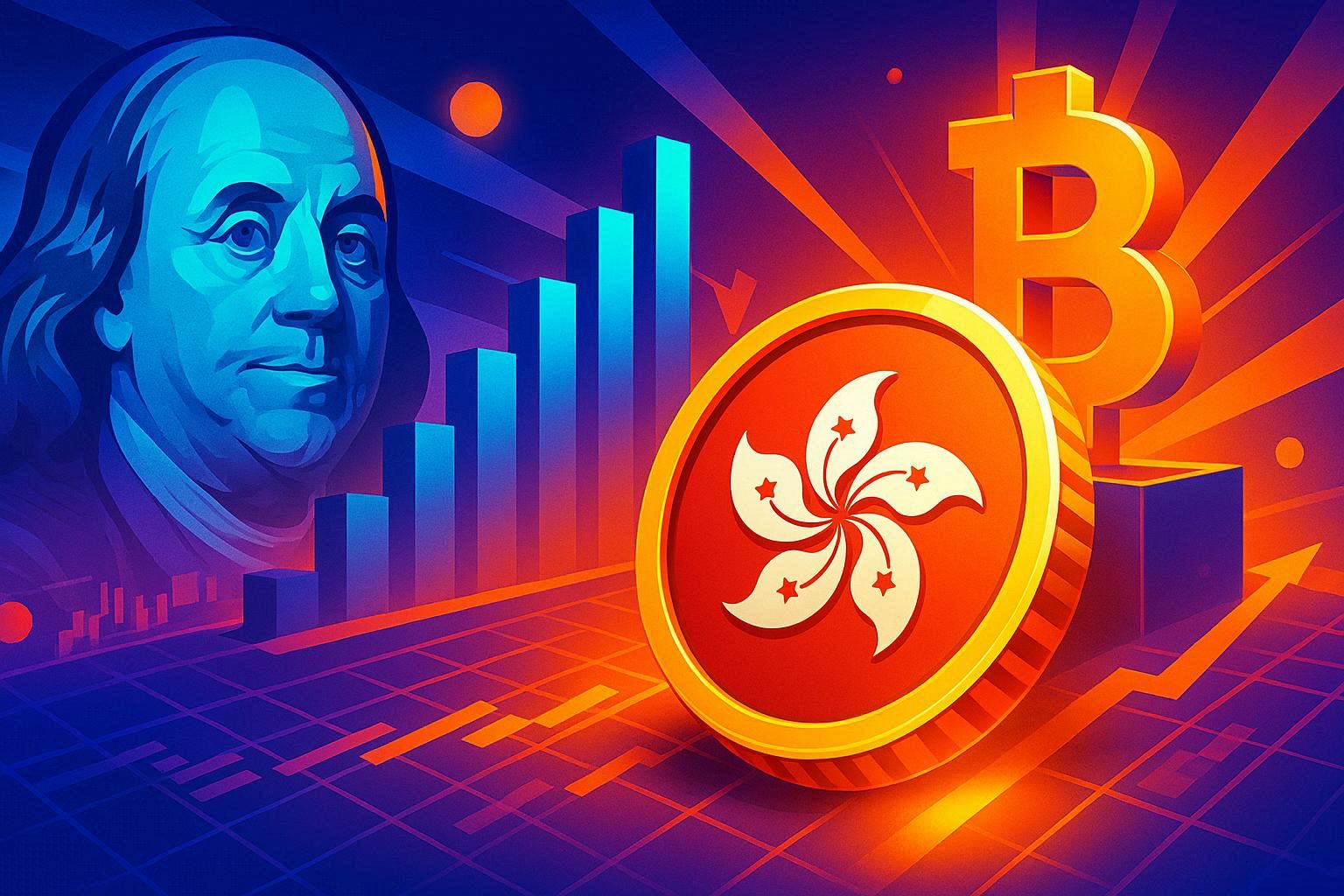
Global asset management giant Franklin Templeton has officially launched its “Franklin OnChain U.S. Government Money Fund” in Hong Kong, marking a major milestone in the city’s Fintech 2030 Strategy led by the Hong Kong Monetary Authority (HKMA).
🇭🇰 NEW: Franklin Templeton launches tokenized USD money market fund in Hong Kong. pic.twitter.com/g6SZzFAgl0
— Cointelegraph (@Cointelegraph) November 6, 2025
According to the firm’s announcement, the tokenized money market fund invests primarily in U.S. government securities and was registered in Luxembourg in 2024. It is currently open to institutional and professional investors in Hong Kong with minimum asset holdings of HKD 8 million (around USD 1.02 million).
Expansion of Franklin’s U.S. Tokenized Fund
The Hong Kong launch extends Franklin Templeton’s earlier U.S.-based tokenized fund “FOBXX”, which debuted in 2021 as the first publicly registered U.S. money market fund operating on a public blockchain.
As of November 2025, FOBXX manages approximately USD 410 million in assets, making it the world’s second-largest tokenized fund, following BlackRock’s BUIDL fund.
The new Hong Kong fund operates on the Ethereum blockchain, utilizing smart contracts for transparency and automation. Each share is represented as a “BENJI” token, which investors can manage through the Benji Investments mobile app.
The platform supports 24/7 trading and settlement, and now features integration with the USDC stablecoin, allowing near-instant liquidity management.
Eyeing Retail Access and Regional Growth
Franklin Templeton’s Head of Asia-Pacific, Tariq Ahmad, said the launch reflects the firm’s commitment to expanding access to tokenized investment products in Asia.
“This initiative demonstrates our continued commitment to delivering innovative investment solutions that meet the needs of modern investors in this vibrant market,” Ahmad stated.
Pending regulatory approval from the Hong Kong Securities and Futures Commission (SFC), Franklin Templeton plans to extend tokenized fund offerings to retail investors , a move seen as a key step in bridging traditional finance with blockchain technology.
At the 2025 Hong Kong Fintech Week, Franklin Templeton CEO Jenny Johnson noted that “demand for tokenized investment products is growing rapidly across multiple jurisdictions.”
HKMA Chief Executive Eddie Yue described the launch as the first phase of Hong Kong’s tokenization initiative, positioning the city as a regional leader in regulated blockchain finance.
Hong Kong Quietly Taking the Lead
Industry analysts highlight that while U.S. regulators remain cautious on tokenized funds, Hong Kong has quietly taken the lead in developing a compliant framework for real-world asset (RWA) tokenization.
Data suggests that stablecoin issuers now account for 60%–75% of daily revenue within the broader crypto sector, signaling that tokenized asset infrastructure is entering a stage of global maturity.