


 Some of the links on this site may be affiliate links. ICOBench may receive advertising commissions when users visit recommended platforms via our affiliate links, at no additional cost to you. All recommendations are based on a comprehensive review process.
 Cardano has been around since December 2017. Over the last seven years, the token has experienced numerous ups and downs. Its all-time high was reached in 2021. But since then, the market has largely remained bearish.Although there have been a few notable spikes, none have come close to its ATH. In this Cardano price prediction, we’ll look at how it may perform in the next 15 years and whether it is truly built for the long race.
Cardano Price Prediction – Overview
| 💰 Ticker | ADA |
| 🏛️ Industry | Smart Contracts, DApps, Blockchain Protocol |
| 🗓️ Founded | 2017 |
| 🖧 Blockchain | Cardano |
| 🏷️ Starting Price | Approximately $0.02 (2017) |
| 📈 Total Supply | 45 billion ADA |
Cardano Price Prediction (2026-2040)
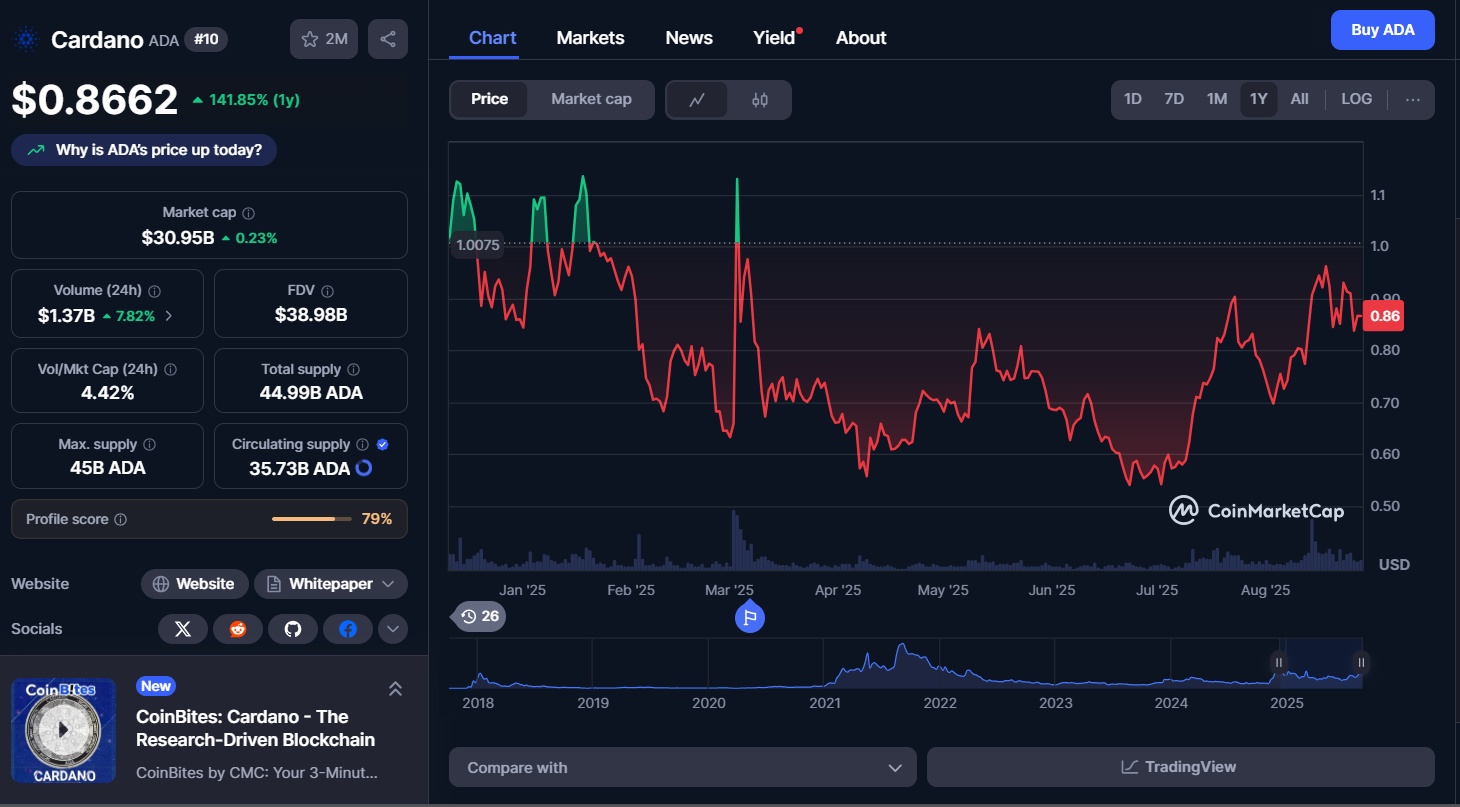
In late August 2025, the price of Cardano (ADA) was around $0.87, representing a small increase of about 2.25% over the past 24 hours.
The price has dropped slightly by around 1.3% over the past week, but it is up approximately 9.6% over the past month. Cardano has seen significant growth this year, with gaining almost 148% compared to the same time last year.
Currently, the circulating supply of Cardano is around 35.9 billion, which is close to its maximum supply of 45 billion. The circulating supply gives Cardano a market capitalization of around $31 billion. The average trading volume is over $1.3 billion in 24 hours.
Although analysts speculated two weeks ago that $ADA may reach $3 in 27 Days, the current price is still below one-third of that target. Despite the bullish momentum building around the crypto, such a sharp increase now seems unlikely. However, the MACD readings support to the bullish setup, with the signal line above zero and positive histogram bars. These indicators suggest upward momentum in the short term.
Meanwhile, Bollinger Bands are forming a triangle chart pattern, a move often associated with impending volatility. While the breakout could go in either direction, the overall trend currently favors the bulls.
Cardano Price History
On September 2, 2021, Cardano reached its all-time high (ATH) of $3.10, which was the highest price it had ever reached, thanks to the strong market confidence and growing adoption at the time. The current price is approximately 72% below the peak, showing a significant decline since then. On the other hand, Cardano’s all-time low (ATL) was around $0.019 in October 2017. Comparing to that, the current price represents a gain of around 4,300%, highlighing its long-term growth despite recent volatility.
In late 2017, Cardano (ADA) entered the market at around $0.02 per token. It quickly gained attention for its promised of being a research-driven, long-lasting blockchain platform. In early 2018, ADA shot up quickly, along with the rest of the crypto market, reaching a high of about $1.33 in January. The market was highly excited about new blockchain protocols, including Cardano’s testnets and staking features, which caused this early surge.
ADA’s price went through a long period of consolidation and decline after the bull run in 2018. It fell below $0.04 during the crypto winter of 2018–2019, when developers were busy building its multi-layer architecture and smart contract features. The Shelley upgrade, released in mid-2020, was a turning point for Cardano. It introduced staking and enhanced decentralization, helping ADA regain momentum.
In 2021, Cardano’s price shot up again to $3.10. This was due to positive market conditions, growing interest in DeFi on Cardano, and excitement about the Alonzo upgrade that would allow smart contracts. Since then, ADA’s price has ranged from $0.70 to $1.20 as the crypto market has been volatile and the network has reached important milestones that will last until 2025.
Cardano Price Prediction 2026

The market outlook for Cardano in 2026 is a combination of cautious optimism and possible difficulties. Ongoing blockchain improvements like Hydra, which improve scalability and transaction speed and increase DeFi and dApp activity, are anticipated to help the cryptocurrency. Demand for ADA may be fueled by Cardano’s growth in real-world applications and smart contract utility, especially in emerging markets.
However, some forecasts indicate a potential price pullback because of financial and regulatory uncertainties, and 2026 may also bring bearish conditions that have persisted since late 2025. Other platforms like Solana and Ethereum continue to pose a serious threat, which could slow Cardano’s explosive price rise.
According to price projections for 2026, ADA may trade at a minimum of about $1.33, a maximum of about $1.54, and an average of roughly $1.44. The crypto might see moderate growth with consistent adoption but will be restrained by general market conditions and possible obstacles.
Cardano Price Prediction 2027
In 2027, Cardano could face a mixed market environment with both bullish potential and downside risks. On one hand, ongoing blockchain improvements, including Hydra and smart contract adoption, may continue to drive demand. The platform’s growing real-world applications and institutional interest could support upward momentum, potentially pushing ADA to a high of around $1.7245.
However, broader market volatility and strong competition from platforms like Ethereum and Solana may temper gains. Analysts project a possible low near $0.97, reflecting uncertainty in adoption pace and regulatory developments. The average price is expected to settle around $1.34, indicating moderate growth for investors while highlighting potential price swings throughout the year.
Cardano Price Prediction 2030

Due to possible bearish forces and general market uncertainties, Cardano’s market outlook for 2030 is cautious. According to many analysts, ADA may experience a major decline, with prices potentially falling as low as $1.60 and peaking at $1.92 in more optimistic circumstances. This reflects worries about regulatory obstacles that could hinder growth and slower technological adoption in comparison to quicker competitors.
The general outlook for 2030 is cautious, with expectations of volatility and high resistance levels, despite the possibility of improvements and growth in decentralized finance. The market might continue to be competitive, and successful network developments and practical use cases will determine Cardano’s ability to stay relevant. As a result, it is anticipated that the average price of ADA will fall within these ranges, approximately between $1.60 and $1.90.
Cardano Price Prediction 2040
Cardano’s price projections for 2040 show considerable variability over such a long period of time. According to conservative estimates, ADA could cost between $3.00 and $3.50, backed by continued adoption and technological advancements. More optimistic estimates place ADA in higher ranges, assuming that scaling solutions are successful, decentralized applications are widely used, and global blockchain integration is favorable.
These long-term projections, however, also rely significantly on changes in regulations and competition from other blockchain systems. The future is still uncertain; Cardano could either experience significant growth or stagnation if it is unable to keep up.
Cardano Price Prediction Table (from 2026-2040)
Year
Maximum Price
Minimum Price
Average Price
% Change (Max)
% Change (Min)
2026
1.54
1.33
1.435
92.5
66.25
2027
1.7245
0.97
1.34
115.5
21.25
2028
2.103
1.063
1.583
162.875
32.875
2029
2.25
1.542
1.896
181.25
92.75
2030
2.352
1.783
2.0675
194.0
122.875
2031
2.56
1.92
2.24
215.0
140.0
2032
2.78
2.02
2.4
237.5
160.0
2033
2.93
2.15
2.54
253.75
177.5
2034
3.05
2.33
2.69
265.0
198.0
2035
3.20
2.50
2.85
280.0
215.0
2036
3.29
2.70
2.995
290.0
232.0
2037
3.38
2.91
3.145
300.0
250.0
2038
3.47
3.00
3.235
310.0
260.0
2039
3.52
3.04
3.28
317.5
265.0
2040
3.56
3.08
3.32
345.0
285.0
Cardano Price Prediction: Key Regulators
ETF Decisions and Approvals
The U.S. Securities and Exchange Commission (SEC) decision on Grayscale’s Cardano ETF application, which is expected by October 2025, will be very important for Cardano’s (ADA) price in the future. Approval would let institutional investors buy ADA through regulated financial products, which would increase liquidity and make ADA more legitimate as an asset beyond just retail.
Such regulation could put an end to doubts about how to classify securities and may lead to a long-term price growth. On the other hand, more delays or a rejection could make the market more volatile and less interesting to institutions, which would put downward pressure on prices.
Ecosystem Technology Growth
ADA’s competitive edge over competitors like Solana depends on Cardano’s layered architecture upgrades, such as the Hydra Layer 2 scaling solution that aims for 100,000 transactions per second (TPS) and CIP-112 smart contract verification. If it works, it will improve network throughput, lower fees, and bring in more decentralized applications (dApps).
It will also increase the demand for ADA for staking and transaction fees. Technical milestones like these have a direct effect on investor confidence and ADA’s intrinsic value, which sets it apart from other crypto factors.
Global Trends
The U.S. is still being careful, but the EU’s MiCA, Singapore’s crypto-friendly policies, and the growing institutional custody of ADA ($1.2B+ assets) show that cryptocurrencies are becoming more widely accepted. These trends help Cardano become more popular around the world and be used in regulated financial systems outside of the U.S., which lowers regional risks. Besides, ADA’s consensus mechanism that follows ESG standards makes it more appealing to institutional investors who care about sustainability.
What is Cardano?
Cardano is a blockchain network that lets you run decentralized apps and smart contracts. Ouroboros is a proof-of-stake consensus structure that tries to make the system use less energy than proof-of-work systems. ADA token holders who stake their tokens validate transactions, protect the network, and get rewards for doing so.
There are many parts to the Cardano ecosystem, including decentralized finance (DeFi) standards, non-fungible tokens (NFTs), and mechanisms for governance that let ADA holders vote on changes to the protocols. This layered architecture makes it easier to scale and be flexible by separating the settlement layer from the computation layer.
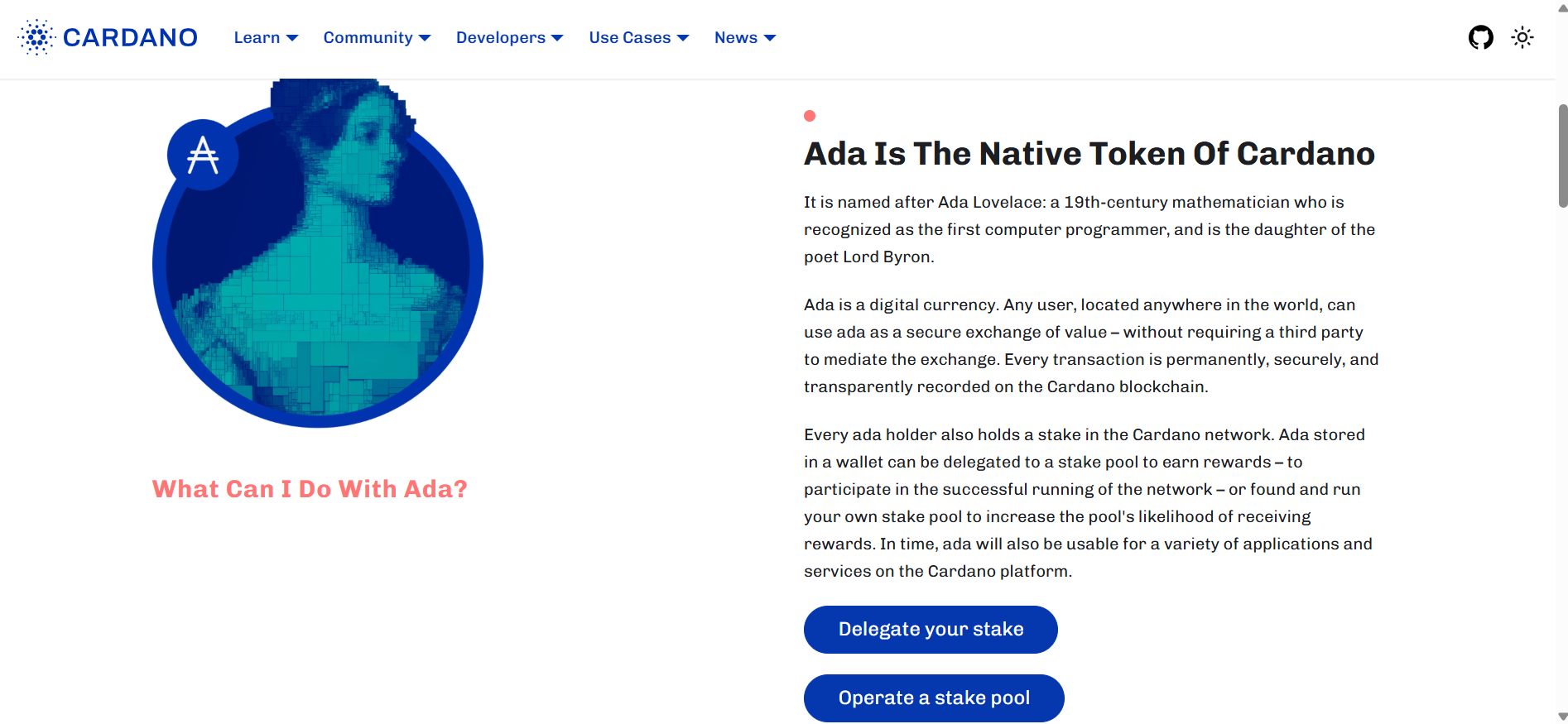
Cardano’s ADA token trades for about $0.87 in August 2025. There are about 35.7 billion ADA tokens in circulation. In 2021, it reached its highest point ever, which was close to $3.10. In 2017, it hit its lowest point ever, which was around $0.019. People are interested in the platform because it takes a scientific approach to development and puts a lot of emphasis on privacy and authentication in smart contracts.
Cardano Ecosystem and Token Use Cases
In 2025, Cardano’s ecosystem was resilient and advancing quickly, with a focus on real-world blockchain uses. The ecosystem had more than 1,300 active projects in areas like DeFi, NFTs, identity protocols, and business solutions. Notably, decentralized exchanges like Minswap and SundaeSwap handle 70% of smart contract interactions and $1.1 billion in monthly trading volume.
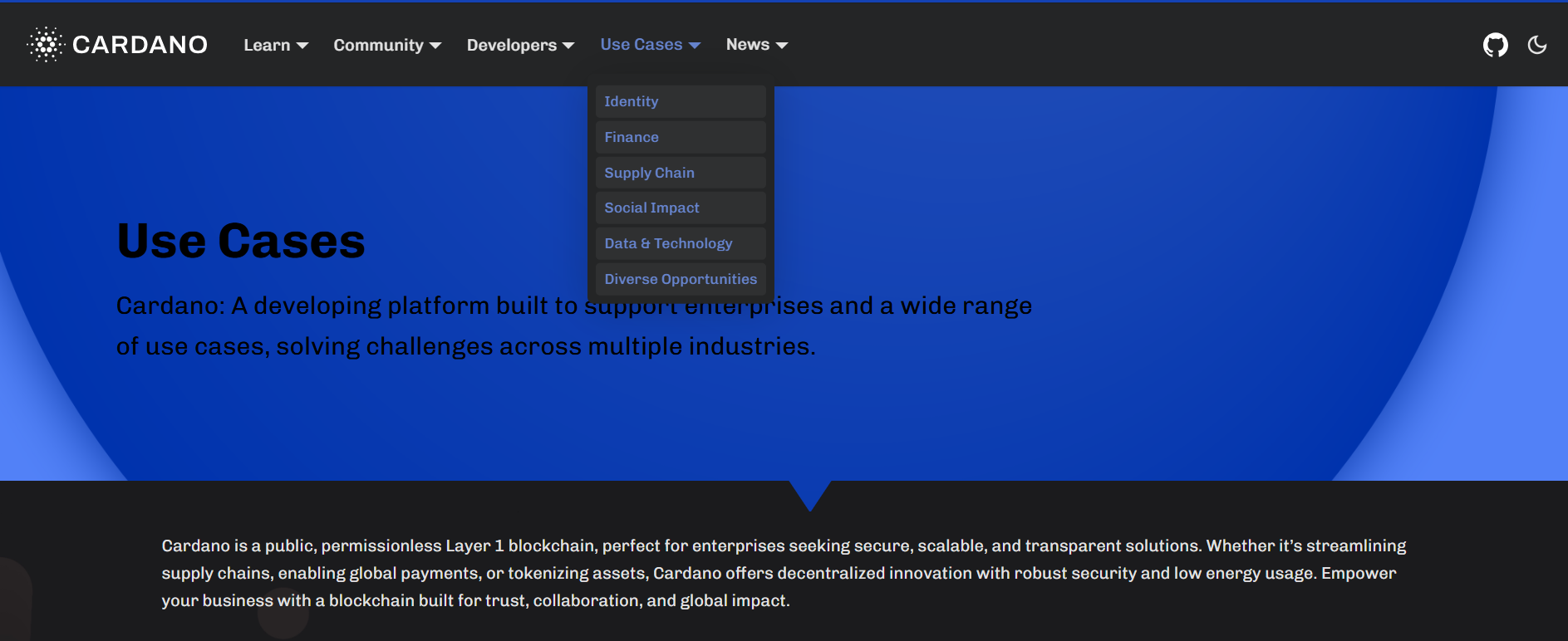
The Total Value Locked (TVL) in Cardano’s DeFi sector has reached $680 million, showing that more people are using it and the financial ecosystem is getting more mature. Using Cardano’s native token standard, NFT platforms like JPG Store and CardiFi have made more than 8 million NFTs.
There are many ways to use it, such as tracking a supply chain in a clear way, making financial contracts with the Marlowe smart contract language, managing subscriptions with projects like Revuto, and using cross-chain decentralized exchanges like ErgoDEX to connect with blockchains like Ergo.
Cardano’s network improvements, such as Layer 2 scaling with Hydra can handle more than 100,000 transactions per second (TPS) and its governance features. The improvement let stakeholders vote and manage the treasury on-chain, to give people more power. Overall, Cardano appears to be a safe, scalable, and long-lasting blockchain platform that can be used for a variety of purposes by both businesses and individuals.
Recent Developments and Future Plans for Cardano
Recent changes to Cardano have been mostly about improving its infrastructure and the way it is run. The Vasil hard fork was released in the middle of 2025 to make transactions go faster and smart contracts work better. This led to a small rise in developer activity. Pilot rollouts of the Hydra Layer 2 scaling solution have begun.
The goal is to speed up transactions and lower fees. The Project Catalyst governance framework has also kept giving treasury money to community proposals, with about $50 million going to them in 2025.
The Cardano Foundation has worked with EU and UK authorities on blockchain compliance frameworks. They have stressed the need for policies that are clear and encourage new ideas. Partnerships with businesses focus on identity verification and supply chain solutions, but these solutions are still in the early stages of being widely used in business.
In the future, the Voltaire era will be moved forward so that decentralized governance can happen, and Cardano will be more fully integrated with other blockchains through interoperability protocols.
These changes are a step toward scalability and decentralization, but there are still problems with the speed of adoption, competition from other blockchains, and unclear regulations. The ecosystem is still changing, and its growth depends on how well the upcoming upgrades and regulatory decisions are carried out.
Why Buy Cardano – Advantages & Disadvantages
| Advantages | Disadvantages |
|---|---|
| Strong focus on academic research and peer review for blockchain development. | Development progress can be slower due to rigorous academic approach. |
| Robust Proof-of-Stake consensus algorithm that is energy-efficient and secure. | Faces strong competition from faster and more established smart contract platforms. |
| Growing ecosystem with expanding DeFi, smart contracts, and dApp adoption. | Regulatory uncertainties may impact adoption and price stability. |
| Ongoing scalability improvements like Hydra aim to reduce transaction costs and increase speed. | Market volatility and price fluctuations can be significant. |
| Active and committed community with transparent governance through on-chain voting. | Success depends heavily on future technological adoption and ecosystem growth. |
Should You Invest in Cardano?
There are a number of things to think about when deciding whether or not to invest in Cardano (ADA), such as how much risk you’re willing to take and what your long-term investment goals are. Cardano has shown steady growth in its ecosystem, made recent technical improvements like the Vasil hard fork, and is still working on ways to make the network more scalable, like Hydra.
As we’ve predicted, the average price range for $ADA will be between $1.21 and $1.10. Analysts say that institutional interest and more DeFi activity on Cardano could be reasons why the price could go up. Cardano, however, has some problems to deal with.
For example, it has to compete with other smart contract platforms like Ethereum and Solana. It also has to deal with regulatory uncertainty, especially when it comes to how to classify securities. Finally, the rate at which developers are adopting Cardano is still slower than that of some of its competitors. Price changes are also something to think about, as ADA’s value is likely to change along with the rest of the crypto market.
Cardano Alternatives
Cardano’s market values show that there is a lot of interest and liquidity. However, forecasts say it could face some risks going into 2026, with prices potentially dropping to the $0.46–$0.72 range. This could lead to big losses in market cap. This is partly because Ethereum, Solana, and other new smart contract platforms are becoming more popular.
Another risk is that new technologies might not work as planned. If Cardano has problems with upgrades like the layer-2 scaling proposed by Hydra, it could slow down the growth of the network and lower the demand for ADA tokens.
There is also a lot of uncertainty about regulations. If the US Securities and Exchange Commission (SEC) decides that ADA is a security, it could have legal consequences and make investors less confident. Besides, the Cardano platform’s decentralized applications (dApps) may take longer to gain popularity than those of its competitors, which could hurt long-term network implications and price efficiency.
Overall, Cardano’s price outlook is still at risk from technical, regulatory, and competitive issues in the near future, even though it has strong fundamentals and a research-based approach. So alternative presales like Maxi Doge or Bitcoin Hyper could outshine Cardano in the long run.
Maxi Doge: The Strongest in the Doge family
After seven years, Maxi Doge, the doge who pumps and trades, is back to change the way people live. The presale is going on right now, and within just two days it raised more than $200,000. Word on the street is that whales assisted gym bro Doge secure $100,000 in minutes. So, there is definitely a lot of hype.
Maxi Doge ($MAXI) is an Ethereum-based ERC-20 meme coin that combines humor with unique blockchain features. Initially launching on Ethereum, the project plans to explore interoperability with other chains like Binance Smart Chain or Solana, potentially expanding its blockchain footprint.
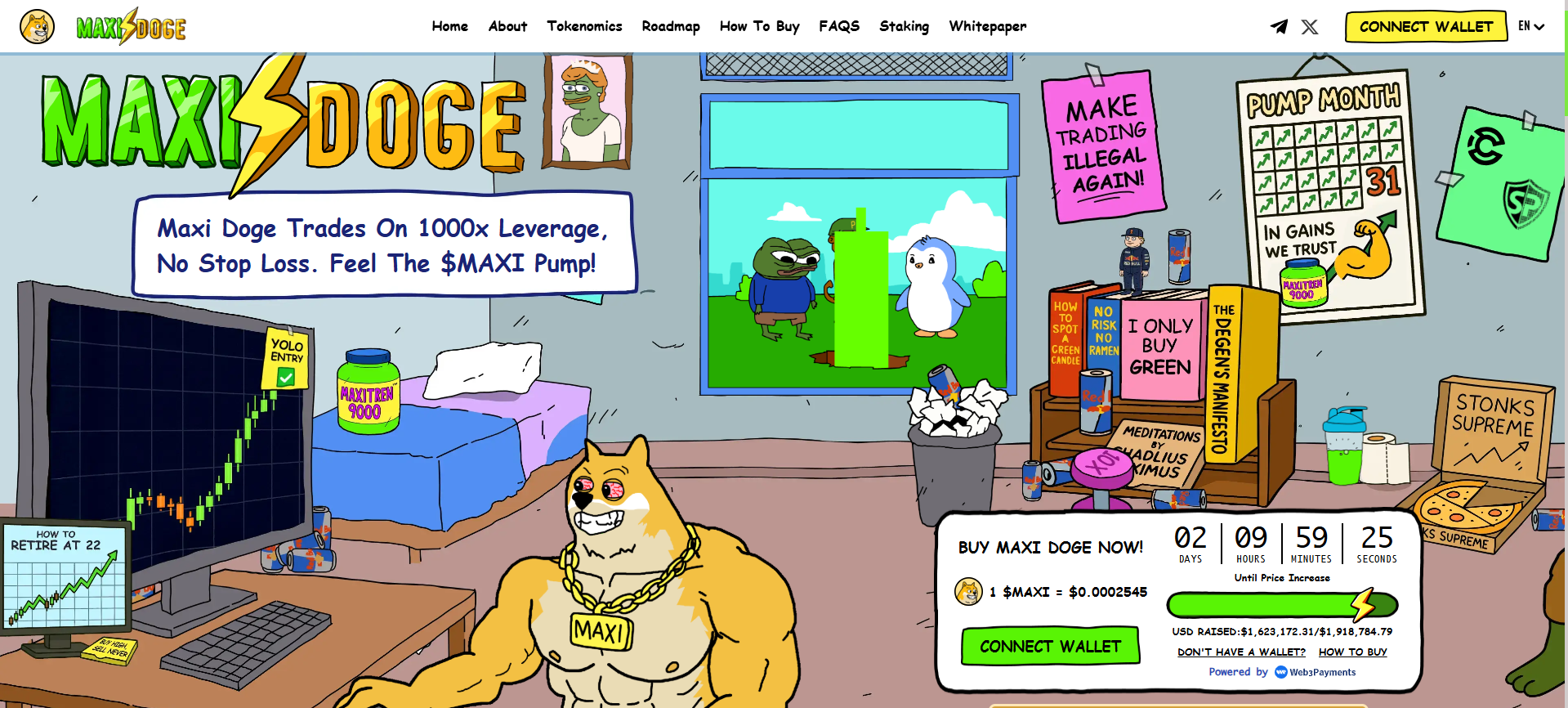
Maxi Doge ($MAXI) has a growing community support and useful features. The current price for the presale is $0.0002545 per token, and it has already raised more than $1.6 million. According to Maxi Doge price prediction, $MAXI could hit $0.0010 by 2030, which would be more than 300% growth since it goes public.
Maxi’s distinct business aspect lies in a high-yield staking mechanism that allocates 5% of tokens for rewards, currently offering an APY over 2500% to early supporters, encouraging long-term holding.
Besides staking, Maxi Doge reserves 25% of its supply in a “MAXI Fund” to secure futures trading platform listings, enabling leveraged trading up to 1000x. Leveraged tokens like these target sophisticated traders and boost liquidity and adoption. The project also focuses on gamified trading contests and community events, fostering engagement and trader rewards. Here’s how to buy Maxi Doge.
Tokenomics
$MAXI calls itself a “lifestyle asset” because it is based on an active trading culture instead of passive staking.Its tokenomics show that it has symbolic value based on momentum and participation. Instead of yield farming, it pushes a “Proof of Workout, Proof of Winning” model that traders who like volatility and action will like.
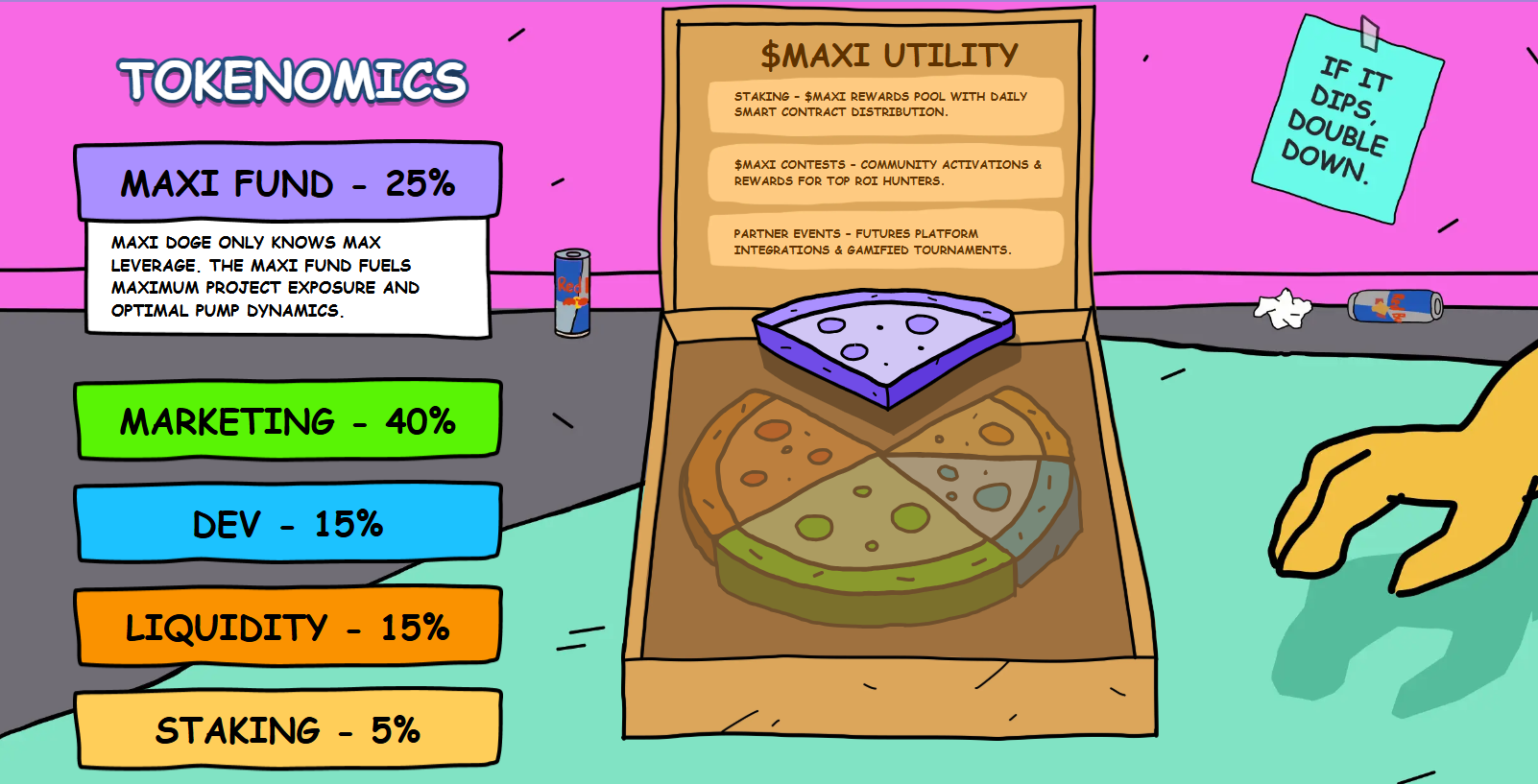
There were 150,240,000,000 tokens when the token first came out on the Ethereum network. 40.00% (60,096,000,000 tokens) of this goes to presale, which is split up into 50 phases. The presale aims to end at $0.00027450 per token, to raise over $15M. So far, over $1.6M has been secured.
Key Characteristics
- Maximum strength and the ability to leverage 1000 times
- Meme culture and the “trading degen” mindset come together
- Persona of a “ultra-ripped alpha Doge” who wanted to do better than Dogecoin
- Promotes discipline, taking big risks, and market momentum
- Made to encourage traders to compete with each other
Bitcoin Hyper ($HYPER)
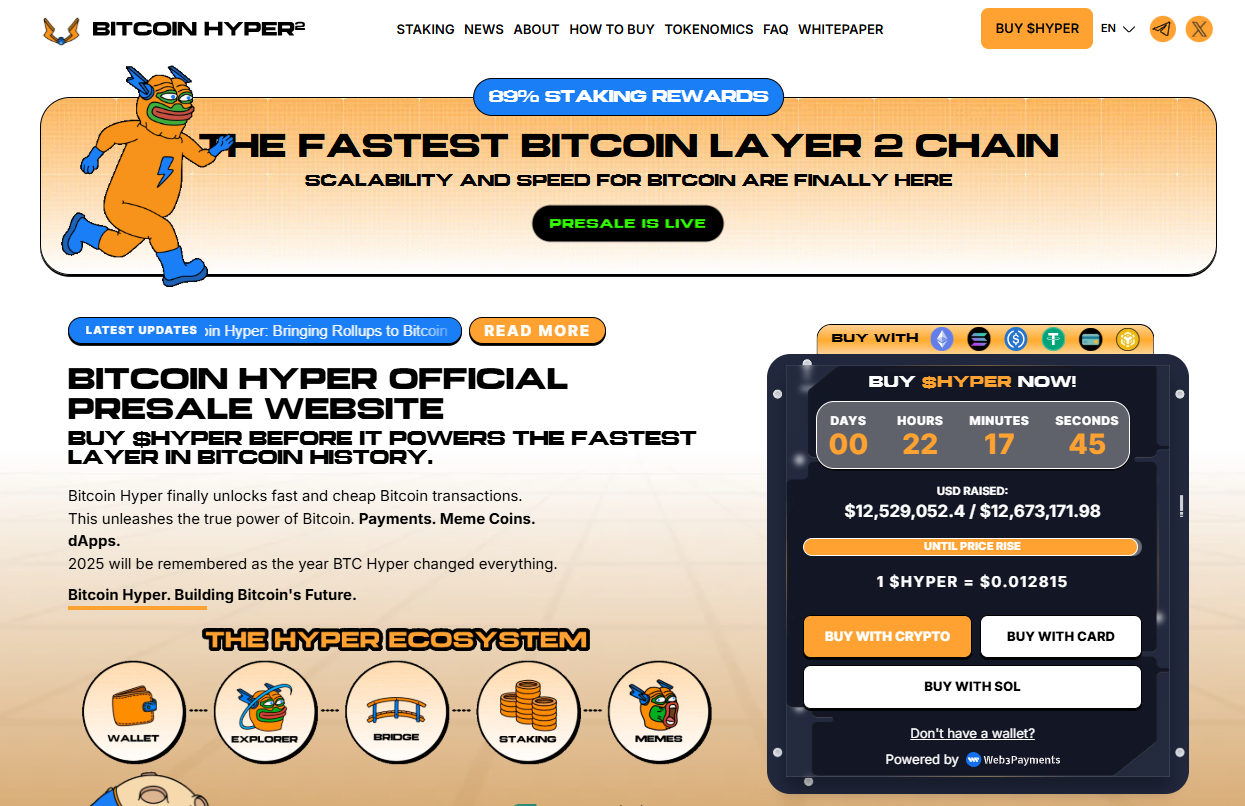
Bitcoin Hyper ($HYPER) is a Layer-2 blockchain currency currently in presale. It could become a cutting-edge alternative to Cardano with a focus on making Bitcoin more scalable. The price for the current presale stage is $0.012815 per token.
Bitcoin Hyper has raised more than $12.5 million, which shows that investors are very interested. Price predictions suggest the token could be worth $0.0395 by 2030, which would be more than 200% growth since it will first get listed.
Why is it unique? Although Bitcoin Hyper bases on the native Bitcoin blockchain, it uses Solana Virtual Machine (SVM). It means the coin can run decentralized applications (dApps) and smart contracts with the high speed and low costs characteristic of the Solana network, all while retaining the security of the Bitcoin blockchain.
The presale has gotten a lot of attention because it offers high staking rewards, with up to 150% APY. The token’s stable supply and growing ecosystem make it a strong candidate in the changing Layer-2 environment. Learn how to buy Bitcoin Hyper.
Tokenomics
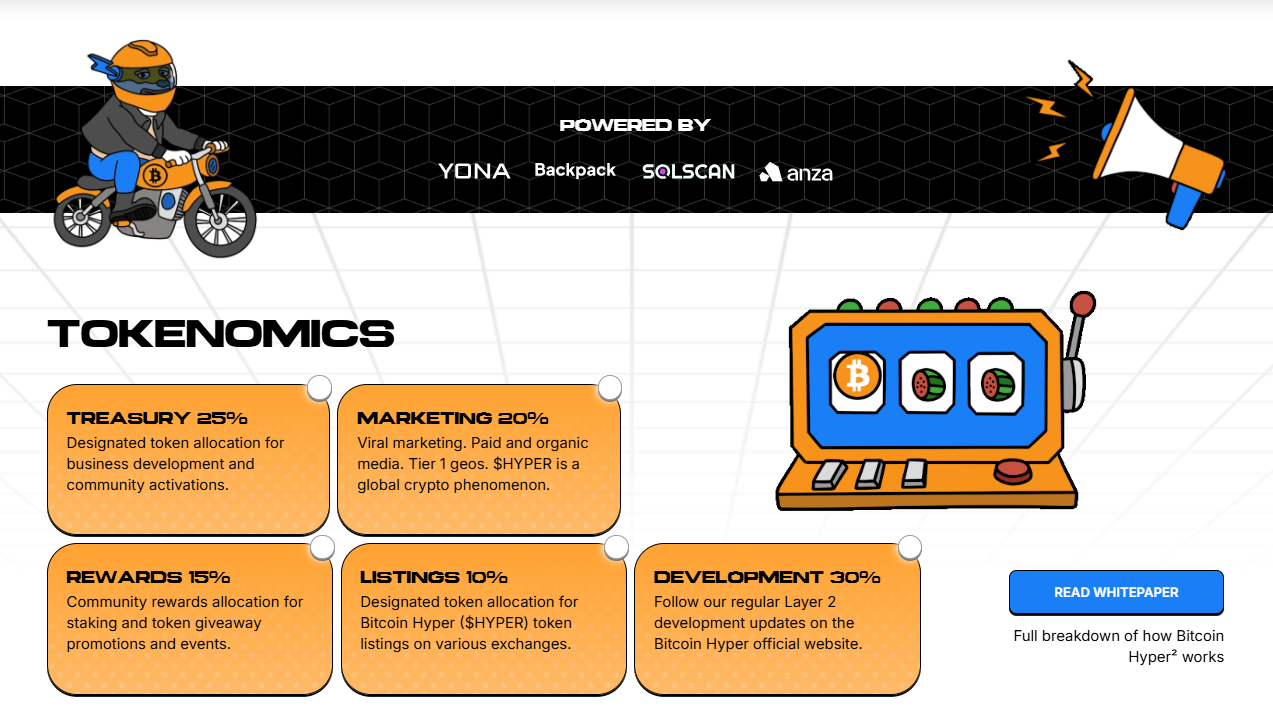
A quarter of the tokens are held by the Treasury, which uses them for community engagement and business development projects. 20 percent goes to marketing, which focuses on viral campaigns that target Tier 1 global geographies using both paid and organic media.
15% of tokens are used for community rewards, which are used for promotional activities, token giveaways, and staking rewards. While 10% of listings are allotted to make sure the $HYPER token is listed on several exchanges, increasing liquidity.
But the majority, 30%, funds ongoing advancements in the Bitcoin Hyper Layer-2 solution. These are dedicated for quicker and less expensive Bitcoin transactions.
21 billion $HYPER tokens are the fixed total supply. In order to create a sustainable ecosystem around the token, this structured allocation attempts to strike a balance between project growth, community engagement, marketing reach, and technological advancement.
Key Characteristics
- Bitcoin Layer 2 solution with Solana Virtual Machine, enabling ultra-fast, low-cost transactions.
- Supports staking with high APY rewards above 150% to incentivize holders.
- Combines meme coin appeal with real utility through smart contracts and DeFi.
- Uses Proof-of-Stake consensus for energy-efficient transaction validation.
- Provides cross-chain interoperability and a trustless BTC bridge for seamless asset transfers.
Where to Buy Cardano?
Using a trustworthy and secure wallet made especially for ADA management should be your top priority when deciding where to purchase Cardano ($ADA). The best wallets combine purchasing, storing, staking, and using Cardano’s decentralized apps in a smooth manner.
Best Wallet is without a doubt the best Cardano wallet of 2026. Being among the best Web3 wallets on the market, DeFi apps, multi-asset support, and staking delegation.
Using Best Wallet allows you to buy ADA, manage assets efficiently, and take part in Cardano’s growing ecosystem without having to concentrate on a single exchange.
We’ve reviewed Best Wallet and it’s the best platform on the market to trade $ADA right now. Here’s a quick guide to get you started with Best Wallet.
How to Buy Cardano – Step-by-Step Guide
Cardano is available on most major exchanges. To get started, you’ll need a wallet first. A crypto wallet keeps your keys secure. Plus, it lets you trade, explore DeFi apps, visit Dexes, and use various useful features, depending on the wallet. We recommend Best Wallet for the most seamless trading experience. Here’s how you can buy Cardano with Best Wallet.
Step 1: Install and Set Up Best Wallet
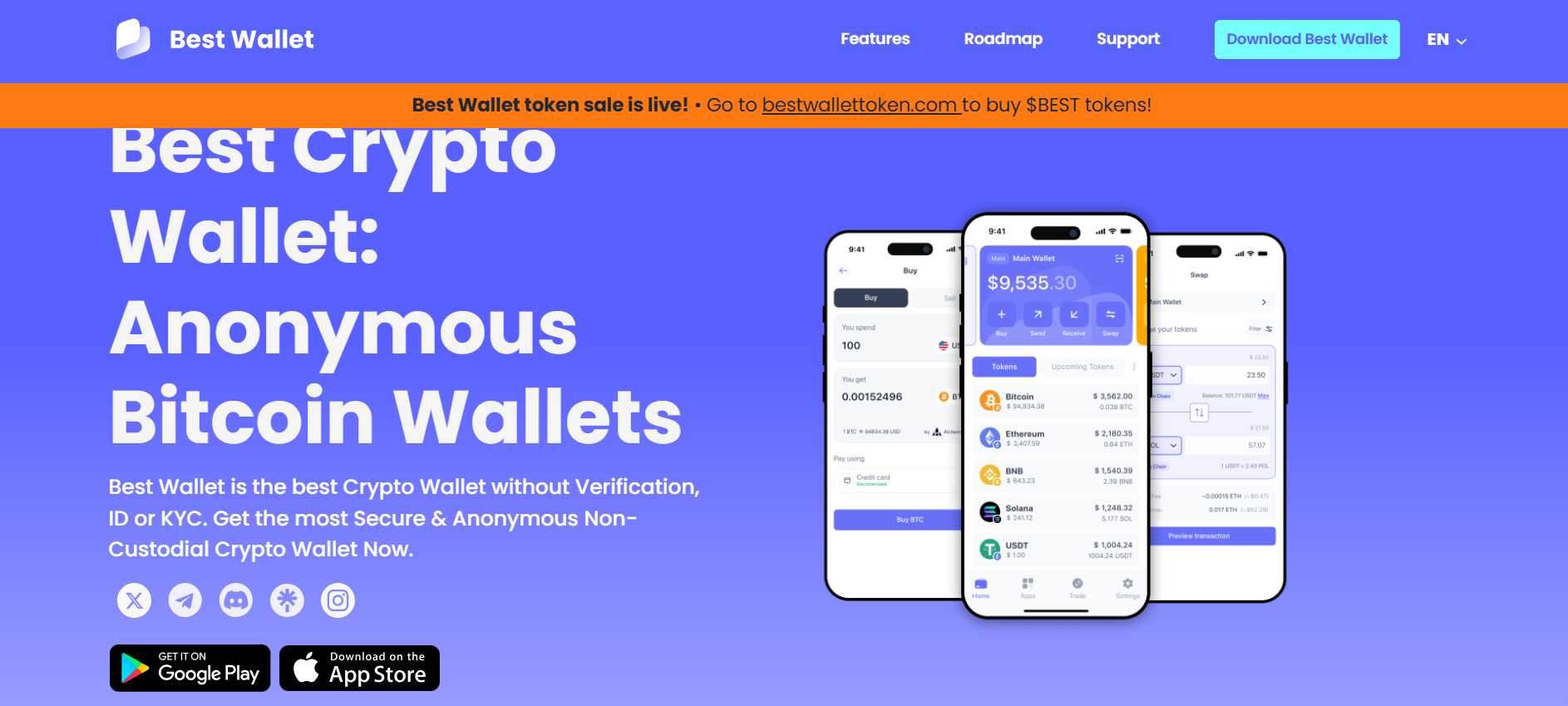
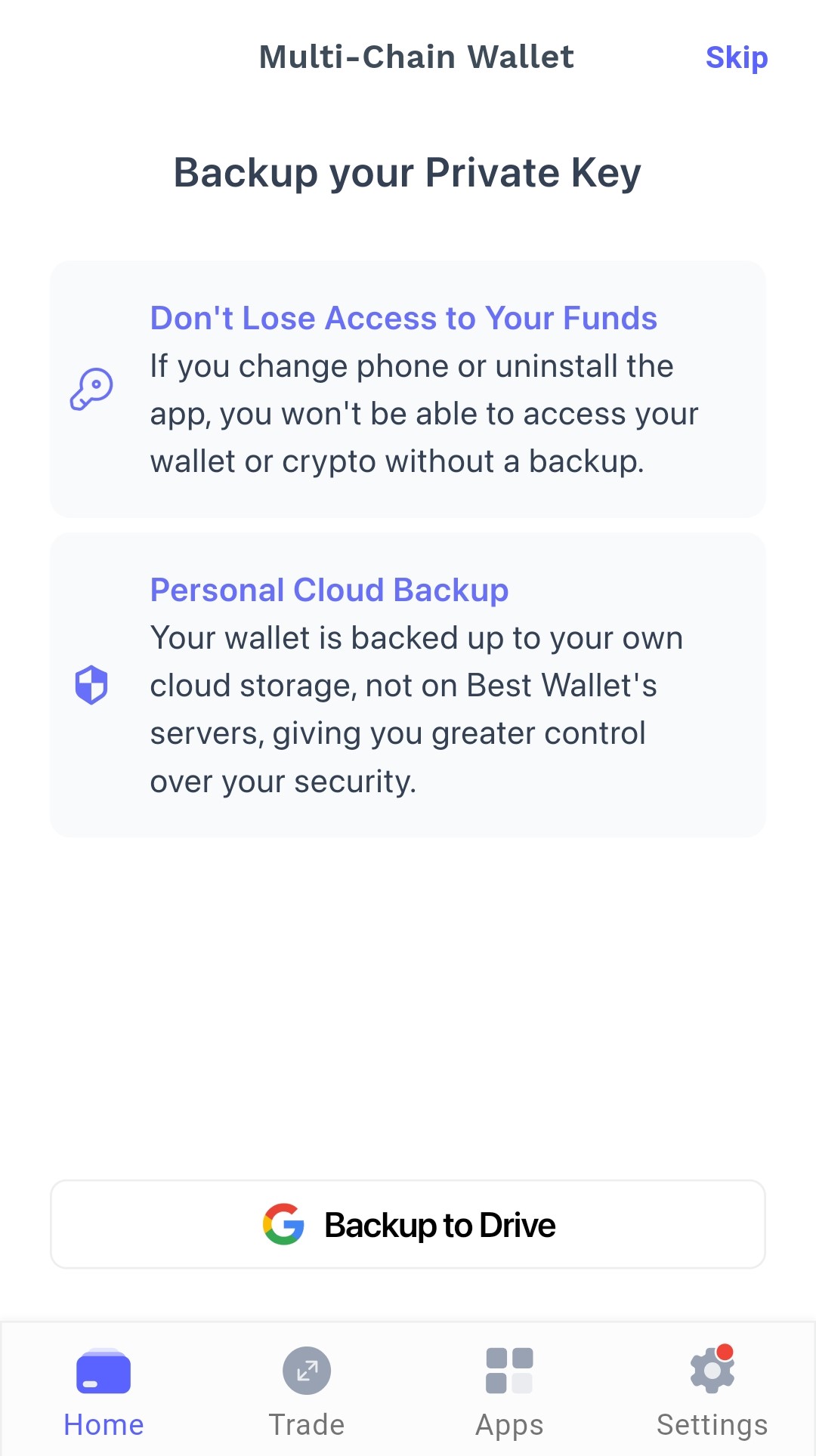
The first step to safely storing and managing Cardano is to make a crypto wallet. Instead of relying on other people, a wallet permits you complete control over your personal information and assets. Best Wallet is a great choice for people who want a reliable and easy-to-use option to start with. Once it’s installed and set up, it will give you a unique address to send and receive ADA tokens.
How to Create a ‘Best Wallet’ Account
Making an account with Best Wallet is a breeze. To open your first multi-currency account, just follow these easy steps.
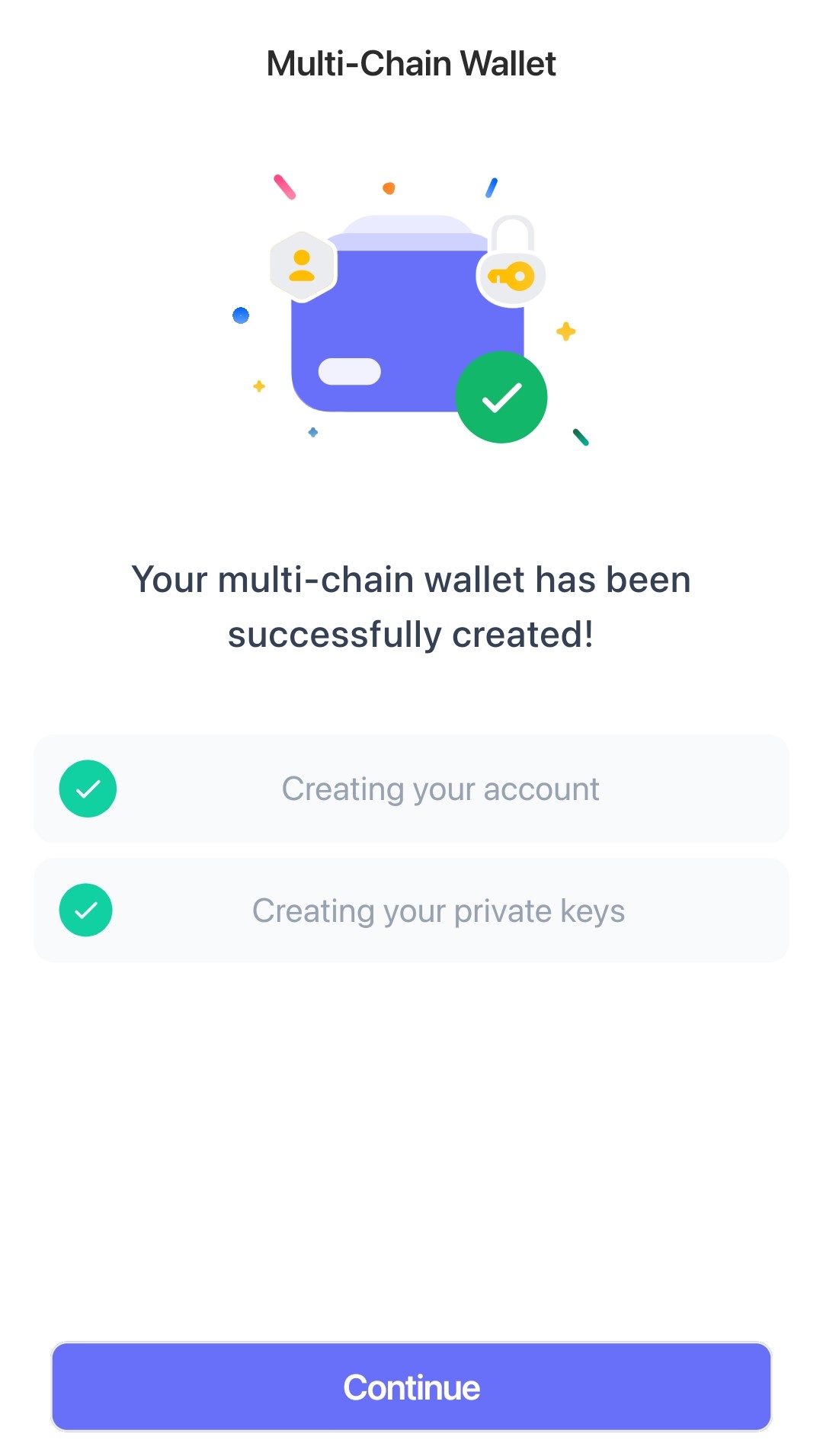
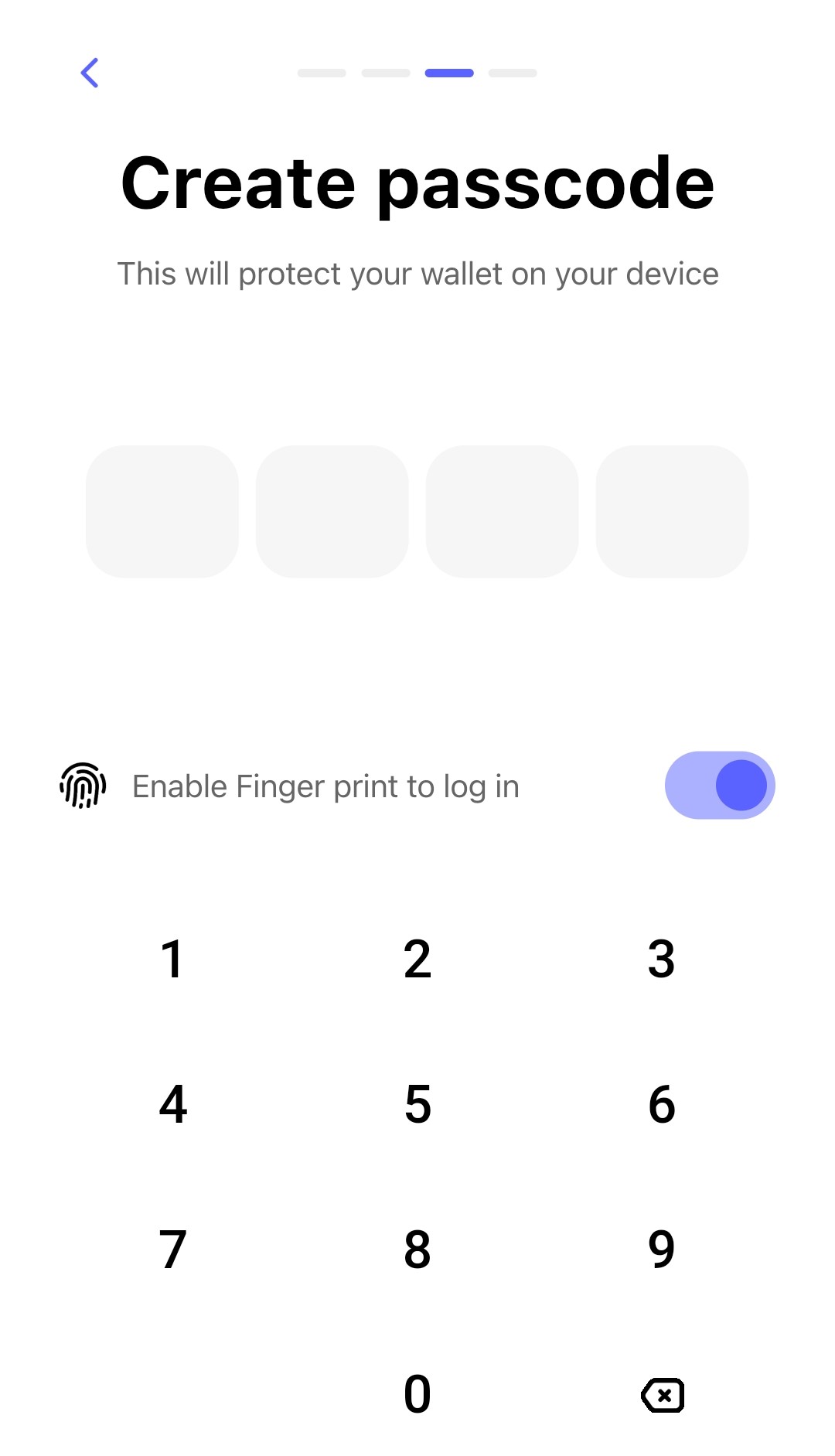
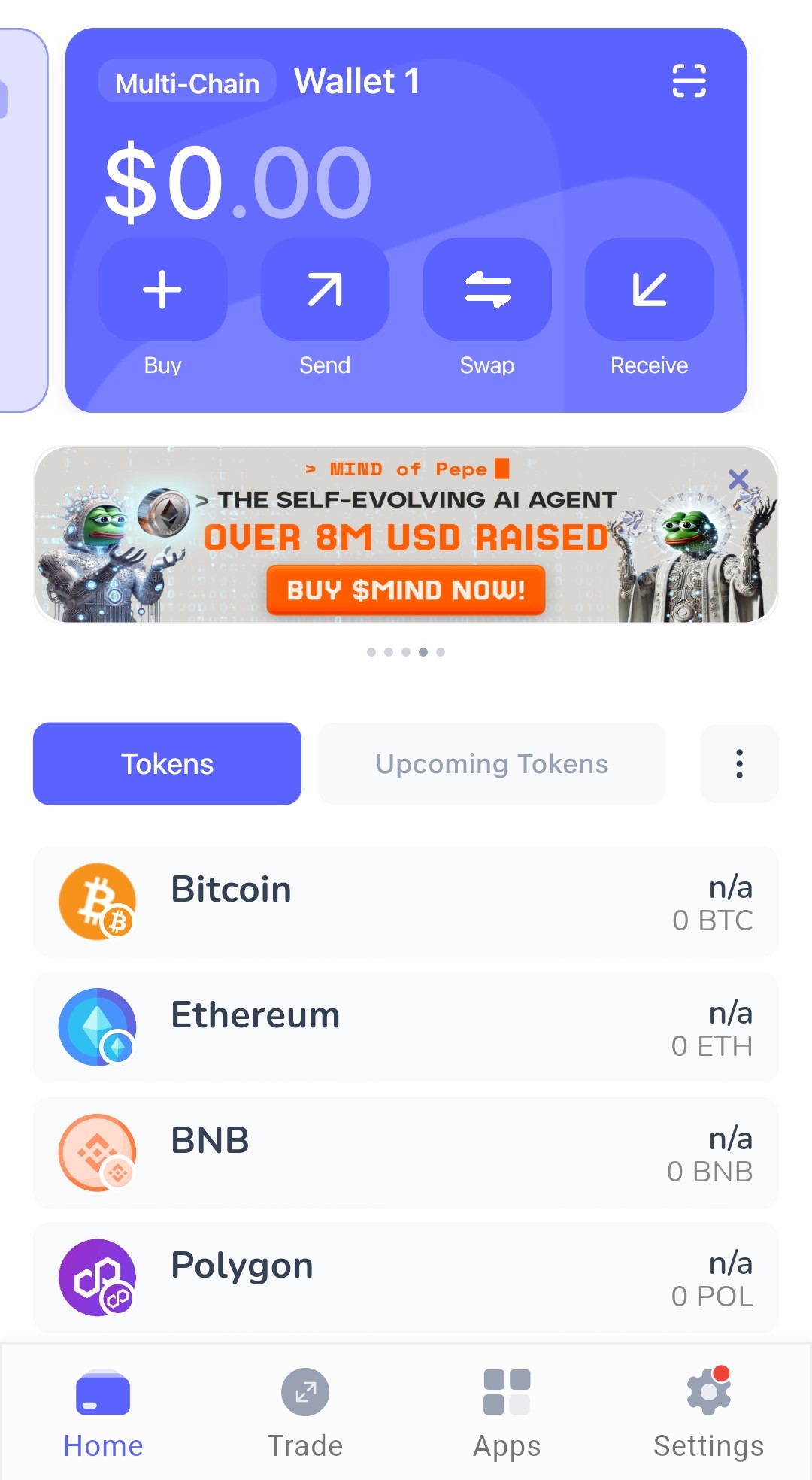
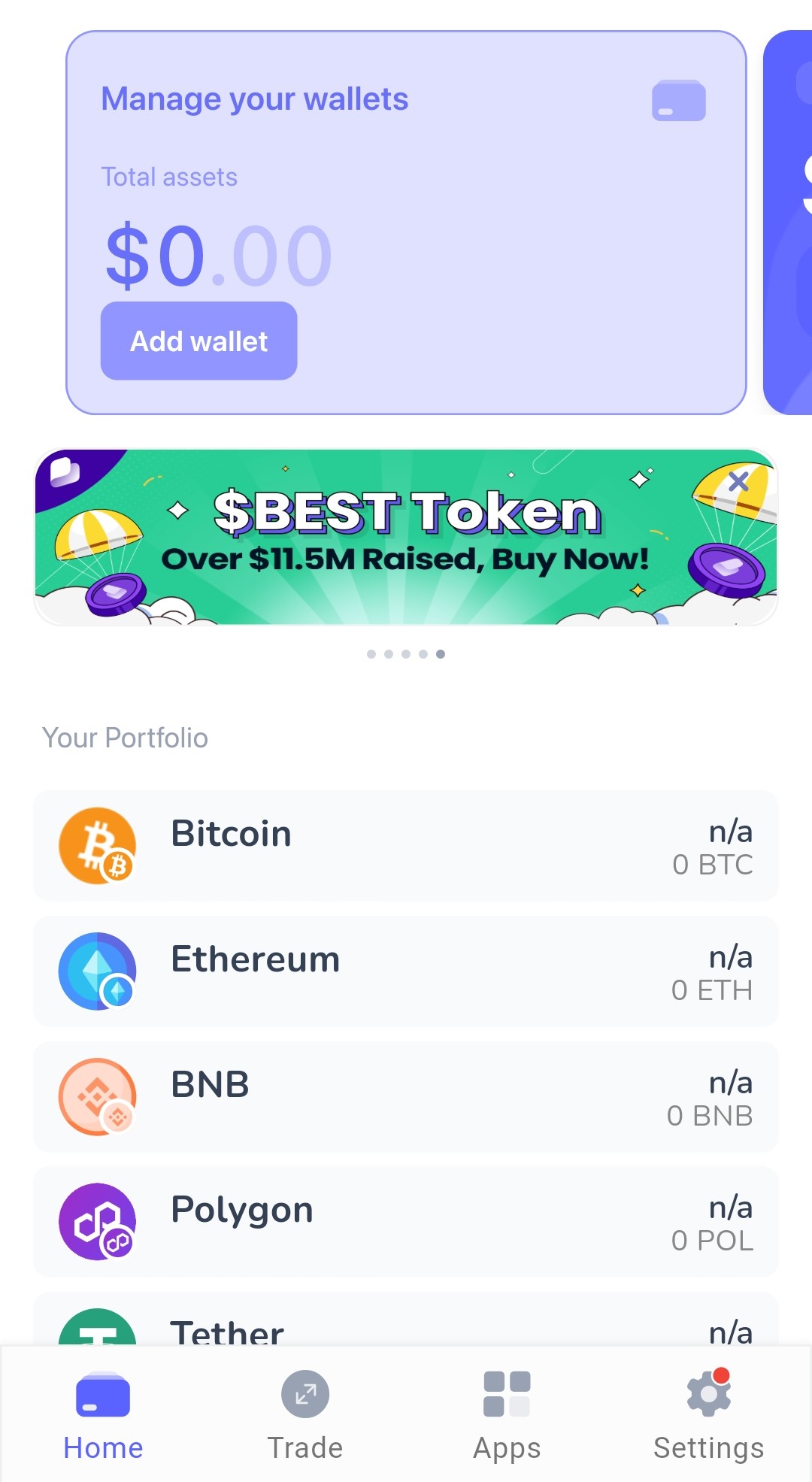
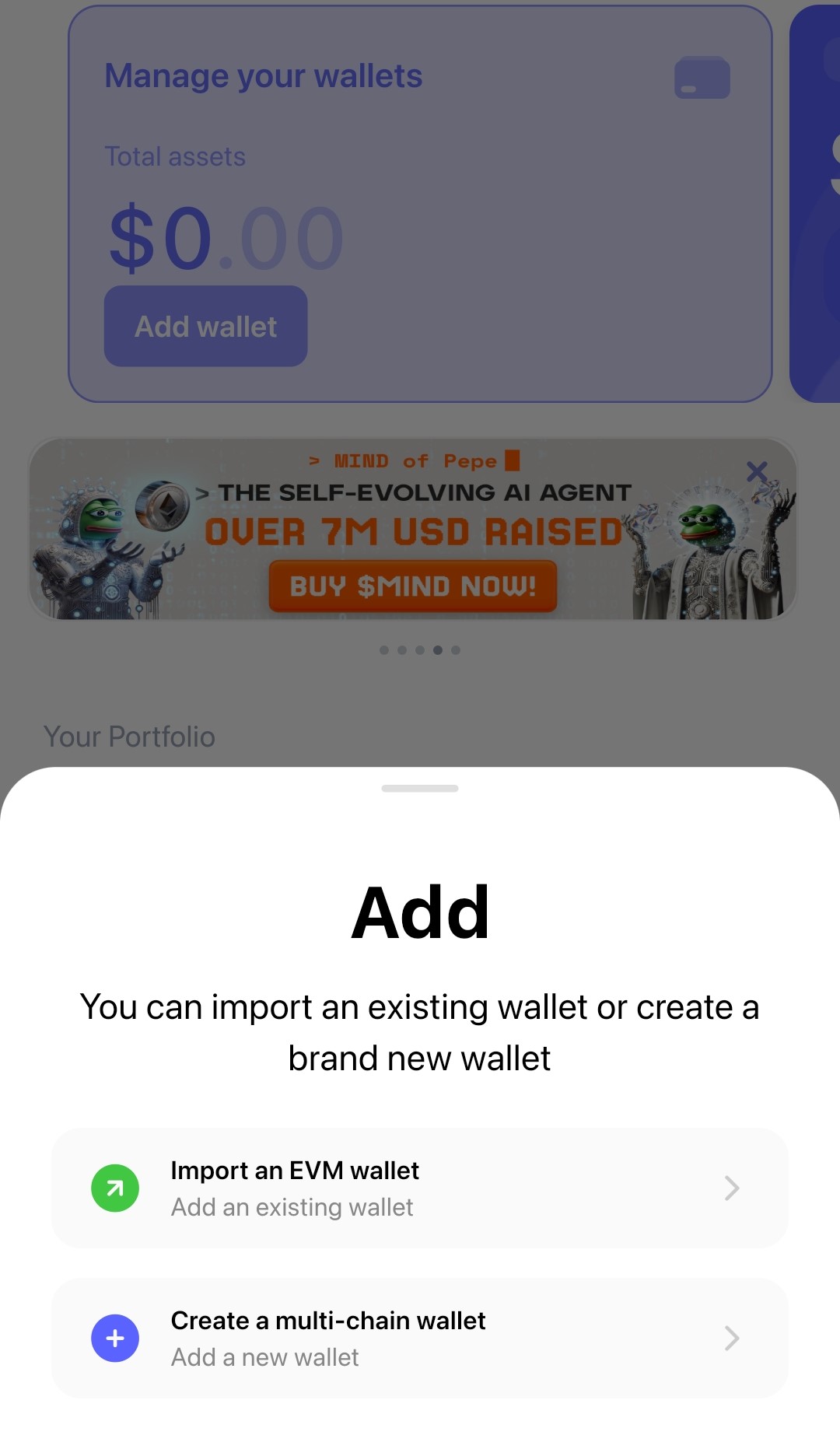
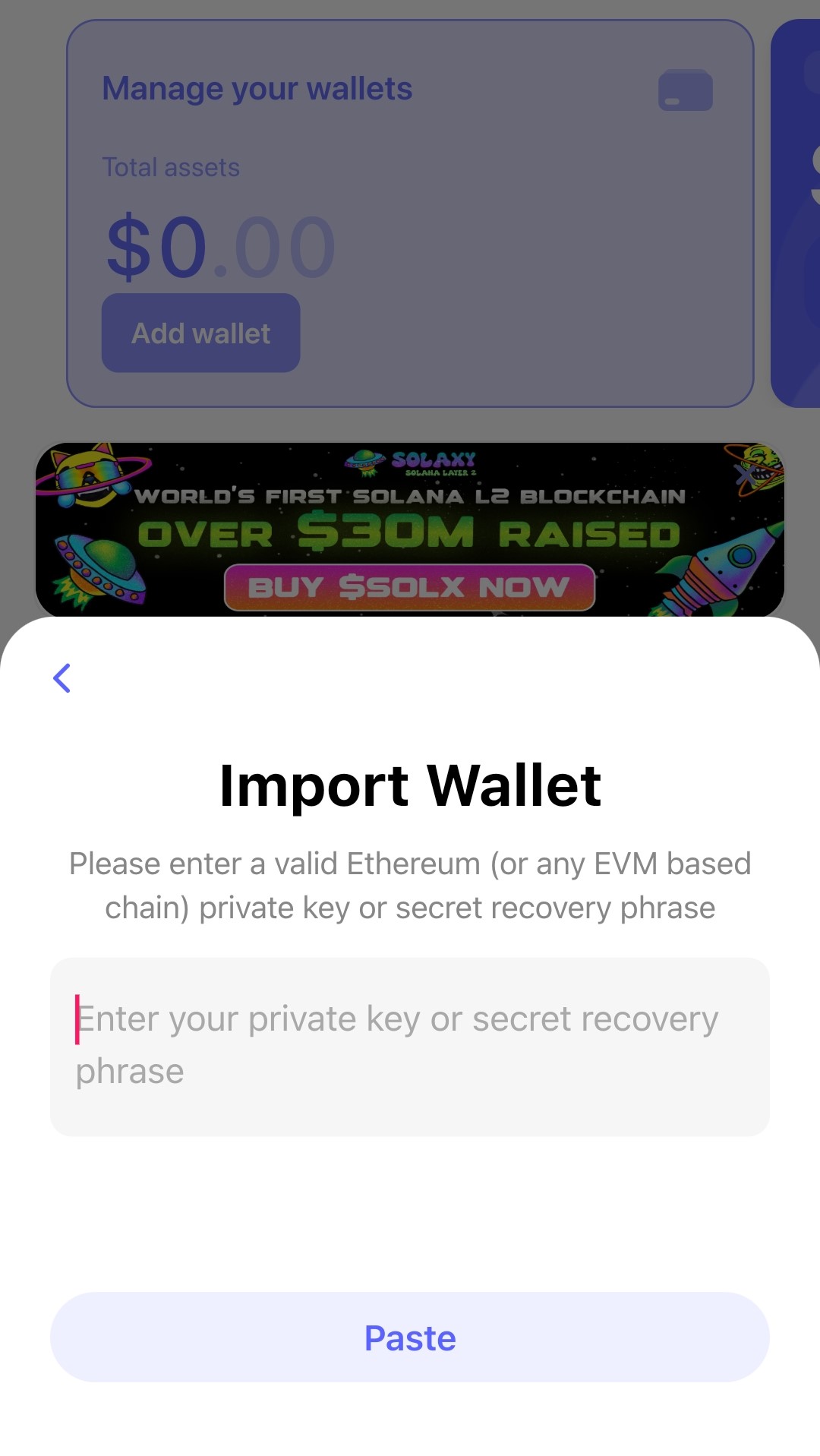
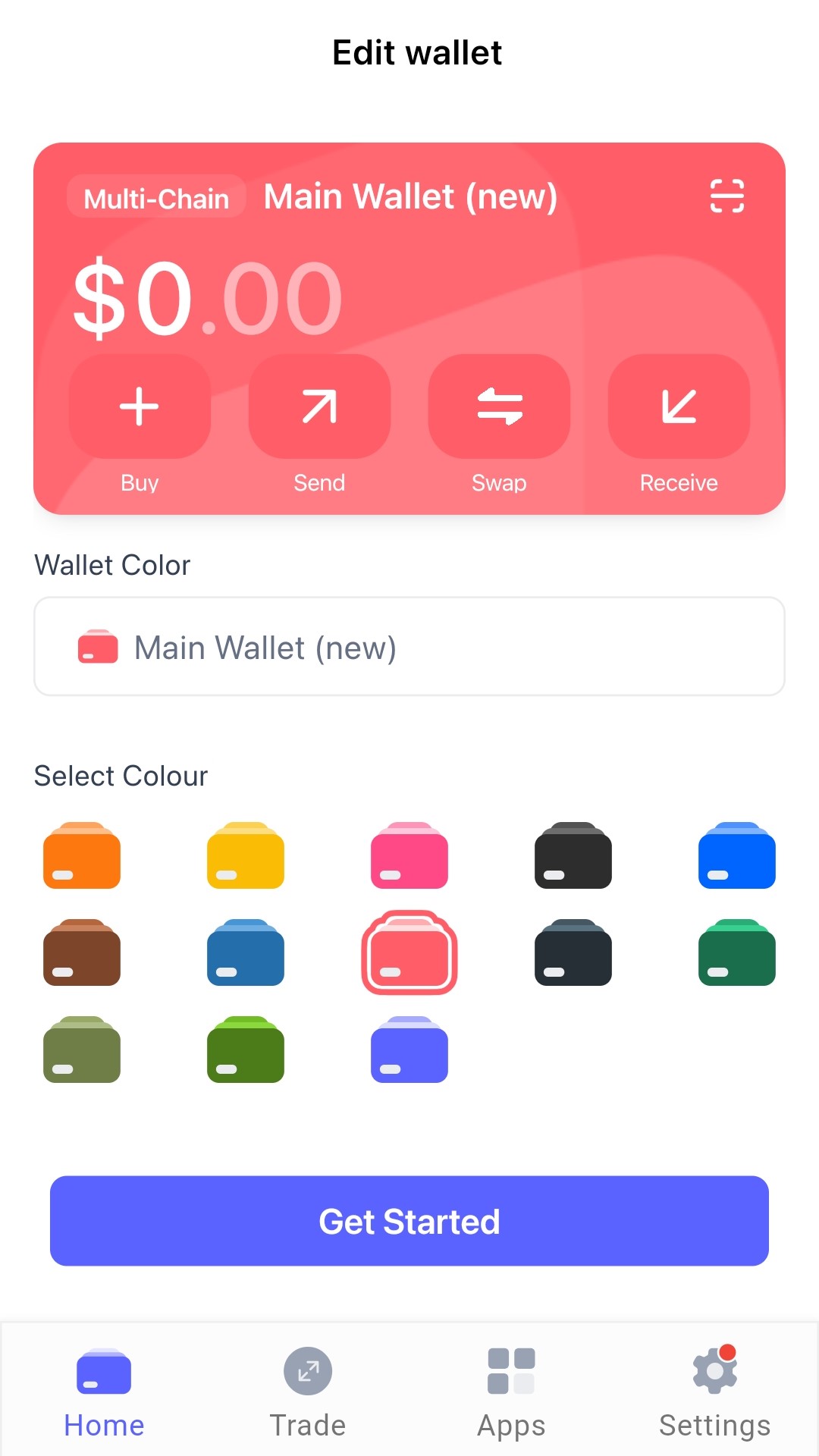
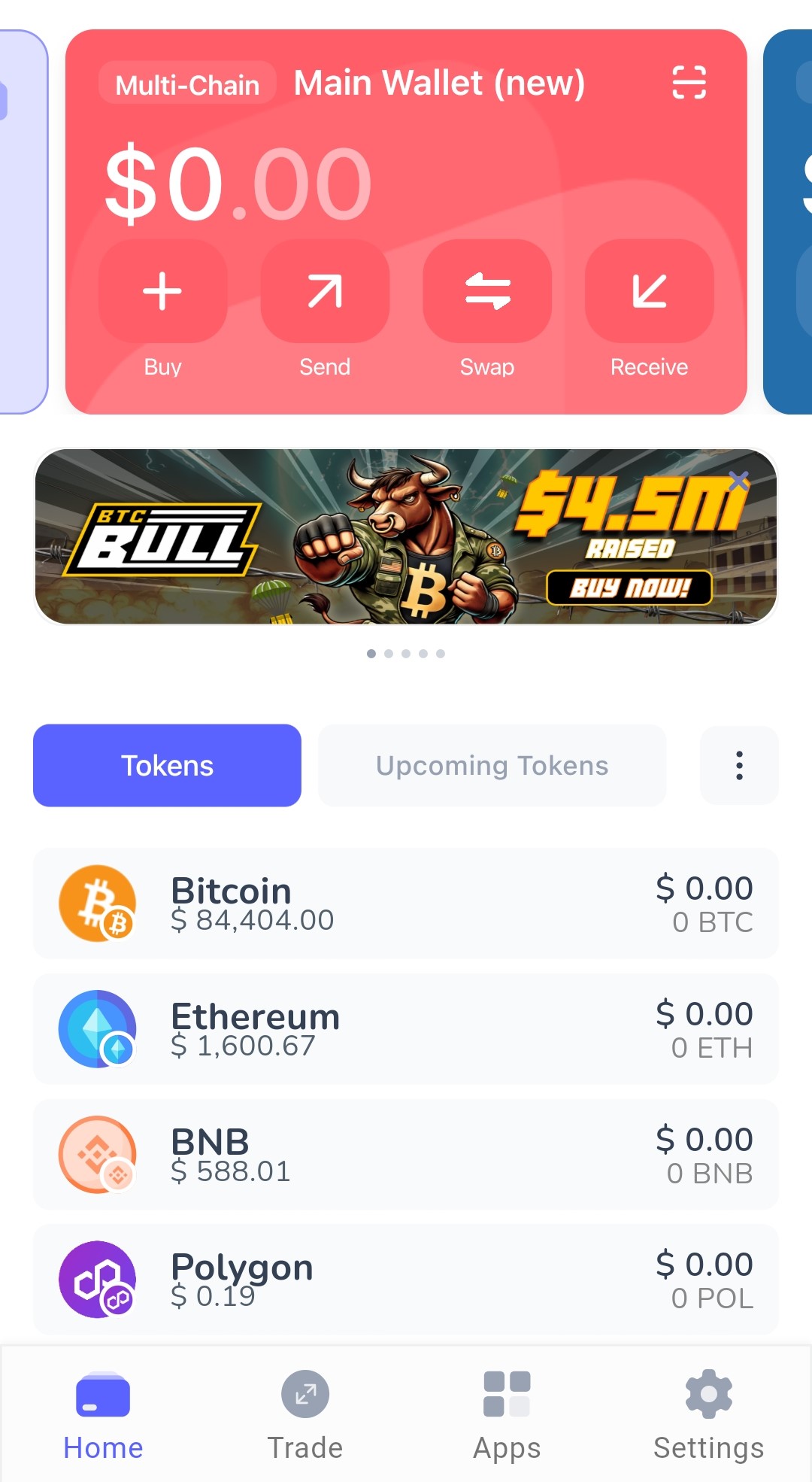
The Best Wallet page can be accessed by clicking the link below. There you can download the app. The Google Play Store and the Apple App Store both provide download options. Proceed as directed by the on-screen prompts. The default wallet will request your personal email address. Ensure that the 4-digit passcode is distinct and can only be accessed by you. On the ‘Home’ tab, swipe right on the wallet and select ‘Add Wallet’. Use your recovery phrase to import your EVM-compatible wallet. Name your wallet, pick a theme, and you’re all set. 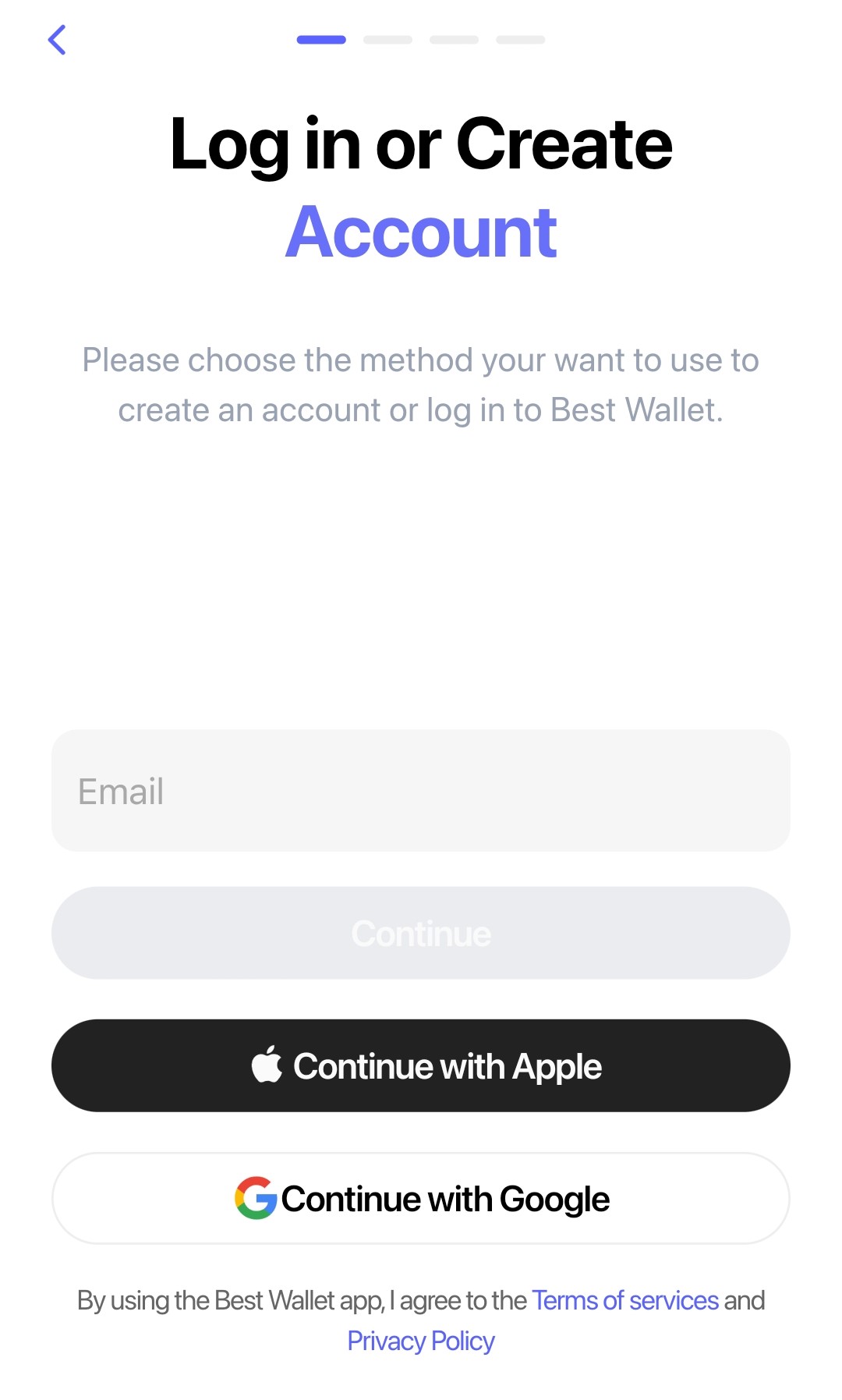
Step 2: Buy $ADA from Best Wallet Dex
Next, choose how you want to buy Cardano. Most of the time, investors buy ADA through centralized trading platforms, decentralized exchanges, or broker services. Each option has its own fees, ease of use, and level of custody control. It’s important to choose one that meets your needs, whether you want simplicity, privacy, or direct ownership of your assets.
Step 3: Move $ADA to Your Wallet
After you buy ADA, move it from the platform where you bought it to Best Wallet to keep it safe. This step makes sure that you still have control over your money and not the exchange or middleman. You can then send, receive, or stake your Cardano safely over time with Best Wallet or any other wallet you choose.
Note: The Best Wallet has its own “Best Wallet Ecosystem” and its native “Best Wallet Token,” referred to as $BEST. You can save a lot of money on gas fees when you trade $ADA with $BEST compared to other tokens or marketplaces.
Cardano Price Prediction – Conclusion
Although Cardano still maintains a bullish momentum, it faces strong competition from Bitcoin, Ethereum, and Solana-based cryptocurrencies. These alternatives are increasingly innovative, open to a broader market, and gaining more public acceptance. Besides, Cardano’s potential legal issues pose a risk to user anonymity and the overall decentralized market.
If you prefer long-term staking with higher yield potential, invest in an asset that’ll potentially see more percentage growth, such as Maxi Doge and Bitcoin Hyper. Concentrated investments in smaller-cap tokens built on the latest technologies could offer a signficantly better return.