

 Some of the links on this site may be affiliate links. ICOBench may receive advertising commissions when users visit recommended platforms via our affiliate links, at no additional cost to you. All recommendations are based on a comprehensive review process.
In Trump crypto news today, Senate Republicans released an updated CLARITY Act floor draft on July 22, 2026, which prohibits the President, Vice President, members of Congress, and their spouses from issuing digital assets.
The draft is set to expire on August 8, coinciding with the Senate recess, and must secure seven Democratic votes to surpass the 60-vote cloture threshold.
If you're wondering why the market is green today:
The ethics clause on the CLARITY Act appears to be resolved.
That single provision, the conflict-of-interest rule around government officials' crypto holdings, is what held this entire bill hostage for months. Democrats pushed… pic.twitter.com/TFfMX1xW6e
— Simon Dedic (@sjdedic) July 21, 2026
Initially introduced as H.R. 3633, the Digital Asset Market Clarity Act of 2025, it passed the House with bipartisan support.
However, as of July 17, 2026, no Senate Democrats publicly supported the bill, raising questions about whether the new ethics provisions will win them over or if the bill is merely political theater.
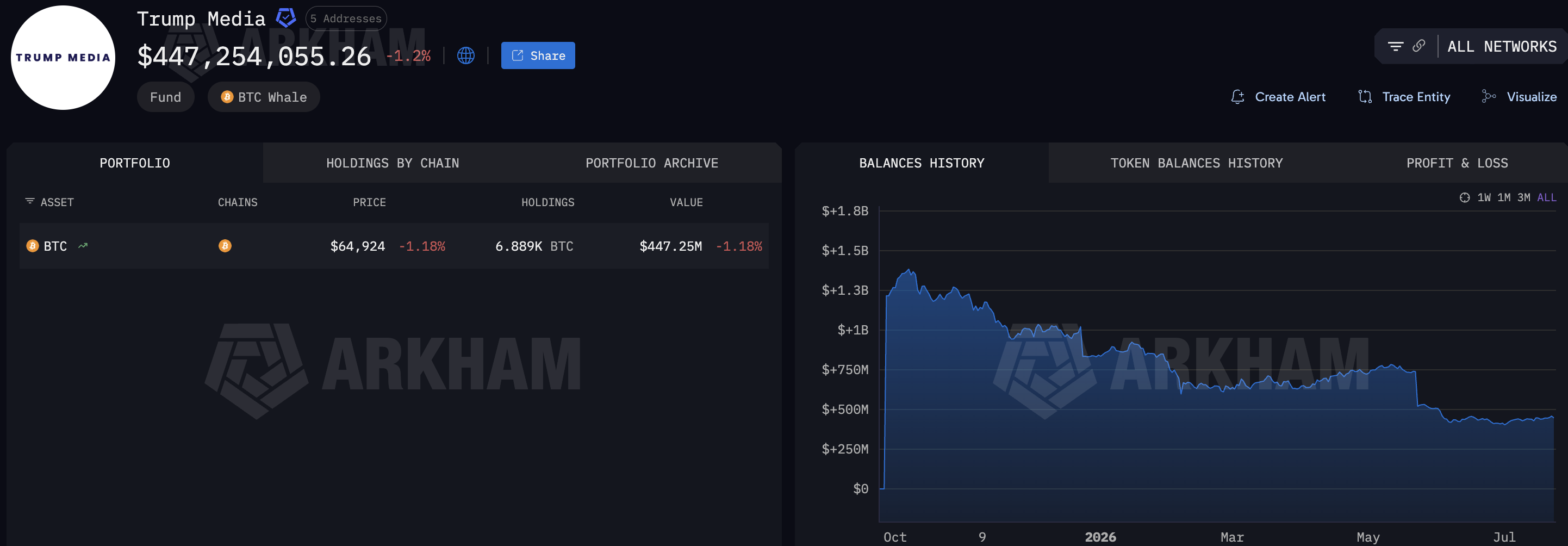
Trump Crypto: What the Senate’s Crypto Ban Actually Reveals About the President’s $1.4Bn Conflict
The updated Senate draft includes ethics provisions for the President, Vice President, and members of Congress, along with their spouses, prohibiting them from issuing digital assets during the enforcement period.
This measure aims to eliminate potential workarounds, but it does not meet the stricter standards sought by Democrats.
Notably, Trump’s existing crypto ventures are allowed to continue, and officials have over a year to place their crypto interests into a blind trust.
Amanda Fischer, former SEC chief of staff, highlighted that the draft doesn’t restrict earning trading-fee or reserve-asset income, leaving significant conflicts of interest unaddressed.
This impacts the ability of senators like Chris Murphy and Kirsten Gillibrand to assure their constituents of meaningful reform.
Cody Carbone, CEO of the Digital Chamber, noted that the ethics issue is crucial for bipartisan support, with Democrats considering it a key threshold.
Even pro-crypto voices like NYU’s Austin Campbell described the ethics framework as inadequate, underscoring its significance within the industry.
Loopholes and Enforcement Gaps: What the Sunset Clause Actually Reveals About the Bill’s Democratic Coalition Problem
The key issue with the ethics provisions is their structural unenforceability after January 20, 2029. This sunset date means that any future administration cannot enforce rules against conduct that occurred before this date.
Critics point to three loopholes that align with Democratic vote calculations: First, the Trump crypto ventures allow a $1.4Bn revenue stream to persist, undermining accountability promises.
Second, the blind trust timeline exceeds one year, allowing officials to remain active without separation during a crucial period. Third, the framework expires just as a new administration could begin to enforce it.
Polymarket odds for Senate passage rose from 24% to around 45% after the text was released, indicating improvement but still reflecting unresolved core Democratic concerns.
For senators in competitive states, the current text complicates their ability to demonstrate real progress in addressing presidential conflicts of interest in crypto legislation.
The 60-Vote Threshold and August 8 Deadline: What the Senate Floor Math Actually Reveals About the Bill’s Passage Probability
Democrat opposition to the historic ethics provision in the Clarity Act appears to take one of two forms, either:
(1) An ethics provision that lacks enforcement by state AGs is meaningless.
(2) An ethics provision that does not penalize President Trump for prior crypto…
— Patrick Witt (@patrickjwitt) July 22, 2026
In other Trump crypto news, Senate Majority Leader John Thune plans to bring the CLARITY Act to a vote during the week of July 20, with the August 8 recess as a key deadline.
The bill requires 60 votes to end debate, meaning Republicans need at least seven Democrats to support it, while also ensuring no GOP defections.
The CLARITY Act is significant for the digital assets industry, as it gives the CFTC exclusive authority over digital commodity spot markets while allowing the SEC to oversee investment-contract assets.
The Senate version includes nine policy titles related to securities, illicit finance, DeFi, and more, with an insider trading section and an insolvency safe harbor.
Senate Banking Chairman Tim Scott aims to move the SEC-related portion by September 30, and the Senate Agriculture Committee is expected to release its draft on digital commodities in early September.