




 Some of the links on this site may be affiliate links. ICOBench may receive advertising commissions when users visit recommended platforms via our affiliate links, at no additional cost to you. All recommendations are based on a comprehensive review process.
The Bitcoin advance from roughly $64,000 on August 18 to above $80,000 by August 25 amounted to a gain of about +24%, according to CoinGecko data. The move followed a gain of more than +20% in three days last week, its biggest three-day advance since 2023.
CoinDesk Research examined whether the rally was accompanied by stable order-book liquidity. Its data showed that average 0.5% market depth across major spot exchanges remained broadly stable during the climb.
The CoinDesk report noted that August is typically the thinnest month for liquidity in crypto and traditional finance, as trading desks scale back during the Northern Hemisphere summer.
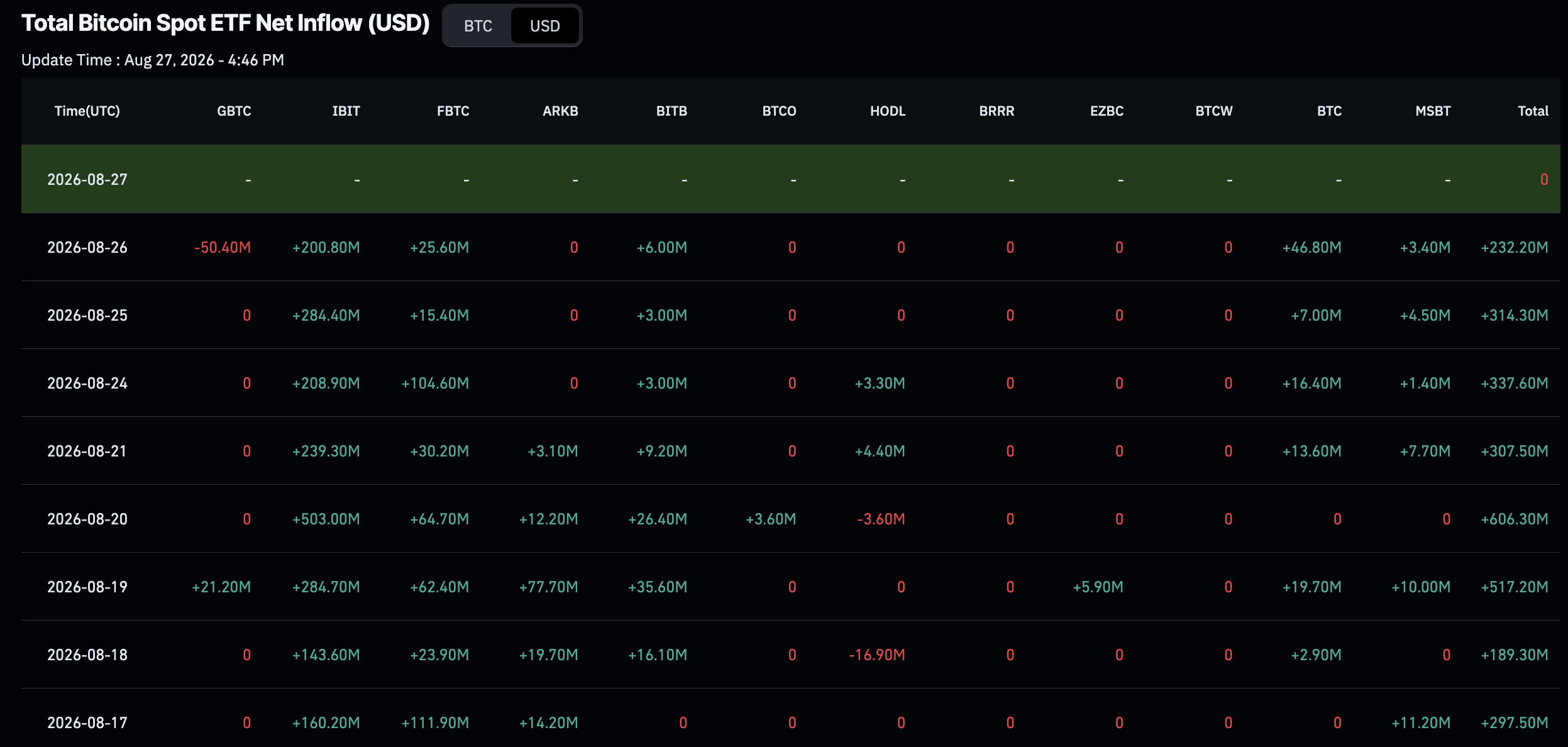
Renewed inflows into US spot Bitcoin exchange-traded funds, improving risk appetite and short covering contributed to the rally. This week alone has seen just over $900M flow into the various BTC ETF products.
Bitcoin Liquidity Check: What Stable Order-Book Depth Shows
$BTC has a huge sell order at $80,500.
Looks like a correction is coming next. pic.twitter.com/YIz2DKmMoF
— Ted (@TedPillows) August 27, 2026
According to a CoinDesk report, market depth indicates the value of buy and sell orders within a certain percentage of the current price. CoinDesk Research measured a 0.5% Bitcoin depth of about $9.6M on August 18.
This is when Bitcoin started rising from around $64,000, dropping to roughly $8.7M by August 25, as Bitcoin reached $80,000. This decline was seen as normal variation rather than a significant decrease.
The report noted that the August 18 depth was comparable to about $9M on January 1, when Bitcoin was around $88,000, and $8M in October, when it exceeded $120,000.
The findings for Ethereum and Solana showed similar trends. Overall, the stable top-of-book liquidity suggested demand absorption during the price rise, providing context alongside other market factors reported by CNBC.
DISCOVER: Trade Bitcoin on Binance Today
ETF Inflows and Short Covering Added Momentum to Bitcoin’s Rally
US spot Bitcoin ETFs attracted $1.92Bn in net inflows last week, their largest weekly haul since October, when Bitcoin reached its previous cycle peak, according to CNBC. CNBC described the inflows as a return of institutional demand.
Short covering also added buying pressure as prices rose. CNBC reported that more than $4Bn in bearish crypto positions were liquidated during the rally, forcing traders with losing short positions to close them.
Fundstrat said in a note cited by CNBC that buying following the short squeeze suggested the rally may be more durable than a tactical bounce.
The firm pointed to strong inflows into Bitcoin and Ethereum ETFs, increased trading activity, more stablecoin creation and options-market positioning toward gains further into the future.
Fundstrat also noted that Bitcoin rose without fresh purchases from Strategy, the world’s largest corporate holder of the cryptocurrency, which had not bought Bitcoin for two weeks.
The Rally’s Next Test Is Whether Demand Holds
CNBC reported that questions remain over whether the breakout can last. Bitcoin had been in a prolonged slump since October, and BTIG noted that a similar January 2023 surge initially faded before Bitcoin found support around its 200-day moving average.
ETF flows, short-liquidation activity and the order-book measures tracked by CoinDesk Research offer different ways to assess the rally.
Continued ETF demand would remain a key factor cited in CNBC’s reporting, while CoinDesk Research’s 0.5% market-depth measure provides insight into whether liquidity on major spot exchanges remains broadly stable.
Neither source establishes a specific price target. Together, the reported ETF inflows, short-covering activity, and market-depth data frame the debate over whether Bitcoin’s move above $80,000 reflects demand that can persist after the immediate effects of the short squeeze fade.