



 Some of the links on this site may be affiliate links. ICOBench may receive advertising commissions when users visit recommended platforms via our affiliate links, at no additional cost to you. All recommendations are based on a comprehensive review process.
The Hong Kong Monetary Authority (HKMA) released its first Quantum Bitcoin Preparedness Index on July 27, rating the banking sector 2.3 out of 10 and aiming for full readiness (10) by 2030 for post-quantum cryptography.
About 32% of banks haven’t started their PQC transition, and half lack a formal roadmap. The HKMA has the power to enforce change, unlike Bitcoin, which faces similar quantum threats but lacks regulatory authority for action.
🇭🇰 HONG KONG ISNT WAITING FOR QUANTUM COMPUTERS TO BECOME A REAL PROBLEM
Banks are being told to prepare now, with the goal of the whole sector being ready by 2030
Smart move if tokenized finance keeps growing
Better early than sorry😅#HongKong #Crypto #Tokenization pic.twitter.com/YMuni8VZ2n
— SBlockSpy (@SBlockspy) July 28, 2026
Two upgrade proposals, BIP-360 and BIP-361, exist in the Bitcoin community, but neither has a deadline or enforcement mechanism. The key question is whether Bitcoin’s decentralized governance can achieve a coordinated quantum migration before the threat window closes.
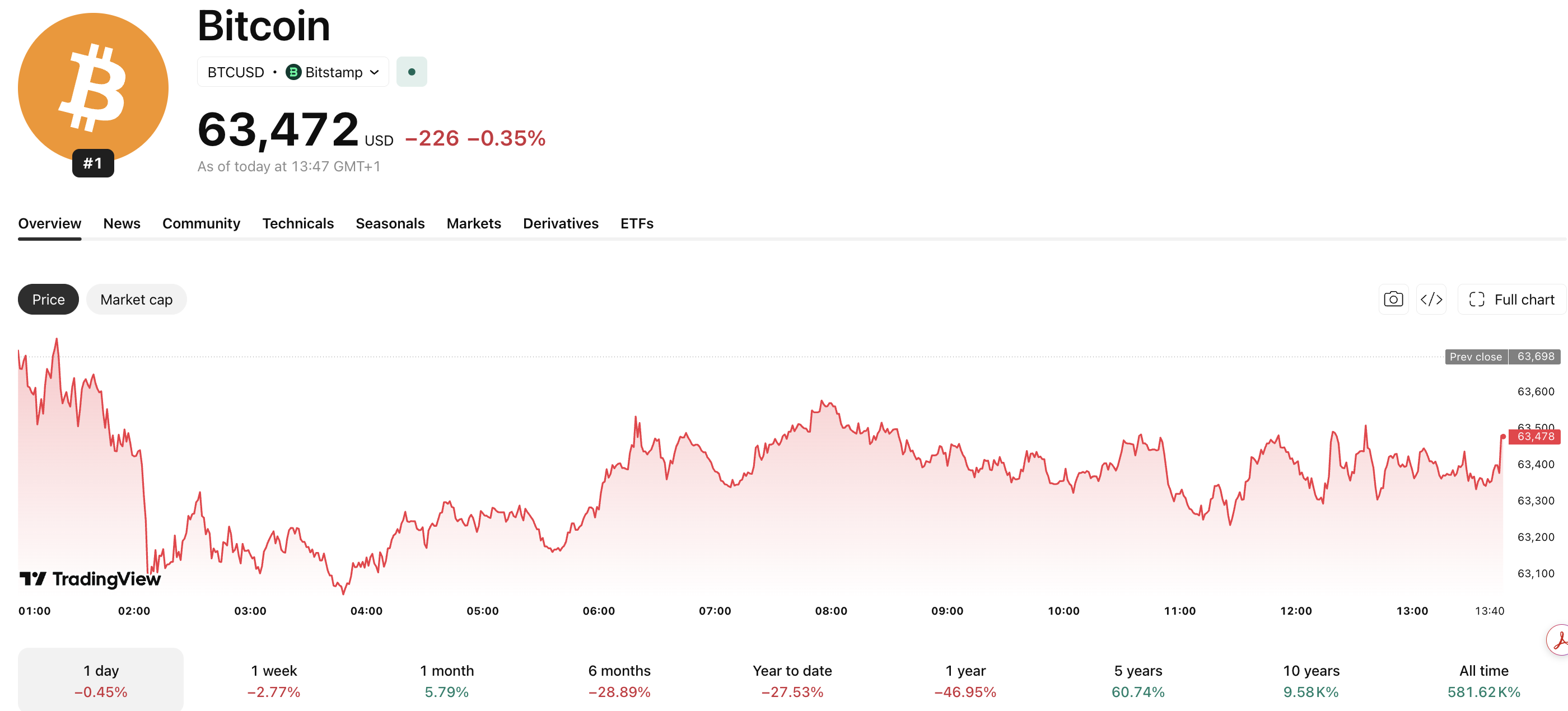
This latest quantum Bitcoin news comes as BTC USD dropped by -3% overnight, trading at around $63,200 with a 24-hour trading volume of $25.1Bn.
HKMA Bitcoin Quantum Preparedness Index: What a 2.3/10 Score Actually Reveals About Institutional PQC Readiness
Hong Kong’s banking sector received a score of 2.3 out of 10 from the HKMA, indicating that while banks recognize the quantum threat, they have yet to take systematic action. Larger institutions are conducting internal assessments, while smaller banks are still in early planning stages.
The HKMA has taken a structural approach, introducing a PQC toolkit with the Hong Kong University of Science and Technology, mandatory workshops, and a framework aligned with NIST’s post-quantum standards. It will set minimum expectations for boards and senior management regarding PQC strategy and governance.
This score reveals not just unpreparedness but also the regulator’s authority to measure, publicize, and enforce accountability.
The HKMA aims for full sector readiness by 2030, aligning with international standards such as the US White House memo NSM-10, which targets NIST-approved PQC by 2035, thereby making Hong Kong’s target particularly ambitious.
BIP-360 and BIP-361: What Quantum Bitcoin’s Two Live Upgrade Proposals Actually Reveal About the Governance Gap
BIP-360 and BIP-361 are notable proposals for Bitcoin. BIP-360, merged in February 2026, introduces a new Pay-to-Merkle-Root (P2MR) output type via a soft fork, addressing long-exposure attacks against taproot outputs while maintaining the functionality of Pay-to-Taproot (P2TR).
BIP-361, co-authored by Jameson Lopp, seeks to phase out ECDSA and Schnorr signatures entirely, potentially making around 1.7 million BTC, primarily linked to Satoshi Nakamoto, inaccessible if a hard migration deadline is enforced.
Both proposals lack a mechanism for binding implementation and instead rely on broad community consensus among developers, miners, node operators, and economic participants, given Bitcoin’s decentralized governance model and lack of formal oversight.
This highlights a decision-making architecture that differs greatly from structured governance models, such as Cardano’s, which utilize formal voting mechanisms.
In Bitcoin, achieving consensus for well-reasoned proposals, especially those involving foundational coins or cryptography, has historically taken significant time.
Strategy And BlackRock Launch Bitcoin Quantum Security Consortium
Strategy and BlackRock have joined seven other firms to launch the Bitcoin $BTC Security Consortium, focused on strengthening Bitcoin against future quantum computing threats.
Founding members also include… pic.twitter.com/XmlMykvqV6
— BSCN (@BSCNews) July 24, 2026
Mandate vs. Consensus: What the HKMA Enforcement Architecture Actually Reveals About the Quantum Bitcoin 2030 Problem
The structural contrast is clear. The HKMA has a published score, defined targets, supervisory examinations, a toolkit of standards, and the authority to enforce minimum expectations for regulated institutions.
In contrast, Quantum Bitcoin has two proposals under discussion, no fixed endpoints for community deliberation, no mandate for adoption, and no enforceable deadlines.
CryptoQuant CEO Ki Young Ju highlights that consensus, not code, is the real bottleneck, as Bitcoiners struggle to unite around changes that affect the network’s core principles. Issues like BIP-361, concerning Satoshi Nakamoto’s coins, tend to divide the community.
The ownership-versus-control dynamic that enhances Bitcoin’s censorship resistance complicates coordinated upgrades, reflecting broader governance challenges in crypto.
The governance gap suggests Bitcoin won’t fail to upgrade, but a quantum-capable adversary can simply wait while Bitcoin’s governance deliberates, unlike HKMA’s banks, which have strict readiness deadlines.