




 Some of the links on this site may be affiliate links. ICOBench may receive advertising commissions when users visit recommended platforms via our affiliate links, at no additional cost to you. All recommendations are based on a comprehensive review process.
 Real-world assets are quickly becoming an important part of the conversation in crypto. Instead of focusing only on digital assets, investors are now exploring how physical assets like property, commodities, and bonds can exist on the blockchain. This approach makes the crypto market more connected to the real economy. In the sections below, we’ll look at how real-world assets work, why they matter, and the significant challenges they bring.
Real-World Assets (RWA): Key Insights
✔️RWAs connect physical assets with blockchain, allowing property, commodities, and bonds to exist in tokenized form. ✔️Fractional ownership increases access, as tokenization enables fractional ownership of high-value tangible assets, letting smaller investors participate in markets once reserved for institutions. ✔️Liquidity improves significantly, since tokenized assets can be traded faster than traditional ones. ✔️Integration with DeFi expands utility, enabling borrowing, lending, and yield strategies tied to real economy assets. ✔️Risks remain important, including regulation, smart contract flaws, and custody concerns for the physical asset.
Introduction to RWAs in Crypto
At its core, the idea of real-world assets (RWAs) is simple. These are everyday assets like houses, gold bars, art, or even government bonds that are brought onto the blockchain in a digital form. Instead of being locked up in the traditional financial system, they are represented as tokens that can be traded, transferred, or used within crypto platforms. This process of converting physical or traditional assets into digital tokens is known as tokenizing real world assets, and the overall process is referred to as real world asset tokenization.
This concept helps bridge the gap between traditional finance and digital markets. For example, a tokenized piece of real estate could be divided into smaller shares thanks to the digital representation of ownership, giving more people access to an investment that was once only for the wealthy. In the same way, tokenized commodities like gold make it easier to buy and sell without dealing with physical storage. As a result, global investors and those in emerging markets benefit from the ability to tokenize real world assets, increasing access and inclusivity. RWAs are also creating new ways for investors to combine traditional strategies with tools like spot vs. futures crypto, making the market more flexible.
How RWAs Work on the Blockchain
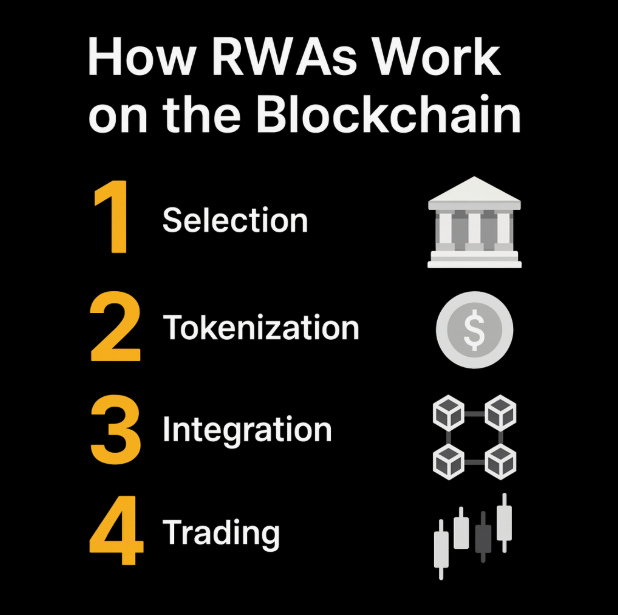
To understand real-world assets, it helps to break the process into clear steps. Each stage shows how a physical item—often referred to as an off chain asset—becomes part of the digital economy and is later used within crypto markets. Before tokenization, it is essential to verify the legal title and ensure proper ownership records of the off chain asset to establish legitimacy and compliance.
Step 1: Choosing the Asset
The first step is selecting an asset that makes sense to digitize. It could be real estate, gold, or treasury bonds, treasury bills, treasury securities, corporate bonds, or private credit. For example, a property worth $1 million can be prepared for tokenization, giving investors a way to own fractions of it without buying the whole thing.
Step 2: Tokenization Process
The asset is then transformed into digital tokens on the blockchain. This process, known as tokenization, creates a one-to-one digital version thatis often facilitated by a tokenization platform, which enables the easy creation and management of tokens representsing the real item. Investors can now buy, sell, or trade these tokens just like other crypto assets, similar to trading on the best crypto trading platforms.
Step 3: Smart Contracts and Custody
Once tokenized, the asset is managed through smart contracts. These contracts ensure the rules are followed (for example, who owns what share and how profits are distributed). Transaction histories are recorded on-chain, providing transparency and verifiable records of ownership and transfers. The contracts can also automate corporate actions such as voting, capital distributions, and reorganizations, streamlining these processes for tokenized assets. A secure custodian often holds the physical asset, while investors only deal with its digital version in the RWA blockchain system.
Step 4: Using RWAs in DeFi
Finally, tokenized assets can be used in DeFi protocols. People can borrow against their shares, provide liquidity, or earn interest. Onchain finance and decentralized finance leverage RWA tokens to enable new financial products and services, making it possible to integrate real-world assets into blockchain-based ecosystems. This step connects RWAs to other tools, like how to leverage trade or even crypto binary options, showing how traditional assets blend into RWA DeFi opportunities.
Why RWAs Matter in Crypto
Real-world assets bring unique value to crypto. They make blockchain more practical, easier to understand, and more attractive for traditional investors. RWAs are also transforming global capital markets by improving liquidity, transparency, and operational efficiency, while creating new opportunities within the blockchain industry. Here are five reasons why RWAs are becoming important.
➡️Accessibility for More Investors
RWAs allow people to invest in assets that were once out of reach. Fractional ownership makes it possible to buy just a slice of real estate, art, or bonds instead of the entire thing. This lowers the barrier to entry for everyday investors. As more people gain access to these assets, it is crucial to ensure strong investor protection through regulatory frameworks and legal safeguards.
➡️Increased Liquidity
Many traditional assets are hard to sell quickly. By turning them into tokenized real-world assets, they become easier to trade on blockchain platforms. This added liquidity helps markets move faster and creates more opportunities for buyers and sellers.
➡️Risk Diversification
Adding RWAs to a crypto portfolio helps reduce risk. Instead of holding only volatile digital assets, investors can mix in stable assets like bonds or commodities. This approach balances exposure between high-risk coins and safer investments.
➡️Integration with DeFi
RWAs can be used inside DeFi protocols to borrow, lend, or earn yield. Investors might lock tokenized real estate into a lending pool to get instant liquidity. This integration connects the traditional economy with innovative tools like the best crypto day trading platforms.
➡️Bridging Traditional and Digital Finance
Perhaps the biggest impact is how RWAs bring traditional finance closer to crypto. They help institutions and retail investors see blockchain as useful beyond speculation. This bridge creates trust and encourages adoption, much like Dogecoin futures trading made crypto feel more mainstream.
Feature
Traditional Assets
Real World Assets (RWAs) on Blockchain
Accessibility
Often limited to wealthy investors
Fractional ownership makes them available to everyone
Liquidity
Can take weeks or months to sell
Traded instantly as digital tokens
Transparency
Records kept privately by banks or brokers
Blockchain provides open and verifiable records
Cost of Transactions
High fees for brokers, lawyers, and paperwork
Lower costs through automated smart contracts
Integration with DeFi
No direct use in crypto systems
Can be borrowed, lent, or used in DeFi protocols
Risks and Challenges of RWAs
While real-world assets create exciting opportunities, they also come with certain risks. Anyone exploring RWAs in crypto should keep these challenges in mind.
- Regulation remains unclear. Many governments are still figuring out how to handle tokenized assets, which can slow adoption and create uncertainty. Regulatory considerations are crucial, as different jurisdictions have varying requirements, and the involvement of the monetary authority can significantly shape the legal landscape for tokenized funds.
- Custody of the physical asset is critical. If the real estate properties, gold, bond and even digital assets is not safely held, the token has little actual value. Accurate ownership records are essential to ensure trust, transparency, and compliance in the management of these assets.
- Smart contract risks exist. Bugs or flaws in the code could cause losses, even if the underlying asset is secure.
- Liquidity is not guaranteed. Just because an asset is tokenized doesn’t mean there will always be buyers, unlike what’s seen on the best crypto contract trading platforms.
- Market volatility can still affect RWAs. Even with stable assets, the crypto environment is tied to wider trends like how to short crypto.
Final Thoughts
Real-world assets are opening a new chapter in the crypto industry by connecting traditional investments with blockchain technology. They make it possible to trade property, gold, or bonds in the same way people trade tokens, offering more accessibility and flexibility. That is why financial institution are now promoting RWAs because it could be global investment opportunities. At the same time, investors need to be aware of the risks, from unclear regulation to smart contract issues. As adoption grows, RWAs could play a major role in how people see crypto, not just as speculation, but as a practical link to the real economy.