Some of the links on this site may be affiliate links. ICOBench may receive advertising commissions when users visit recommended platforms via our affiliate links, at no additional cost to you. All recommendations are based on a comprehensive review process.
On June 30, 2026, the White House held a meeting with law enforcement to discuss concerns about Section 604 of the Digital Asset Market CLARITY Act, also known as the Blockchain Regulatory Certainty Act (BRCA).
Senate Banking Committee Chairman Tim Scott urged a vote on the legislation in July, increasing pressure on crypto adviser Patrick Witt to address law-enforcement objections before the summer recess.
The meeting featured about 20 participants, including the National Sheriffs Association, and aimed to resolve issues related to illicit finance that have hindered bipartisan support.
Senate Majority Leader John Thune indicated he might bring the CLARITY Act to the floor in July, but the bill needs 60 votes to pass, which would require significant Democratic support and limited time before the recess.
Section 604 and the BRCA: What the Developer-Liability Dispute Actually Reveals About the Bill’s Path to 60 Votes
More Uncertainty Over The CLARITY Act?
US President Donald Trump scrapped the signing of a separate housing bill last Wednesday, raising uncertainty over his support for the CLARITY Act.
Trump says he won't sign other legislation until the SAVE America Act passes.
Senator… pic.twitter.com/JJqFOzTC7C
— BSCN (@BSCNews) June 30, 2026
The CLARITY Act addresses the jurisdictional dispute between the SEC and CFTC by granting the CFTC primary oversight of digital commodity spot markets and the SEC oversight of investment contract assets.
It garnered bipartisan support, except for Section 604 of the Blockchain Regulatory Certainty Act, which exempts non-controlling software developers from being classified as money transmitters under the Bank Secrecy Act.
However, the National Sheriffs Association and other law enforcement groups oppose this exemption, arguing that it could hinder efforts to trace illicit finance.
Senator Catherine Cortez Masto has echoed these concerns, emphasizing the need for law enforcement to prioritize the recovery of victims’ funds.
Patrick Witt, advocating for the bill, claims it establishes necessary regulatory constraints and helps clarify definitions for prosecutors dealing with crypto infrastructure.
DISCOVER: Best Crypto Presales to Watch Right Now
Why the White House Meeting Changes the CLARITY Act Risk Profile
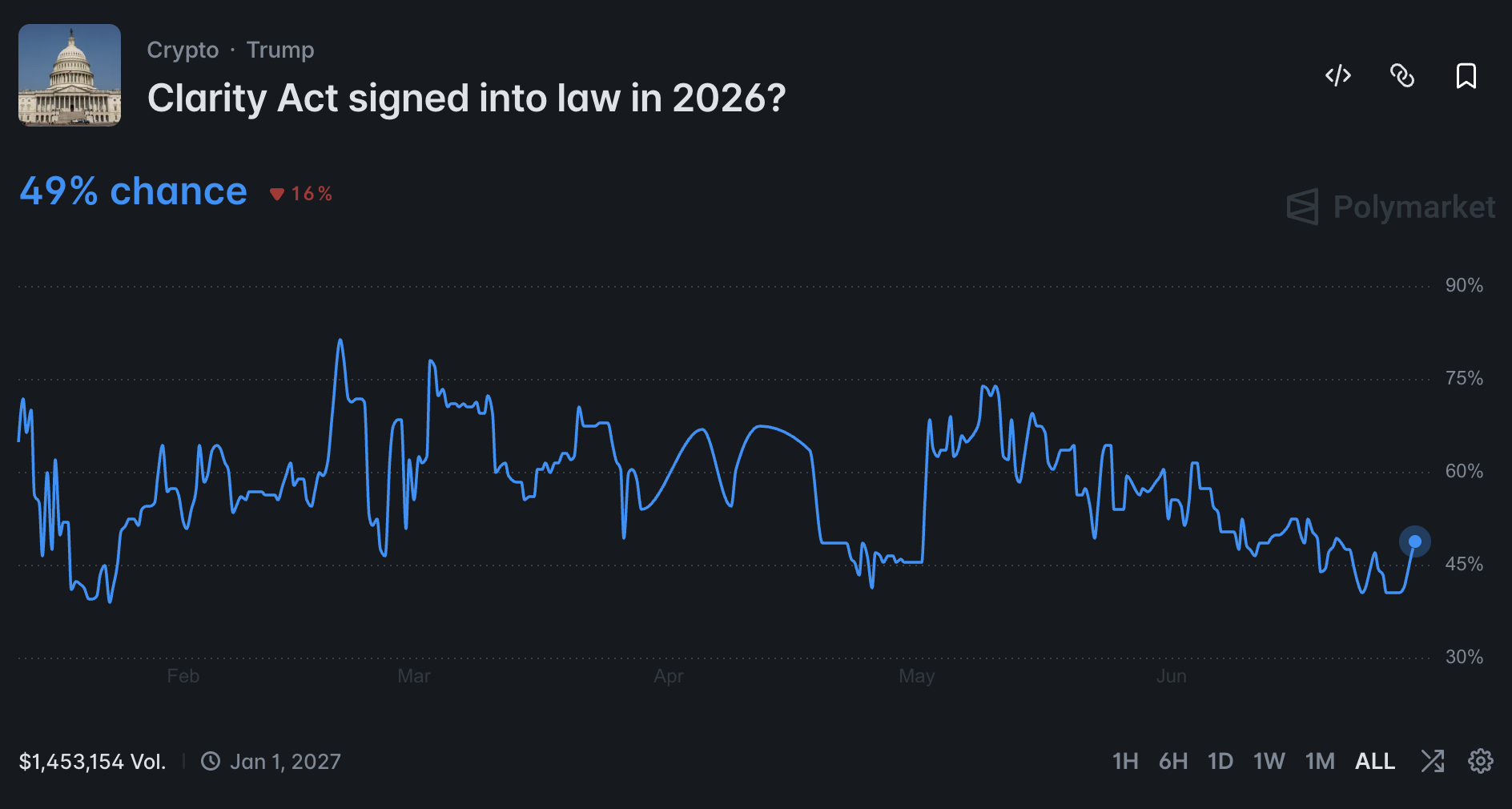
Three disputes are currently affecting the CLARITY Act: the Section 604 BRCA language, the need to fill CFTC commissioner positions, and an ethics provision that would ban senior officials, including the president, from holding interests in crypto.
Some lawmakers have tied their votes to the inclusion of the ethics provision, setting a minimum threshold for Democratic votes regardless of the White House’s stance on Section 604.
President Trump’s ongoing negotiations over the housing affordability bill add uncertainty to the timeline of the CLARITY Act. If resolved, a meeting with the White House may lead to refined Section 604 language.
Support could potentially be garnered from law enforcement to allow a vote. Successful passage would significantly clarify crypto regulations and positively impact digital assets like BTC and ETH.
Conversely, if law enforcement objections aren’t fully addressed, a delay could occur, pushing the vote past recess and prolonging regulatory uncertainty for the crypto market.
In a collapse scenario, intensified opposition could prevent the bill from reaching the Senate floor before summer recess, reverting the industry to status quo enforcement-led regulation.
The outcome of the next draft of Section 604 is crucial in determining the bill’s fate, with resolution offering a major shift in the US regulatory landscape for digital assets.
DISCOVER: Best Crypto Presales to Buy for July