




 Some of the links on this site may be affiliate links. ICOBench may receive advertising commissions when users visit recommended platforms via our affiliate links, at no additional cost to you. All recommendations are based on a comprehensive review process.
Bitcoin slid from an intraday high of $79,586 to below $78,000, after Polymarket odds on the CLARITY Act passing this year reversed course. From above 30% during the US session to just 18% in early Asian trading.
The asset, which accounts for roughly 60% of total crypto market value, is now tethered to a single Senate procedural vote. That vote needs 60 senators to advance the bill, and partisan disputes over its ethics safeguards and stablecoin provisions remain unresolved.
JUST IN: Bitcoin ETFs bought $160M worth on Monday, pushing total assets back above $100B
Institutional inflows ahead of a crucial regulatory turning point.
All eyes on Clarity Act cloture vote at 2:15 PM ET 👀 pic.twitter.com/fdBdh8SjsR
— Bitcoin Archive (@BitcoinArchive) September 15, 2026
You’re Still Early: 10 AI Agent Coins That Could Win Big Next Bullrun
From 70% to 18%: A Market With No Stable Read
The swing is not an isolated blip. Odds of a 2026 CLARITY Act signing sat above 70% in May, collapsed to the low teens through August, and rebounded toward 30% on Monday before falling back to 18%.
US Senator Mark Warner told reporters at the US Capitol that Democratic negotiators would send Republicans a counteroffer ahead of the pivotal procedural vote, while Senate Majority Leader John Thune said progress had been made, but he was uncertain whether the votes would be there to advance the bill on Tuesday.
The core sticking point remains the ethics language that Democrats view as inadequate to stop President Donald Trump from continuing to profit from crypto after he reported US$1.4 billion in income last year. This is compounded by bank lobbying, driven by fears that stablecoins might divert deposits from community lenders.
Republicans’ revised draft attempts to bridge both gaps: it would let the Treasury secretary intervene if deposit flight became “detrimental” to community banks. This would force the president to divest virtual assets or place holdings in a blind trust under penalty of fines, and hand state attorneys general a role in enforcing the new ethics rules.
Whether that’s enough to peel off the Democratic votes needed under the Senate’s 60-vote threshold is still an open question heading into the vote.
JUST IN: 🇺🇸 Republicans reject Democrats' Crypto Clarity Act counter-offer as negotiations remain deadlocked.
— Watcher.Guru (@WatcherGuru) September 15, 2026
Bitcoin Next Move? What Traders Are Watching Now?
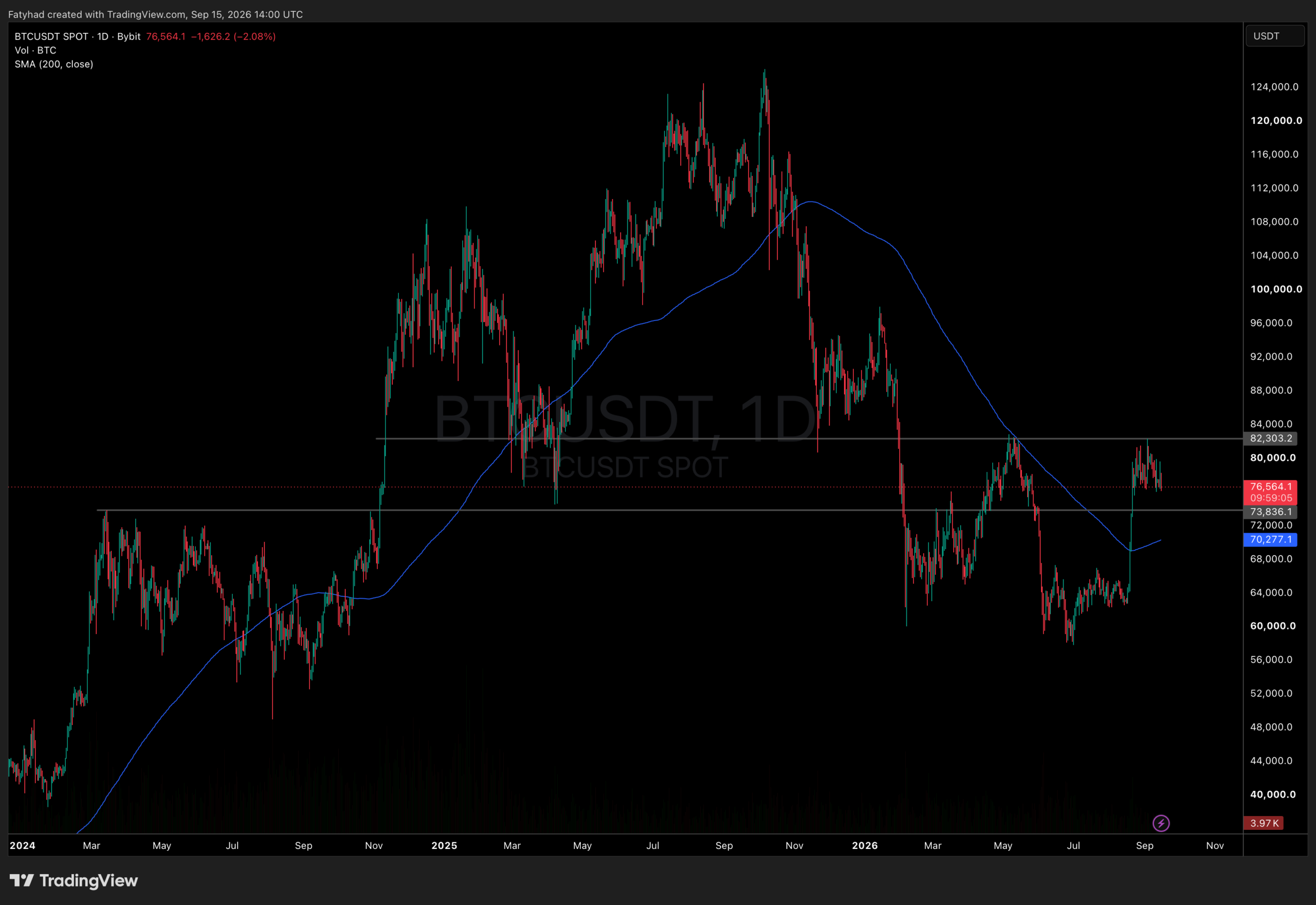
Two binary events now sit stacked on top of each other for Bitcoin bulls: the Senate’s cloture-style procedural vote on the CLARITY Act, and the Fed’s rate decision landing in the same window. Republicans rejected the Democratic counteroffer, and the vote now heads to the floor with no bridge between the two positions. Polymarket’s 18% reflects that: absent a handful of Democratic crossovers materializing on the floor itself, the procedural vote fails.
Until that resolves, Bitcoin’s failure to reclaim US$80,000 looks less like exhaustion and more like a market pricing two live, unresolved catalysts at once. A dynamic that echoes the asset’s recent struggle against resistance near the same level amid whale selling and softer US demand.
Traders positioning into either the vote or the Fed statement are, in effect, betting on which headline breaks the standoff first.
on’t Miss: ETF Experts Predict The Next Crypto to Explode in 2026