



 Some of the links on this site may be affiliate links. ICOBench may receive advertising commissions when users visit recommended platforms via our affiliate links, at no additional cost to you. All recommendations are based on a comprehensive review process.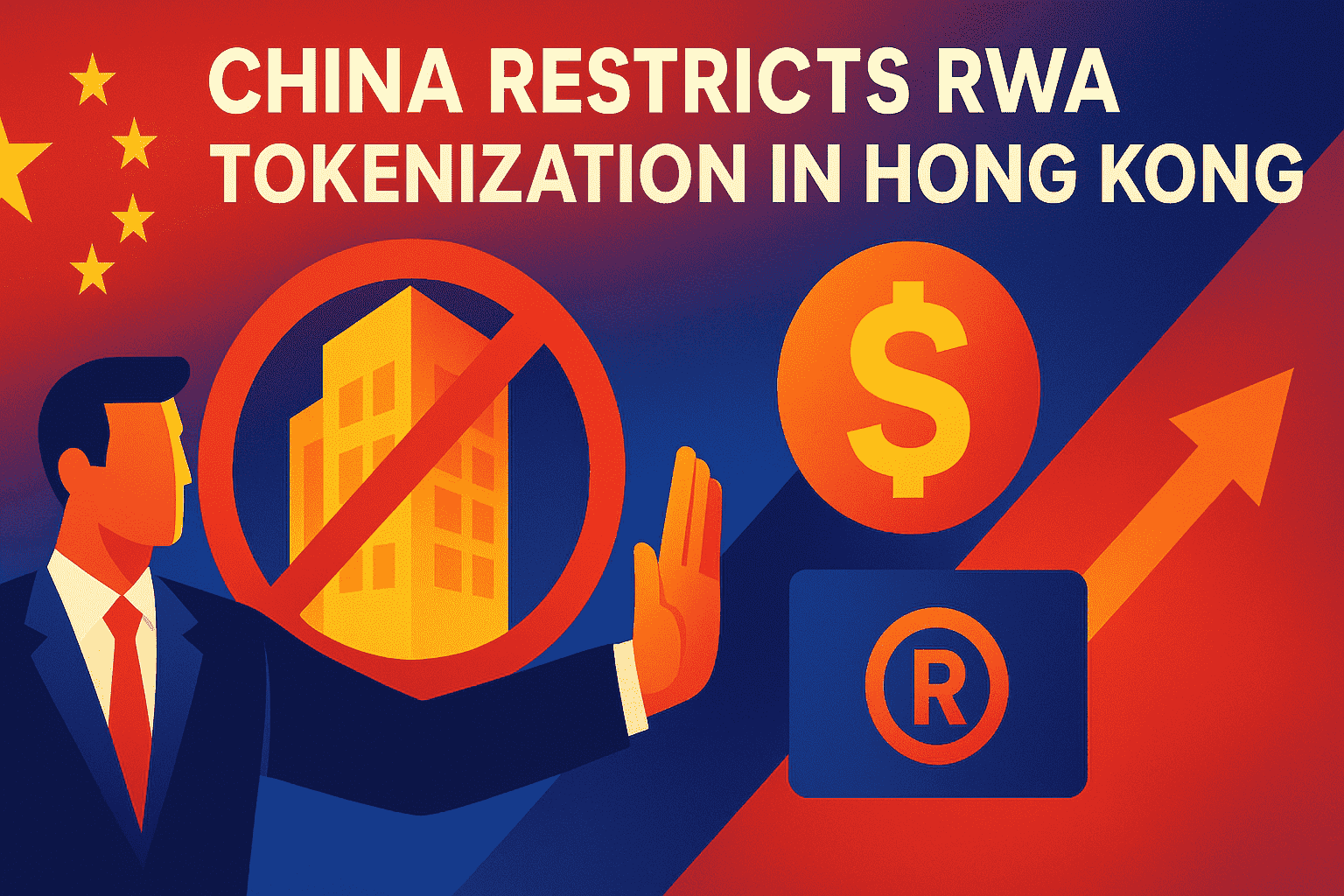
China has asked several Chinese brokerage firms to suspend their real-world asset (RWA) tokenization operations in Hong Kong, signaling tighter oversight even as the city races ahead with its ambitions to become Asia’s leading crypto-financial hub.
According to two sources, China's securities watchdog has informally advised some local brokerages to pause their real-world asset (RWA) tokenization business in Hong Kong.
The guidance signals Beijing's concerns about the rapid growth of the digital assets market offshore.
RWA… pic.twitter.com/WDkj7tbaXV
— Spotlight on China (@spotlightoncn) September 23, 2025
China Tightens the Screws
According to reports, the China Securities Regulatory Commission (CSRC) issued informal guidance to at least two major brokerages, instructing them to pause Hong Kong-based RWA activities. Regulators cited risk management concerns, warning that commercial promises must be backed by sustainable business models.
Since 2021, China has outlawed crypto trading and mining, while closely monitoring offshore markets. This latest clampdown extends beyond speculative crypto, hitting traditional Web3 sectors such as tokenized bonds, equities, funds, and real estate, areas where Hong Kong had emerged as a testing ground.
Hong Kong Pushes Forward on Crypto
In contrast, Hong Kong is doubling down on its crypto strategy. The city recently implemented its stablecoin regulatory regime, with 77 expressions of interest filed by late August. Authorities, however, signaled that only a handful of licenses will be issued initially, with approvals likely beginning in early 2026.
Recent examples highlight the divergence. In June, GF Securities (Hong Kong) launched “GF Token,” offering tokenized securities denominated in USD, HKD, and offshore RMB with daily interest and redemption options. Similarly, China Merchants Bank International helped Shenzhen Futian Investment raise $68.5 million (500 million yuan) through a digital RWA bond.
Investor appetite has surged. Shares of Guotai Junan International more than doubled after receiving approval for crypto trading services, with one week’s rally peaking near 300%.
RWA Market Growing Rapidly
The tokenized asset market has already reached scale. In June, CoinDesk valued it at $24 billion, a 380% increase over three years. Recent data puts the figure closer to $29–30 billion. Industry forecasts predict the market could surpass $2 trillion by 2030, though growth will depend heavily on regulatory clarity, compliance costs, and adoption rates.
RWA tokenization transforms traditionally illiquid assets, such as bonds, loans, fund shares, and real estate, into digital tokens, enabling faster settlement, fractional ownership, and streamlined operations.
China ’s restrictions are a tactical pause while Hong Kong maintains its forward momentum. The RWA sector is unlikely to disappear. It is becoming more selective, bank-integrated, and compliance-driven. For investors, the winners will be crypto exchanges and networks that can operate seamlessly across regulatory divides, turning compliance into a competitive edge.