





 Some of the links on this site may be affiliate links. ICOBench may receive advertising commissions when users visit recommended platforms via our affiliate links, at no additional cost to you. All recommendations are based on a comprehensive review process.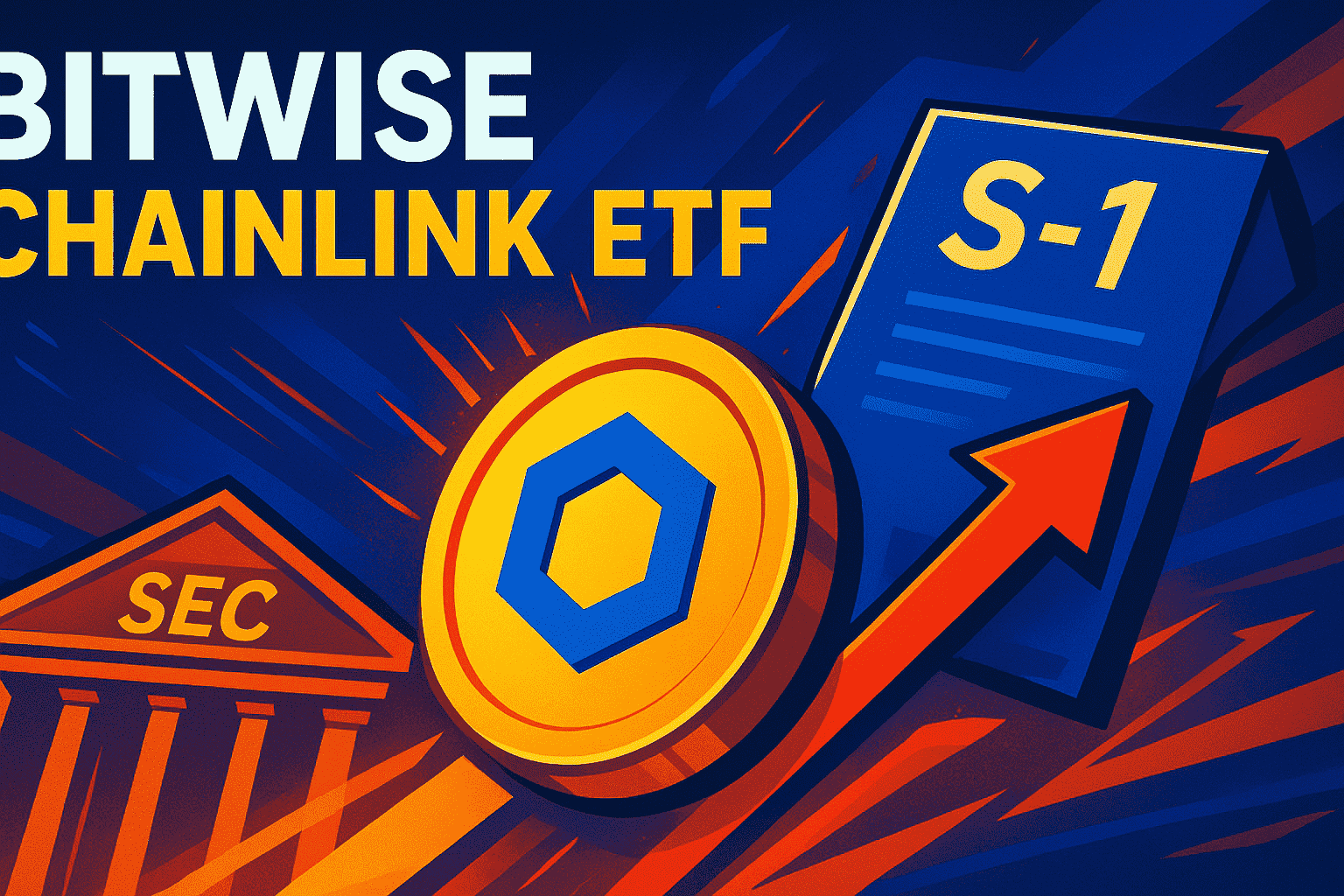
Crypto asset manager Bitwise has filed a preliminary S-1 registration statement with the U.S. Securities and Exchange Commission (SEC) to launch a spot Chainlink ETF backed by physically held LINK tokens. While no approval has been granted yet, the filing officially sets the process in motion.
⚡️JUST IN: Bitwise has filed an S-1 with the SEC to launch a Chainlink ETF. pic.twitter.com/Jj5JzKtRXO
— Cointelegraph (@Cointelegraph) August 26, 2025
Structure and Benchmark
The proposed ETF would be organized as a Delaware statutory trust, the same legal structure used by commodity-backed ETFs such as those tied to gold. At this early stage, neither a ticker symbol nor a listing exchange has been disclosed.
The fund aims to provide investors with direct exposure to Chainlink’s price through physical replication. Its net asset value (NAV) would be calculated daily using the CME CF Chainlink–Dollar Reference Rate (New York Variant), published at 4:00 p.m. EST by FCA-regulated CF Benchmarks, a trusted provider already used in other crypto ETPs.
The filing specifies that the Trust will not be registered under the Investment Company Act of 1940, nor classified as a commodity pool under the CFTC framework, aligning it with gold-backed ETF regulations.
Coinbase as Custodian
All LINK tokens for the fund would be securely stored by Coinbase Custody Trust Company, a New York–based custodian already well-established in the crypto ETF sector. Custody would be supported by private insurance but remain outside FDIC coverage, consistent with industry standards.
Creation and redemption of ETF shares would occur in blocks of 10,000 units, with flexibility for both in-kind transfers of LINK and cash transactions. Only Authorized Participants could carry out these operations, and fees would apply to maintain alignment with the NAV.
One crucial detail remains unspecified: the management fee. Currently listed as “0.__%” in the preliminary filing, the sponsor fee will be charged in LINK transferred from the Trust’s holdings. The final rate will be key in determining the product’s competitiveness against rival offerings.
Regulatory Path Ahead
The SEC will now review the S-1 filing and may request amendments before granting approval. Additionally, if the targeted exchange requires it, a 19b-4 filing will also need to be cleared to authorize trading—similar to the path taken by other recent crypto ETFs on NYSE Arca.
Regulatory conditions have eased slightly in recent months. Since July 29, 2025, the SEC has allowed in-kind creations and redemptions for crypto ETPs, aligning them more closely with commodity ETF operations. While not a guarantee of approval, the policy change streamlines logistics should Bitwise’s filing succeed.
If approved, the ETF would open mainstream brokerage access to Chainlink, a critical infrastructure token in the blockchain ecosystem. Institutional investors in particular would gain a regulated vehicle to allocate capital to LINK, potentially boosting liquidity and reducing price discrepancies through arbitrage.
In the event of dissolution, the Trust would liquidate its LINK holdings and distribute the proceeds in U.S. dollars.
As of August 26, 2025, no Chainlink ETF is listed in the U.S. With Bitwise now formally in the race, the launch ultimately hinges on the SEC’s timeline. It could be a good news for the LINK token, which has finally broken out of the 6-month consolidation pattern it was trading in.