




 Some of the links on this site may be affiliate links. ICOBench may receive advertising commissions when users visit recommended platforms via our affiliate links, at no additional cost to you. All recommendations are based on a comprehensive review process.
In SEC crypto news today, SEC Chairman Paul Atkins told CNBC on July 28, 2026, that his agency is ‘ready, willing, and able to come out with rules that address the same issues as CLARITY’, a direct on-air signal that crypto regulatory clarity is coming regardless of whether the Senate passes the CLARITY Act before its August 7 recess deadline.
The statement is grounded in the SEC’s March 2026 Token Taxonomy and the agency’s July 2026 Regulatory Agenda, both of which already target tokenized securities, capital raising frameworks, and onchain custody, the core subject matter of the legislative bill itself.
The open question the market must now resolve is whether Senate Majority Leader Thune can bring CLARITY to a floor vote before August 7, or whether Atkins pulls the trigger on unilateral rulemaking that reshapes the onchain capital markets landscape without congressional authorization.
CLARITY Act News: What Atkins’s Plan B Signal Actually Reveals About Regulatory Architecture Already in Place
The Atkins statement has significant institutional weight, as it reflects an existing framework established by the SEC’s Token Taxonomy released in March 2026. This taxonomy outlines which crypto assets are classified as digital securities and which are not.
On July 7, 2026, Atkins highlighted on the SEC’s Regulatory Agenda that clear rules for crypto capital raising, tokenized securities, and onchain asset custody are priorities, progressing without congressional involvement. Analyst Ben Lilly noted that the SEC avoids rules mirroring the CLARITY Act due to a preference for the permanence of codified legislation.
Atkins’s remarks transform a policy preference into a public commitment, contrasting with the previous Gensler era focused on enforcement rather than proactive rulemaking. Under the Project Crypto initiative, the SEC and CFTC are actively issuing guidance and rules.
Atkins’s message signals to the Senate that the regulatory framework for the industry is forthcoming, influencing Democratic senators’ voting considerations ahead of the August 7 recess.
RWA Tokens and Onchain Capital Markets: What the $32Bn Total and SEC’s Unilateral Move Actually Reveal About Token-Level Risk and Opportunity
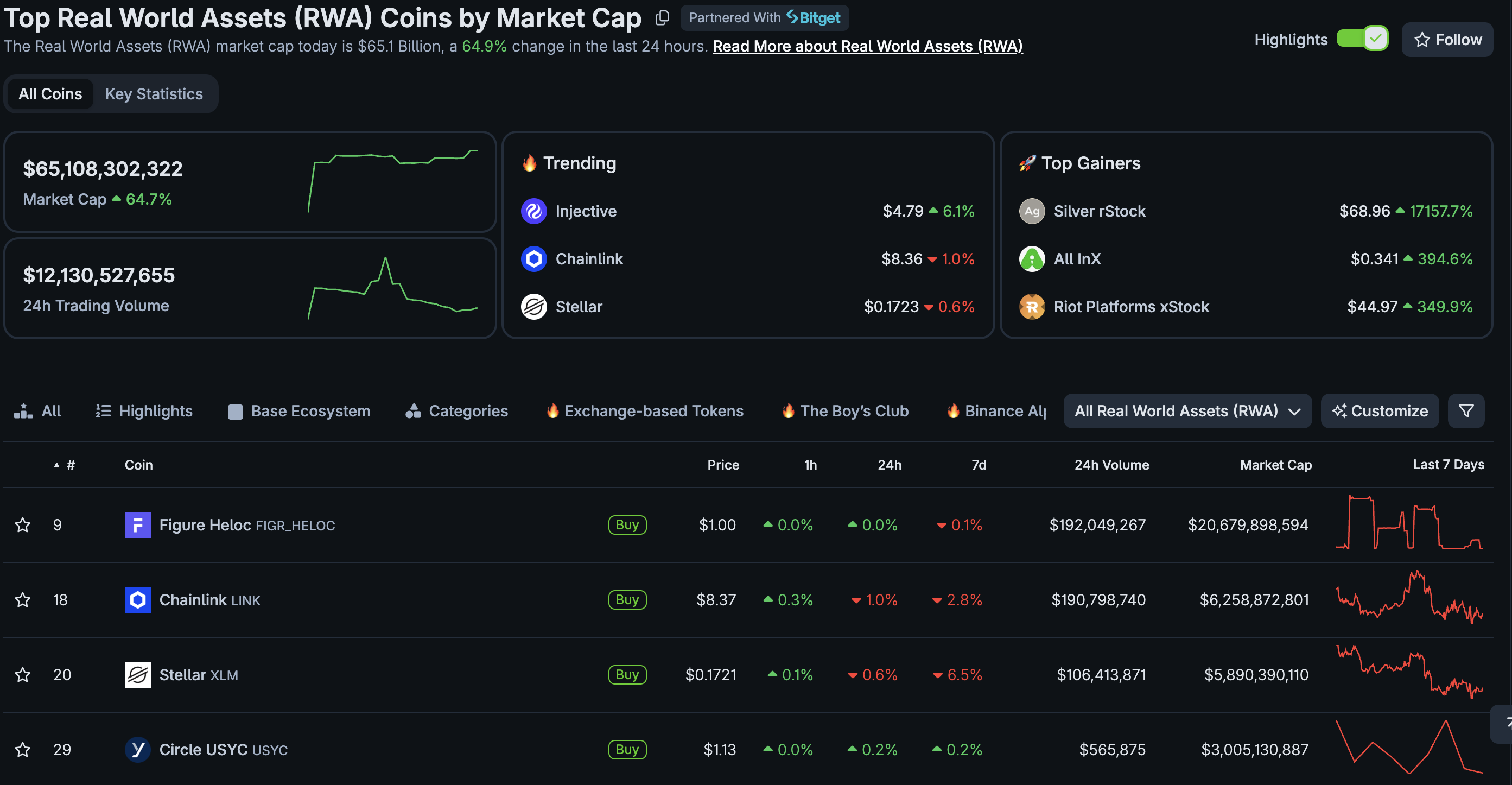
Atkins’s statement highlights significant stakes in the RWA market data. According to CoinGecko data, the total value of tokenized real-world assets has surpassed $65Bn, excluding stablecoins, with tokenized stocks alone reaching around $2Bn.
This growth underscores the need for formal regulatory guidance as an active market risk, especially with key players like Robinhood and major exchanges vying to establish a new onchain capital markets infrastructure.
Clarity is needed on which token structures qualify as digital securities under the SEC’s Token Taxonomy and how custody and capital raising exemptions apply to these offerings.
The SEC’s indication of readiness to act independently reduces some uncertainty for compliance-oriented issuers, signaling that regulations will be established on a known timeline, either through the CLARITY Act or the SEC’s rulemaking by July 2026.
The August 7 Deadline: What the Senate Floor Math Actually Reveals About Whether Plan B Gets Triggered
Senators Set To Send Tougher CLARITY Act Ethics Rules On Trump Crypto Ties
Senator Thom Tillis and Senator Ruben Gallego have finished new ethics language for the CLARITY Act. Sources say the rules are ready to be sent to the White House soon.
The provision would limit senior… pic.twitter.com/8LT84fk1dx
— BSCN (@BSCNews) July 30, 2026
Getting the CLARITY Act to a Senate vote before the August 7 recess requires Senate Majority Leader Thune to prioritize it, a decision still unresolved as of late July 2026.
Even with a vote secured, the bill faces a 60-vote threshold, with ethics language on presidential crypto holdings being a key point of contention.
Progress is evident but not definitive. Senators Tillis, Lummis, and Gallego are working on a compromise allowing state Attorneys General to sue the DOJ for enforcing ethics violations, bridging Democratic and Republican positions.
Senate Minority Leader Schumer has also nominated candidates for vacant SEC and CFTC seats, signaling potential vote trading. Major financial firms like BlackRock, Fidelity, and Goldman Sachs have publicly endorsed the CLARITY Act.
Three scenarios shape the regulatory outlook for digital assets:
Bull case: CLARITY passes before August 7, establishing clear crypto regulations and alleviating concerns for tokenized securities.
Base case: Delays push CLARITY to the fall while the SEC begins rulemaking, providing temporary regulation without legislative certainty.
Invalidation: Continued delays push CLARITY into 2027, creating a regulatory vacuum that hampers compliance-oriented projects.
The market must watch if Thune schedules a formal vote before August 7. If it happens, a compromise for passage seems likely; if not, the SEC will begin actions before 2027.