

 Some of the links on this site may be affiliate links. ICOBench may receive advertising commissions when users visit recommended platforms via our affiliate links, at no additional cost to you. All recommendations are based on a comprehensive review process.
 What are stablecoins? If you’ve ever wondered why crypto prices go up and down like a rollercoaster, stablecoins are the calm in the storm. They’re digital coins designed to stay steady, usually tied to something familiar like the US dollar. Stablecoins aim to maintain a fixed price, typically pegged to a specific asset such as the US dollar. In this blog, we’ll break down the stablecoin meaning, show you how they work, and explain why they’ve become so important in the world of crypto.
Key Insights: What Is a Stablecoin?
✔️Stablecoins provide stability in a crypto market known for extreme ups and downs. ✔️They come in different forms, including fiat-backed, crypto-backed, algorithmic, and commodity-backed designs. ✔️Popular examples include USDT, USDC, and DAI, which are widely used for trading and payments. ✔️They make crypto more practical, helping with international transfers, day trading, and as safe collateral. ✔️Risks still exist, such as regulation, reserve transparency, or peg failures like TerraUSD’s collapse.
Introduction to Stablecoins
At its core, a stablecoin is exactly what the name suggests: a coin that stays stable. Unlike Bitcoin or Ethereum, which can swing wildly in price, stablecoins are designed to keep their value steady. Most of the time, they are tied to traditional currencies like the US dollar, euro, or even gold, which serve as the reference asset for the stablecoin. That means 1 stablecoin is usually worth about 1 USD. For example, Tether (USDT) and USD Coin (USDC) are two of the most popular stablecoins, both pegged to the dollar. There are also others like DAI, which uses crypto to keep its value steady. Due to its stability and stable price, people often use them for trading, saving, or sending money without worrying about sudden price drops.
Types of Stablecoins
Stablecoins is to keep prices steady, and they do it in different ways. It aims to provide a reliable store of value by reducing volatility in the digital asset market. Let’s look at the types of stablecoins and how each one works with real-world stablecoin examples.
1. Fiat-Backed Stablecoins
Fiat-backed stablecoins are the most common. Each coin is backed by real-world money, usually stored in bank accounts. For example, if a company issues 1 million USDC, it keeps 1 million actual dollars in reserve. These reserves may be held as bank deposits, which are subject to regulatory oversight. This way, 1 USDC = 1 USD. They’re easy to understand and widely used on the best crypto trading platforms.
2. Crypto-Backed Stablecoins
Instead of being backed by dollars or euros, these stablecoins use other cryptocurrencies as collateral. For example, DAI is backed by Ethereum and other crypto assets. Because crypto is volatile, users lock in more than the value they borrow. This design is flexible, and it’s often compared in strategies like spot vs. futures crypto.
3. Algorithmic Stablecoins
Algorithmic stablecoins, also known as non collateralized stablecoins, don’t rely on banks or reserves. Instead, they use smart algorithms that automatically adjust supply and demand. For instance, when prices fall, the system reduces supply to push value back up. TerraUSD was one such coin, but its collapse showed the dangers when things go wrong.
4. Commodity-Backed Stablecoins
Some stablecoins are tied to physical assets like gold, oil or other precious metals. A good example is PAX Gold (PAXG), which represents ownership of real gold. These coins allow investors to hold digital tokens while indirectly investing in commodities. They provide another option beyond fiat or crypto backing.
Type of Stablecoin
Backed By
Examples
Notes
Fiat-Backed
Dollars, euros
USDT, USDC
Simple, most widely used
Crypto-Backed
Cryptocurrencies
DAI
Flexible, but volatile
Algorithmic
Supply adjustments
TerraUSD (collapsed)
Riskier, experimental
Commodity-Backed
Gold, oil
PAXG
Tied to real-world assets
Why Are Stablecoins Important?
🚨Stablecoins aren’t just another crypto trend. They serve a real purpose in making digital money practical for everyday use. Stablecoins allow consumers and businesses to store value in more stable assets, providing a safe haven during market volatility. Here are a few key reasons why stablecoins matter so much.
🚨Easier and Safer Trading. Traders use stablecoins as a safe place during volatile markets. Instead of converting back to cash, they can park funds in coins like USDT or USDC. Stablecoins also make trading smoother across the best crypto day trading platforms where speed and stability are critical.
🚨Sending Money Across Borders. Stablecoins make sending money internationally much faster and cheaper than banks. Someone in the US can send USDT to a family member overseas in minutes. This use case has become one of the most popular stablecoin examples, especially for people without easy access to traditional banking.
🚨Support for Futures and Leverage. Stablecoins also fuel advanced strategies like Dogecoin futures trading and margin positions. Traders often use them as collateral since their value doesn’t swing like other cryptos. This stability is crucial when learning how to leverage trade, as it reduces the risk of sudden liquidations caused by price volatility. As stable assets, stablecoins are suitable for day-to-day transactions and financial security.
Stablecoins in Crypto Trading
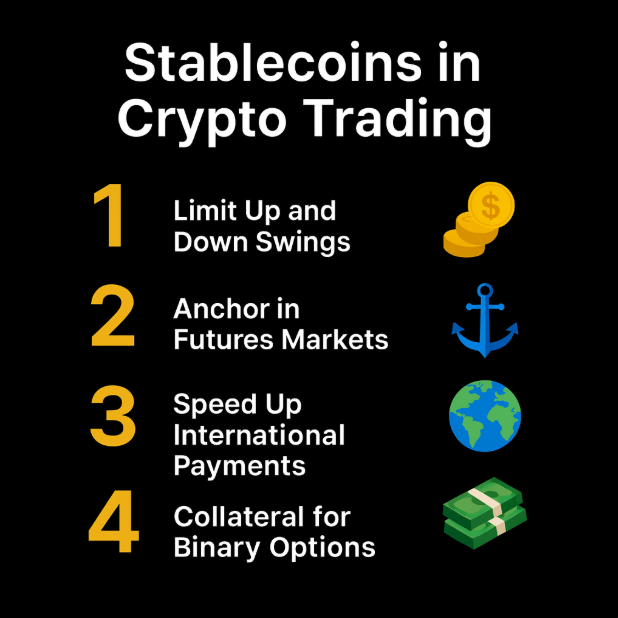
Stablecoins have become a backbone of the crypto market. Since their value stays steady, traders use them as a reliable base currency. Instead of cashing out to a bank account every time, they switch into coins like USDT or USDC to keep funds ready. Stablecoins are also actively traded on the secondary market, where their prices can sometimes fluctuate below the peg due to market pressures. This makes it easier to move quickly between tokens and strategies, such as how to short crypto when the market turns bearish.
Stablecoins also play a big role on the best crypto contract trading platforms where users open long or short positions without worrying about their collateral losing value. Even in high-risk areas like the best 100x leverage crypto trading platforms, traders often rely on stablecoins for stability before diving into volatile moves.
This shows that the stablecoin meaning goes beyond just being “digital dollars”; they are an essential tool for modern crypto trading.
Risks and Limitations of Stablecoins
Stablecoins sound simple, but they aren’t risk-free. Here are a few things you need to keep in mind before trusting them completely.
- Regulation can change overnight. Governments are still figuring out how to treat stablecoins. If rules tighten, coins like USDT or USDC could face restrictions.
- Reserves aren’t always transparent. Some issuers claim they’re backed 1:1 with dollars, but not all publish audits. This caused controversy with Tether in the past.
- Algorithmic coins can collapse. TerraUSD’s crash in 2022 showed how unstable an “algorithm-only” design can be. Billions in value were wiped out.
- Stablecoins are tied to platforms. If an exchange freezes withdrawals, your stablecoins can get stuck. This risk grows in areas like crypto binary options where trading happens outside regular spot markets.
- They aren’t fully safe havens. Even though they’re more stable than Bitcoin, they can still lose their peg under stress, which happened briefly with USDC in 2023.
Belief
Reality
Example
Always backed 1:1 with cash
Reserves can include bonds or loans
Tether (USDT)
Algorithms keep coins stable
They can fail in a crash
TerraUSD collapse
Stablecoins never lose value
Pegs sometimes break under stress
USDC depeg in 2023
Always easy to withdraw
Exchanges can freeze withdrawals
Several platforms in 2022
Conclusion
Stablecoins is a digital currency built to stay steady while the rest of the crypto market moves up and down. From trading on exchanges to sending money overseas, stablecoins have become one of the most practical tools in crypto. They aren’t perfect, but their balance of speed, stability, and flexibility makes them essential for beginners and pros alike.
If you’re exploring crypto, stablecoins are a safe place to start.