





 Some of the links on this site may be affiliate links. ICOBench may receive advertising commissions when users visit recommended platforms via our affiliate links, at no additional cost to you. All recommendations are based on a comprehensive review process.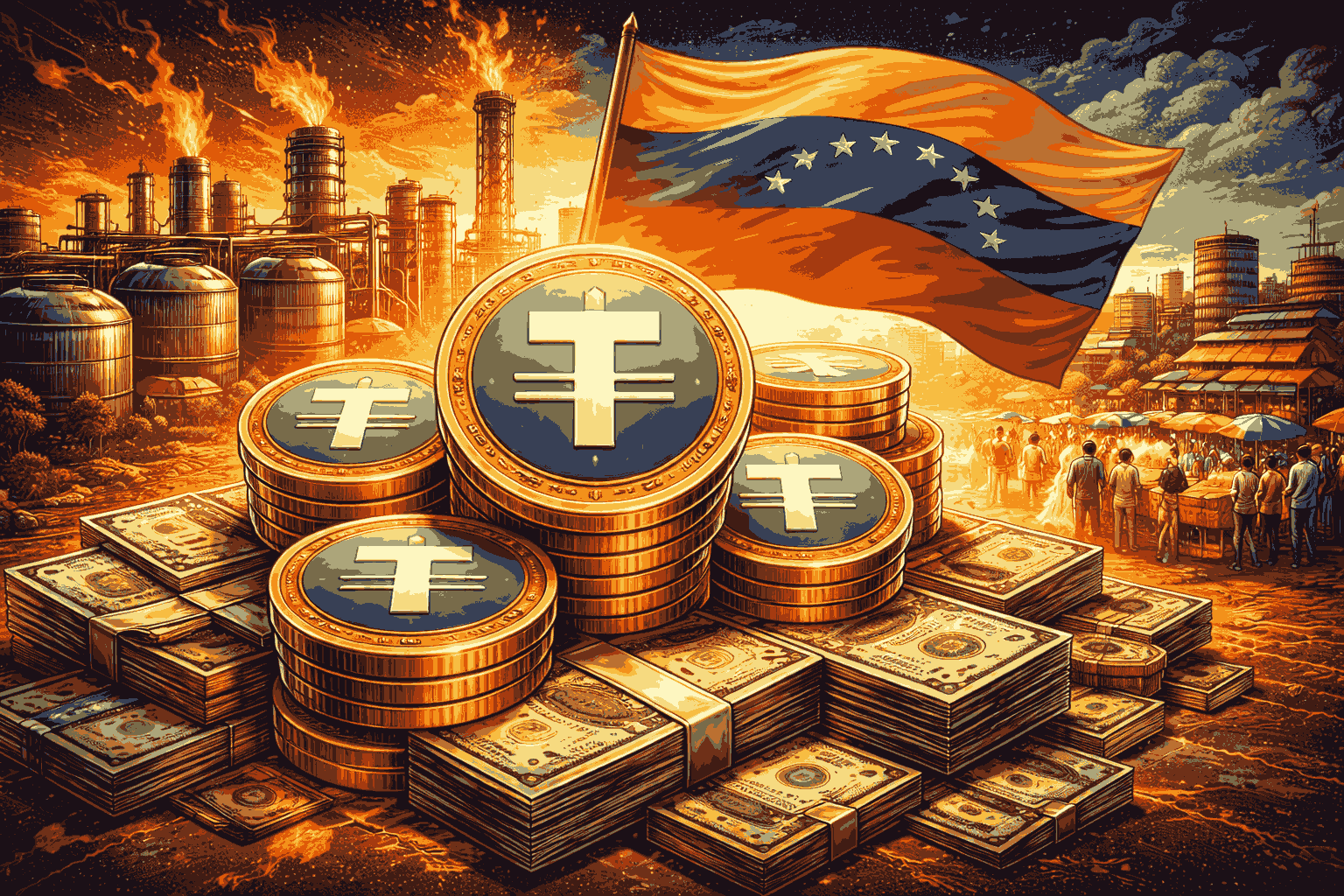
Tether’s USDT stablecoin has become deeply embedded in Venezuela’s economic activity, emerging as a critical financial tool for both the government and ordinary citizens under the weight of international sanctions.
Exploring Tether's USDT Impact in Venezuela and Iran Reveals Stablecoin Duality
Recent geopolitical and economic crises in Venezuela and Iran have reignited debate over the dual roles of stablecoins, especially those backed by the US dollar, such as T…https://t.co/mSwAjSuGn5
— Crypto Breaking News (@CryptoBreakNews) January 12, 2026
According to a report by The Wall Street Journal, Venezuela’s state-owned oil company PDVSA has been using USDT to receive payments for crude oil exports as a way to bypass restrictions on access to the global banking system imposed by U.S. sanctions.
With traditional international payment rails largely closed off, USDT has effectively become a key settlement and funding mechanism for the country. Economists estimate that as much as 80% of Venezuela’s oil sales may now be settled in USDT, highlighting the scale of the shift toward stablecoin-based trade.
Local companies reportedly use USDT obtained from oil transactions to pay domestic and international counterparties, creating a parallel trade system that allows commerce to continue despite financial isolation.
USDT as a Daily Currency for Venezuelan Citizens
Beyond the energy sector, USDT usage has expanded rapidly among everyday Venezuelans. The Wall Street Journal notes that the country has suffered hyperinflation over the past decade, with the bolívar losing more than 99.8% of its value, pushing citizens to seek more reliable stores of value and payment methods.
USDT, commonly referred to locally as the “Binance dollar,” is now used for a wide range of daily transactions, including grocery purchases, apartment maintenance fees, and even salary payments.
Although the government previously viewed stablecoins as a threat to monetary sovereignty and attempted to restrict their use, economic pressure from sanctions has forced a policy shift. Authorities now appear to tolerate USDT as an informal mechanism for managing foreign exchange flows.
Government officials have acknowledged adopting “non-traditional mechanisms” to help stabilize the bolívar’s exchange rate, effectively recognizing the role of stablecoins in the domestic economy.
As a result, Venezuela has become one of the most active regions globally for cryptocurrency usage and investment.
Tether’s Response and Growing Regulatory Scrutiny
In response to concerns about sanctions evasion, Tether has stated that it strictly complies with U.S. and international sanctions regimes. The company says it cooperates with authorities when required and freezes wallets linked to illicit activity.
Tether has previously disclosed that it froze 41 wallets in 2024 connected to unlawful transactions.
U.S. authorities are also stepping up oversight. The Department of Justice has prosecuted individuals involved in oil smuggling schemes that allegedly used USDT, while lawmakers continue to debate legislation aimed at regulating stablecoin issuers.
There are also claims that the Venezuelan government has accumulated a so-called “shadow reserve” worth up to $60 billion in Bitcoin and USDT, though such figures remain difficult to independently verify.
Despite potential political instability , including speculation around the arrest of President Nicolás Maduro , analysts believe USDT usage in Venezuela is unlikely to decline. Having become embedded in both state operations and everyday commerce, the stablecoin now functions as a critical component of the country’s economic infrastructure.