


 Some of the links on this site may be affiliate links. ICOBench may receive advertising commissions when users visit recommended platforms via our affiliate links, at no additional cost to you. All recommendations are based on a comprehensive review process.
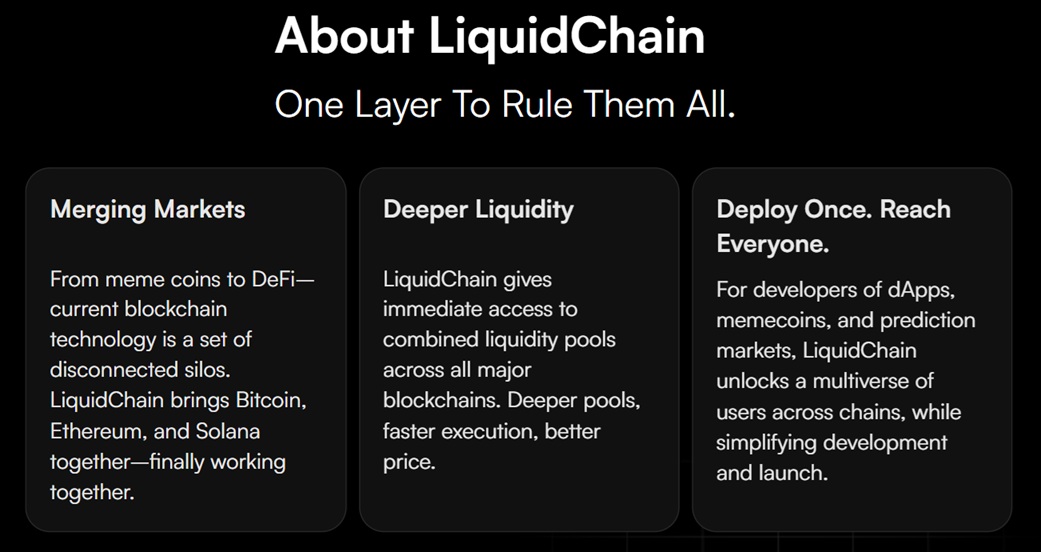
Blockchain promises a lot – but the actual islands are a mess of isolation. While Ethereum remains the place for institutional capital and Solana dominates the retail meme token world, the distance between them has never felt larger. Developers are forced to pick sides, and users are stuck paying bridging taxes both in gas fees and time while waiting for cross-chain transactions to clear.
It is a fragmentation that prevents DeFi from reaching the trillion-dollar liquidity levels seen in traditional finance.
In 2026, the market has stopped chasing every new Layer 1 and started looking for the connective tissue between the silos, with a narrative shift toward Layer 3 solutions driven by a simple realization: we have enough block space, but we don’t have enough unified liquidity.
So in a rocky period in crypto which, among other price moves, has seen SOL drop nearly 5% in the last 24 hours, investors are moving toward protocols that don’t try to compete with each other, but rather sit on top of them to smooth out the difficulties that make modern on-chain life so disjointed. The constant bridging era of crypto is dying, and it deserves to.
This search for a unified layer has brought significant attention to LiquidChain (LIQUID), a protocol designed to act as the ultimate aggregator. Having already secured $645,000 in its early stages, the project is advancing along its roadmap, with a current entry price of $0.0145. Early participants are currently eyeing a staggering 1666% staking APY – an extreme number, but one that rewards early believers before the crowd cottons on.
The Technical Architecture of Cross-Chain Unification
LiquidChain operates as a Layer 3, meaning it doesn’t try to settle transactions on its own isolated hardware. Instead, it uses the security of Ethereum, the speed of Layer 2s, and the low-cost execution of Solana. It offers a liquidity router that removes the underlying chain from the user experience.
You don’t bridge to LiquidChain; you interact with it as a single point of entry for any asset, regardless of where it actually lives. It is a fundamental departure from the wrapped-token models of the past.
The next layer starts here. 👁⟁https://t.co/vqvBcdSQYC pic.twitter.com/vBzPngPk2e
— LiquidChain (@getliquidchain) April 6, 2026
The architecture has been vetted by both SpyWolf and Certik, providing the technical assurance required for a project handling cross-chain flows in 2026. By seeing all large protocols as liquidity rather than using a traditional bridge, LiquidChain avoids the common pitfalls of locked and minted assets.
Instead, it facilitates atomic swaps and state-synchronization across networks like Arbitrum and Ethereum to source liquidity, and the LIQUID token serves as the functional gas and governance layer for this unified ecosystem, ensuring that every transaction across the pools contributes to the network’s internal economy.
The brilliance of the Layer 3 approach is its adaptability because, as new scaling solutions emerge on Solana or Ethereum, LiquidChain simply plugs into them. It treats every chain equally while providing the user with a single balance and a single interface.
This means users do not need to maintain multiple gas tokens or manage dozens of seed phrases across disparate wallet architectures. The protocol handles the backend, allowing the user to focus on the trade, not the tools.
Why LIQUID Might Be Next to Explode
The sheer volume of capital currently siloed in Arbitrum and Solana is a powder keg and, as these ecosystems continue to diverge technically, the economic necessity for a protocol like LiquidChain becomes obvious.
This is why many analysts see LIQUID as the next crypto to explode, not as another speculative token but as a play on the inevitable commoditization of block space. When the underlying chain no longer matters to the end user, the platform that provides the interface becomes the most valuable asset in the stack.
The momentum of the presale suggests that the market is beginning to understand this utility, as raising $645,000 in a crowded 2026 market is no small feat, particularly for a Layer 3 project focusing on the technical heavy lifting of interoperability.
The 1666% APY for stakers also acts as a powerful incentive for long-term holding and creates a tailwind that favors early adopters who understand the shift from L1 dominance to L3 utility.
Furthermore, the price point of $0.0145 offers a low barrier to entry for a project that is aiming to solve a multi-billion dollar problem. In the current cycle, investors have become wary of “high FDV, low float” tokens that dump on retail. LiquidChain’s transparent presale and audited code suggest a more sustainable growth pattern.
Is LayerChain The New Standard for Interoperability?
Crypto does not need more chains, but it does need fewer barriers. LiquidChain is building the unlocked gate that connects them all, with a technical foundation verified by top-tier auditors and a roadmap focused on removing the friction from DeFi.
The move from a fragmented multi-chain world to a unified liquidity environment is the final hurdle for mass adoption. If users can interact with dApps without knowing whether they are on Ethereum or Solana, the industry will finally achieve the invisible tech status required for the next billion users.
LiquidChain is laying the groundwork for that reality today, with high staking rewards and the mission-critical nature of its Layer 3 architecture. The project has found a product-market fit that few in its category can match.