Some of the links on this site may be affiliate links. ICOBench may receive advertising commissions when users visit recommended platforms via our affiliate links, at no additional cost to you. All recommendations are based on a comprehensive review process.
Monero has clearly woken up. After pumping more than 30% in mid-January, XMR has pushed its market capitalization back above the $10 billion mark, reminding the market why privacy coins still command attention during volatile periods. The move has been strong, and well supported by renewed trading activity.
Still, history shows that large-cap rallies often spark a second question among more aggressive market participants. Cryptos like Monero can continue to trend higher, but the search for 10–20x upside usually shifts elsewhere.
That is where early-stage opportunities come into play. In the current environment, many traders are once again scanning the crypto presale market for asymmetric setups. One project that consistently stands out in that discussion is LiquidChain ($LIQUID), which continues to tick the boxes investors look for when evaluating altcoins to buy ahead of the next expansion phase.
The Solution: Why LiquidChain Targets a Much Bigger Market Than XMR
(Best crypto to buy thesis at the infrastructure level)
LiquidChain is not competing with Monero, Bitcoin, or Ethereum at the asset level. Instead, it focuses on the infrastructure layer where capital movement actually breaks down. According to its whitepaper, LiquidChain is focused to act as a global settlement layer for DeFi as this allows capital to flow freely across ecosystems rather than remaining locked in isolated chains.
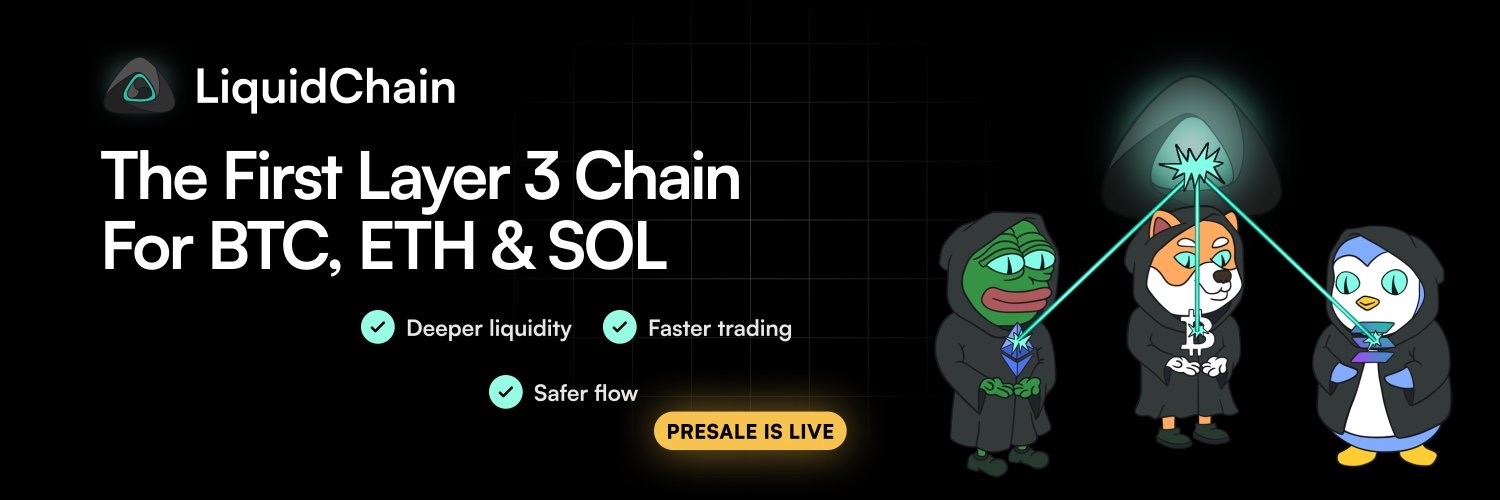
The core problem is fragmented liquidity. Bitcoin, Ethereum, and Solana each host massive pools of capital, but that liquidity is siloed. Moving value between them requires bridges, delays, fees, and additional security assumptions. LiquidChain approaches this differently by creating unified liquidity pools where assets from BTC, ETH, and SOL are verifiably represented within one execution environment, forming deeper and more efficient cross-chain markets.
At the technical level, LiquidChain introduces a high-performance virtual machine built for real-time DeFi execution. Inspired by Solana-class throughput, the Liquid VM is designed to handle multi-chain operations instantly rather than sequentially.
On top of that, cross-chain proofs and messaging allow Bitcoin UTXOs, Ethereum accounts, and Solana states to interact securely and atomically. The result is not “another blockchain,” but a meta-layer that merges the three largest ecosystems into a single liquidity engine.
This is why LiquidChain’s thesis is fundamentally different from a price-driven rally like Monero’s. It is positioned where capital coordination happens, not where narratives rotate. That distinction is critical when evaluating the best crypto to buy for the next cycle rather than the last one.
Crypto Presale Momentum, Tokenomics, and Why Early Capital Is Moving In
Beyond the technical design, LiquidChain’s presale numbers are increasingly hard to ignore. Its crypto presale is still active, with $LIQUID priced at $0.013 and total funds raised now exceeding $400,000. This price level reflects early-stage risk, not mature infrastructure adoption, which is exactly what attracts investors looking for outsized returns.
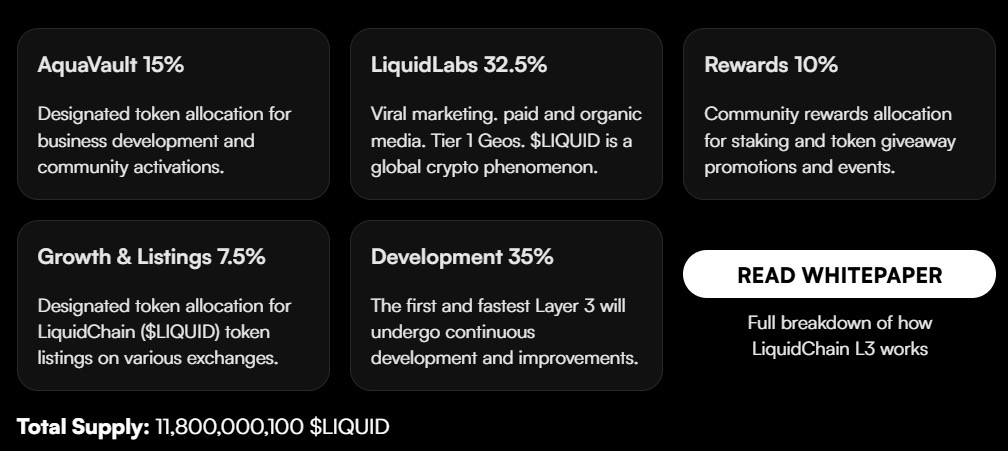
The total supply is set at 11.8 billion $LIQUID. Development receives 35% to ensure continuous protocol upgrades. LiquidLabs holds 32.5% to support global growth and ecosystem expansion. AquaVault accounts for 15% to fund business development and community activation. Rewards are allocated 10% to support staking and incentives, while 7.5% is reserved for growth and exchange listings.
Staking adds another layer of urgency. By staking $LIQUID, participants help secure the network while earning rewards from the incentives pool. Early staking phases offer higher yields, but those APYs decrease as more tokens are locked. This structure rewards early conviction and gradually tightens circulating supply; a setup that has historically favored price expansion once demand accelerates.
As presale stages progress, the entry price increases. That dynamic is driving much of the current momentum, especially among investors who view LiquidChain as one of the more interesting altcoins to buy at the infrastructure level.
Why $LIQUID, Not $XMR, Fits a High-Upside Strategy Right Now
Monero’s recent pump shows renewed confidence in established assets, but it also underscores their limitations. With a market cap already above $10 billion, the upside profile naturally compresses. That does not make XMR unattractive, but it does change the risk-reward equation.
LiquidChain operates in a different category entirely. Its valuation is still anchored in a crypto presale, its addressable market spans multiple blockchains, and its role sits at the execution layer where future DeFi growth converges. For investors prioritizing percentage returns rather than capital preservation, that difference matters.
When comparing opportunities side by side, Monero represents strength in an existing narrative, while LiquidChain represents exposure to a structural shift in how liquidity moves across crypto. That is why many now frame $LIQUID as the best crypto to buy for those willing to position early.
Explore LiquidChain and its ongoing crypto presale:
Presale: https://liquidchain.com/
Social: https://x.com/getliquidchain
Whitepaper: https://liquidchain.com/whitepaper