


 Some of the links on this site may be affiliate links. ICOBench may receive advertising commissions when users visit recommended platforms via our affiliate links, at no additional cost to you. All recommendations are based on a comprehensive review process.

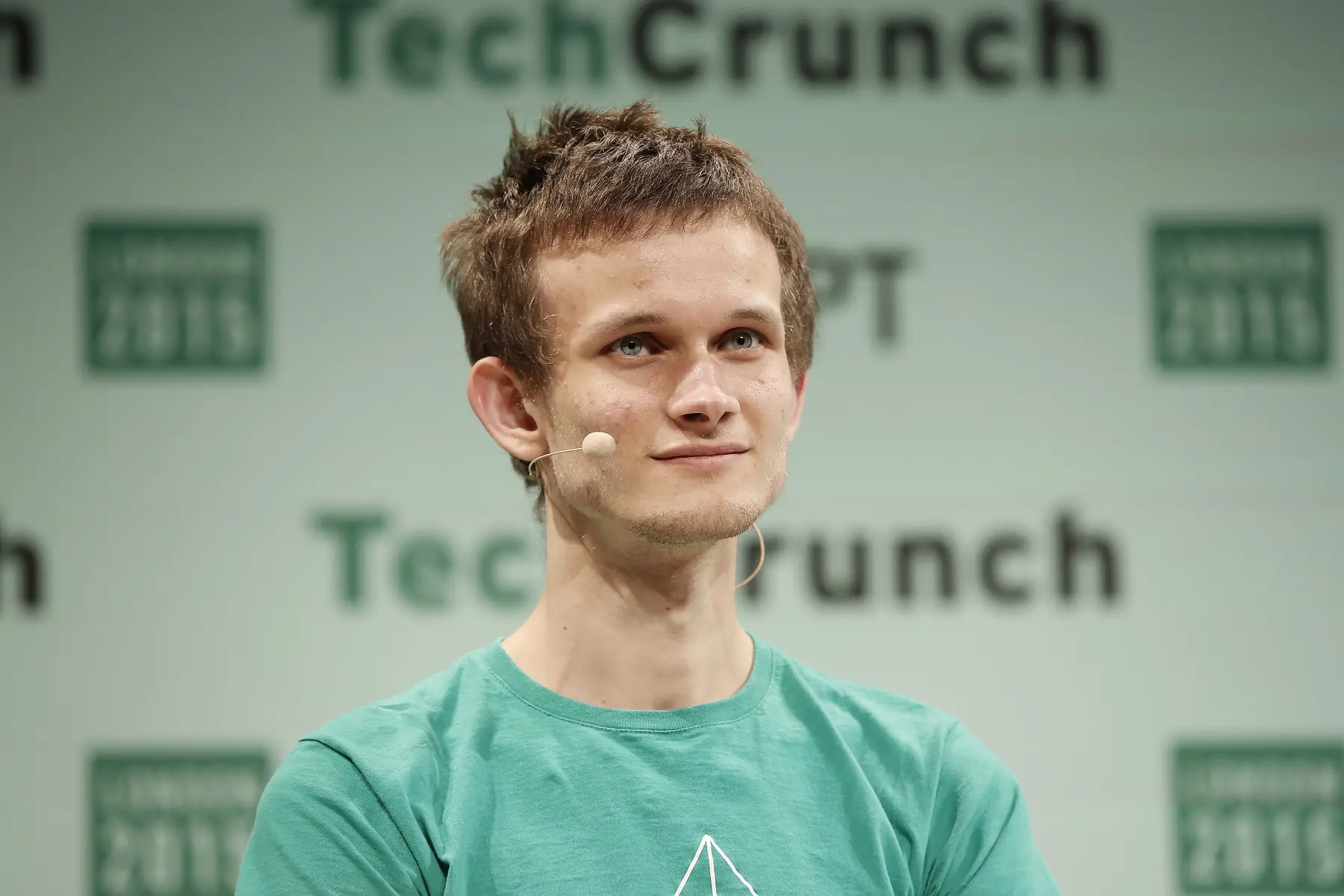
Ethereum co-founder Vitalik Buterin published an essay titled “The cryptographic world computer”. In the essay, he outlines a 2030 vision in which the network moves beyond a conventional replicated blockchain toward a settlement, privacy and verification layer for computation carried out largely off-chain.
The proposal describes external computers performing transaction and application work and submitting compact mathematical proofs that others can check far faster than they could repeat the original calculations. It is a long-term architectural vision from Buterin, not a deployed feature set or a governance-approved delivery schedule.
Trade Securely With 0% Trading Fees on BinanceThe cryptographic world computer:https://t.co/ueayODeUPo
My attempt to express in somewhat concise terms the true meaning of basically everything planned to happen to Ethereum starting from the fork after Hegota. It's really not just a blockchain anymore. It's a hybrid…
— vitalik.eth (@VitalikButerin) September 27, 2026
Ethereum: What is Vitalik Buterin’s 2030 Cryptographic World Computer Vision?
Today, a computer fully verifying Ethereum repeats the calculations behind every transaction: confirming a sender had enough balance, or that an application followed its own rules. That redundancy keeps the network honest, but means adding more computers does not automatically add more capacity, since each machine stays busy re-checking the same activity.
Buterin’s proposed system pairs the blockchain with zero-knowledge proofs and networks of computers working outside it. A computer might handle transactions and produce a brief proof of compliance with the rules; other participants could check this proof instead of repeating the task, while occasional spot checks would ensure that transaction records remain open for review.
That division of labor is central to how a related mechanism, detailed in Ethereum’s proposed segmented broadcast changes, would ease the bandwidth constraints of propagating more data across the network. The broader shift toward rollups, Layer 2s, and emerging Layer 3s already anticipates a version of this settlement-and-verification role, as explored in recent coverage of new Layer 2 and Layer 3 designs.
What’s the Argument Behind Ethereum’s Shift?
Buterin argues that Ethereum’s developers tried to distribute work this way a decade ago but could not reliably confirm that every participant had done its part correctly. He frames modern cryptographic verification tools as the missing piece that now makes parallelized, off-chain computation practical without sacrificing the independent checks that keep the network trustworthy.
He also extends the idea to privacy: checking a wallet balance today typically means querying an outside server, whose operator can learn which accounts a person follows even when payment amounts stay private. Buterin’s plan would hide those balance requests alongside payment details and spending rules, so a business could keep transactions confidential without exposing which accounts belong to it.
Don’t Miss: Best Crypto Presales This Quarter
What Does the Vision Mean for the Ethereum Investment Case?
If realized, the design could widen Ethereum’s addressable market across rollups, payments, institutional applications, and privacy-preserving computation. That would reshape the ETH investment case around value capture from settlement, proof verification, data availability, and staking, rather than raw transaction volume. A dynamic already partly visible in how account abstraction is redefining programmable payments, discussed in Ethereum’s account abstraction roadmap.

That reframing cuts both ways. More network activity would not automatically translate into higher fees or price appreciation if cheaper, proof-based scaling makes blockspace abundant. Unresolved engineering questions – the cost of generating proofs, coordinating shared state across parallel computers, and cost or privacy limits for complex applications – remain the gating factors between Buterin’s essay and any measurable shift in ETH’s economics.
What Comes Next for Ethereum’s Roadmap?
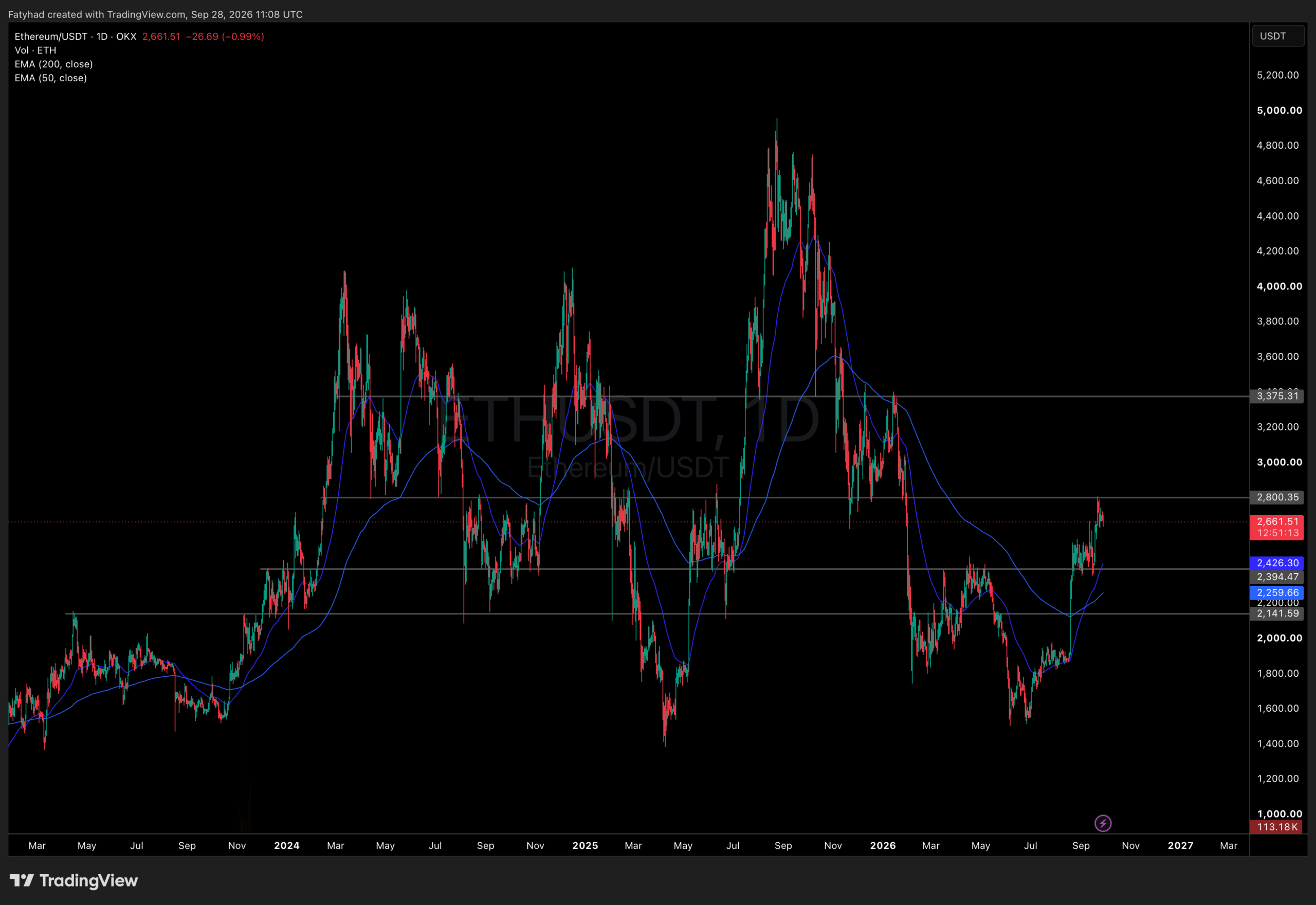
Buterin expects Hegotá, the upgrade planned for the following year, to be Ethereum’s last “normal” fork built with technology familiar to a developer working on the network in 2015. Subsequent upgrades would lean increasingly on mathematical proofs, software-verification tooling and security designed to withstand future quantum computers.
Under this vision, payments could become final in roughly eight to 32 seconds: a target rather than a firm specification. Reaching it depends on making proofs cheap enough for widespread use and ensuring that computers handling separate jobs can update shared balances. All of this without interfering with one another, turning the cryptographic world computer from an essay to an engineering reality.
Don’t Miss: ICOBench Experts Call the Next 1000x Crypto Coins for 2027