


 Some of the links on this site may be affiliate links. ICOBench may receive advertising commissions when users visit recommended platforms via our affiliate links, at no additional cost to you. All recommendations are based on a comprehensive review process.

Bitcoin (BTC) traded near $84,375 on Wednesday, September 30, up about 0.6% over 24 hours. With the quarter closing today, BTC is on track for a Q3 gain of roughly 44%, its strongest quarter since Q4 2024. The rally now faces a key test: can buyers defend the $82,000–$83,000 area while high Treasury yields and Fed expectations weigh on demand?
A strong quarter alone does not confirm a lasting trend reversal. The immediate question is whether spot buying can keep Bitcoin above its recent consolidation floor.
Trade Securely With 0% Trading Fees on BinanceJUST IN: Spot Bitcoin ETFs bought up for 9 straight days.
Sept. total reaches $2.8B with 1 day left.
Institutional demand keeps accelerating! pic.twitter.com/3mmwlu0REp
— Bitcoin Archive (@BitcoinArchive) September 30, 2026
Can Bitcoin Hold the $82,000 Support Zone?
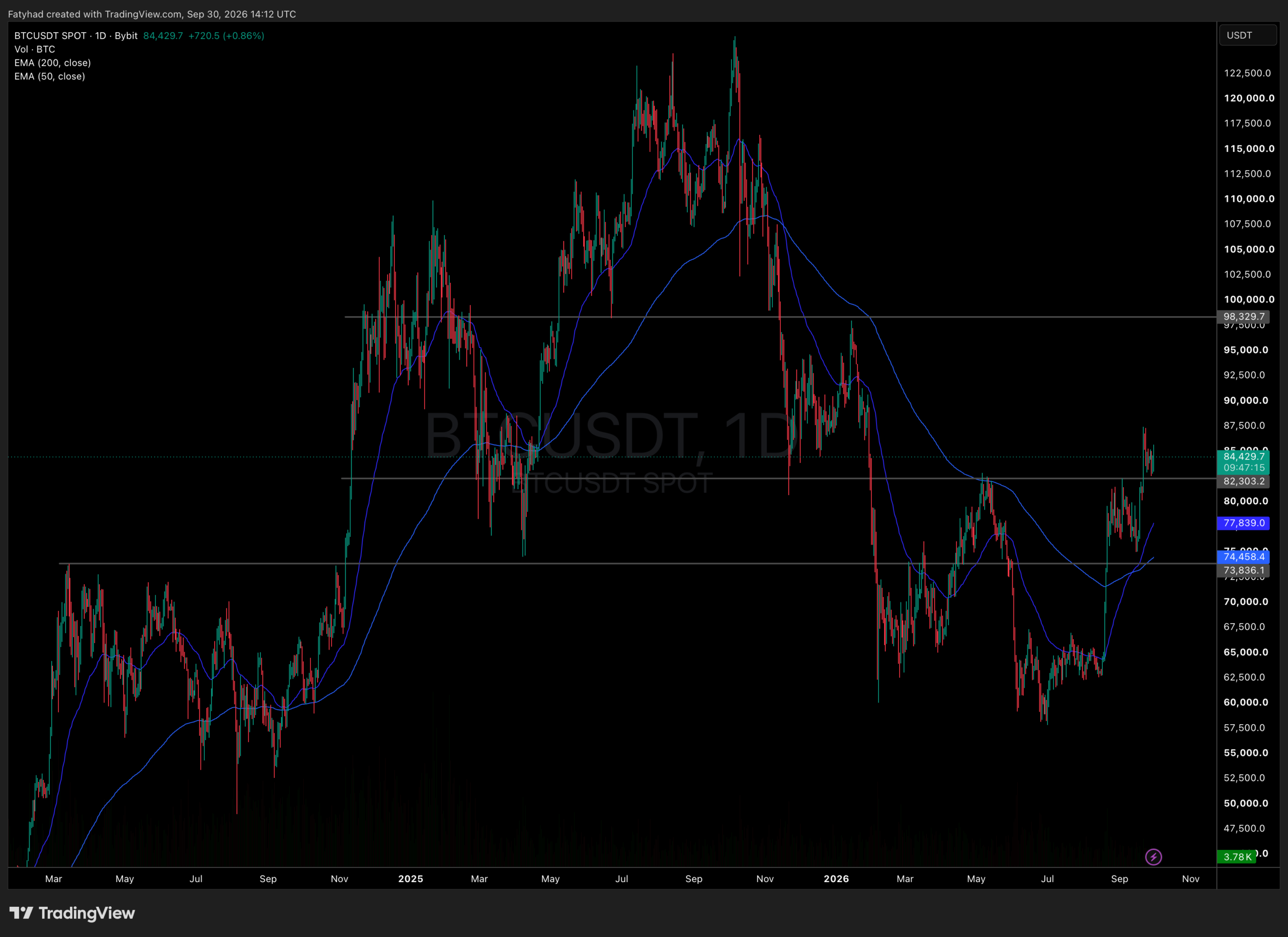
Bitcoin has traded mostly between $83,000 and $85,000 since hitting highs near $87,392 on September 21.
The daily chart shows support near $82,300, a level Bitcoin has now reclaimed as a floor after breaking above it this month. Over the past 24 hours, BTC dipped to about $82,911 and bounced back.
To strengthen the bullish case, Bitcoin needs to reclaim $85,000. Bitfinex flags heavy cost-basis supply between $85,000 and $86,500. A clean move through that band would bring the $87,300–$87,400 highs back into view. Above that sits the $87,722 yearly open.
On the downside, Bitfinex’s True Market Mean near $77,000 is the main structural support. The 50-day moving average sits close by, near $77,800.
Don’t Miss: ICOBench Experts Call the Next 1000x Crypto Coins for 2027
Are ETF Inflows Strong Enough to Offset High Yields?
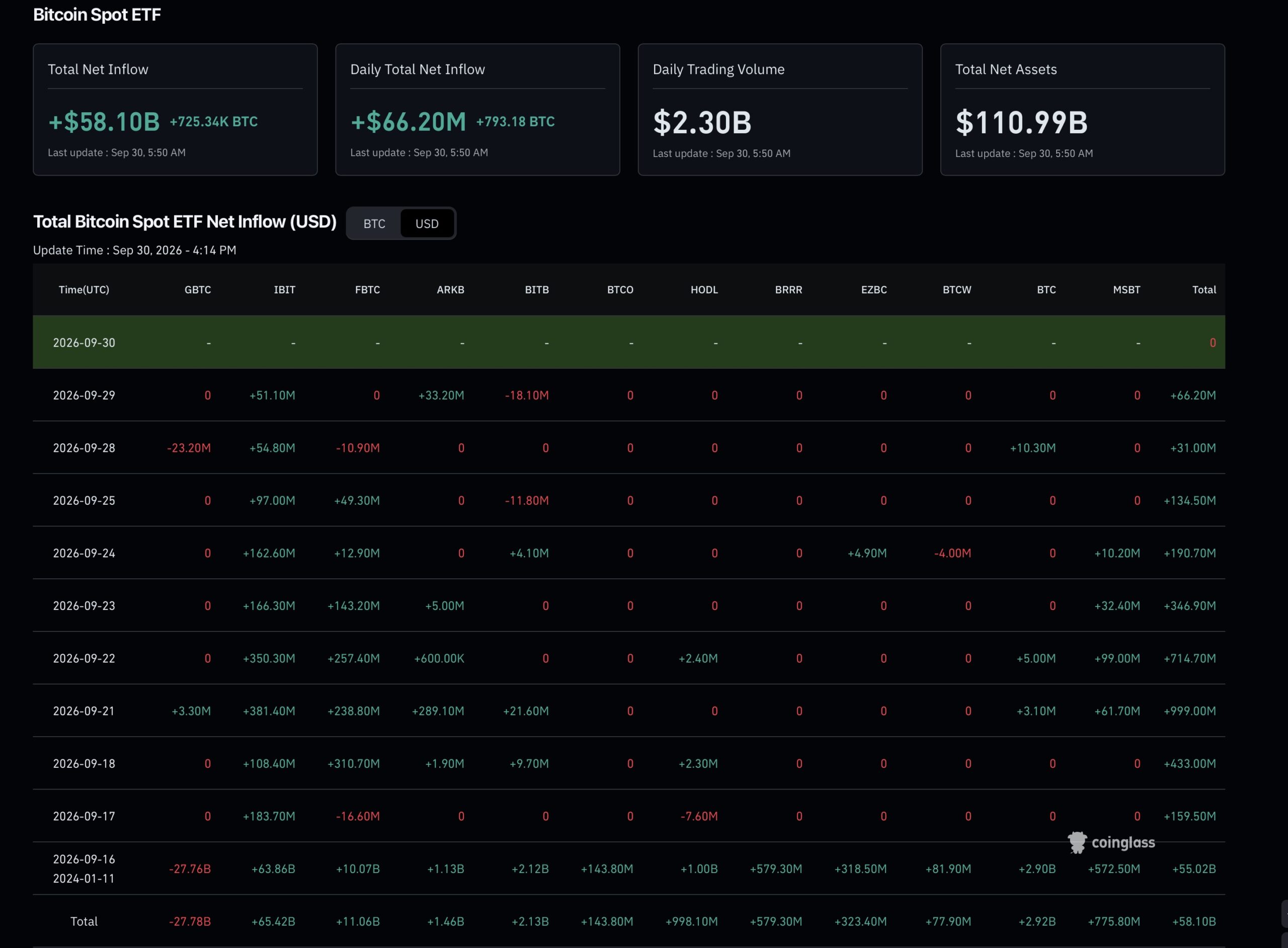
ETF demand remains a key confirmation signal. U.S. spot Bitcoin ETFs took in about $2.39 billion between September 21 and 25, the largest weekly total since October 2025, CoinGlass data shows.
That pace has cooled sharply, however. Daily inflows slipped from $999 million on September 21 to $31 million on September 28 and $66 million on September 29. The Coinbase Premium Index stayed negative, a sign that U.S. spot demand is softer than headline flows suggest.
Macro conditions pull the other way. Market reports put the 10-year Treasury yield above 5.2%, near a 19-year high, as traders priced sticky inflation. Higher yields make safer assets more attractive and can weigh on Bitcoin. Fed hike fears have eased slightly, though, with Polymarket now favoring no change in October.
Regulatory optimism, corporate buying by Strategy, and fiscal worries all helped power the Q3 rally, beating Bitcoin’s usually weak Q3 seasonality. Still, past strength cannot rule out a reversal if flows fade.
Bitcoin Holds $82,000: What Comes Next for Bitcoin in Q4?

- Bull case: Bitcoin holds $82,000–$83,000, and ETF demand stays positive. Reclaiming $85,000 would then put the $87,300–$87,722 resistance zone in focus. A sustained break above it would suggest the Q3 rally can extend.
- Bear case: Losing the low-$82,000s would break the current range. Sellers could then target the $77,000–$78,000 area, where the True Market Mean and 50-day average meet. Rising yields, a hawkish Fed or weaker ETF flows would add to that risk.
The Q3 rally has restored momentum, but confirmation depends on two things: support holding near $82,000, and demand absorbing supply between $85,000 and $86,500.
Don’t Miss: ETF Experts Predict The Next Crypto to Explode in 2026