




 Some of the links on this site may be affiliate links. ICOBench may receive advertising commissions when users visit recommended platforms via our affiliate links, at no additional cost to you. All recommendations are based on a comprehensive review process.
Bitcoin trades near $86,190 on Friday, October 2, up about 3% in the last 24 hours. BTC climbed 3% to $86,650, lifting its weekly gain to 2.6% for a third straight week. After a 6.4% rise in September, the case for “Uptober” is back in focus.
However, the U.S. nonfarm payrolls report due later today could decide whether that momentum holds. The setup depends on data, not the calendar. A weaker jobs report could ease pressure on risk assets. A stronger one could revive bets on more Fed rate hikes.
Trade Securely With 0% Trading Fees on BinanceHeads up.
The US non-farm payroll and unemployment rate data is coming out today.
Consensus is at 90K, softer than last month's big surprise of 162K.
A print below 90K would spark a bullish reaction for $BTC.
It's going to get volatile. pic.twitter.com/B9imR8sEqA
— BATMAN ⚡ (@CryptosBatman) October 2, 2026
Is Uptober Seasonality a Reliable Bitcoin Signal?
Bitcoin has gained in 10 of the past 15 Octobers. Positive months averaged gains of 27.4%, while negative ones averaged declines of 13%. That gives buyers a historical tailwind, but the size of those losses shows why history is not a price target.
October 2025 is a clear warning. Bitcoin hit a record high near $126,000 early that month, then turned lower as U.S. tariff threats and AI-related worries pushed investors away from crypto.
Bitcoin enters this October after three straight monthly gains, having recovered from a 2026 low near $58,000. Still, it remains about 2% below its yearly open, so the rebound has not yet erased the year’s losses.
Historically, October is one of the best months$BTC pic.twitter.com/WpijQowGhi
— Inmortal (@inmortalcrypto) October 1, 2026
Don’t Miss: ICOBench Experts Call the Next 1000x Crypto Coins for 2027
Payrolls and Rising Yields Set the Macro Test
Friday’s payroll release is the immediate catalyst because employment and inflation are central considerations in Federal Reserve rate decisions. A stronger-than-expected result could give policymakers more room to raise rates, reinforcing a headwind for Bitcoin; weaker data could support risk assets by reducing pressure for further tightening.
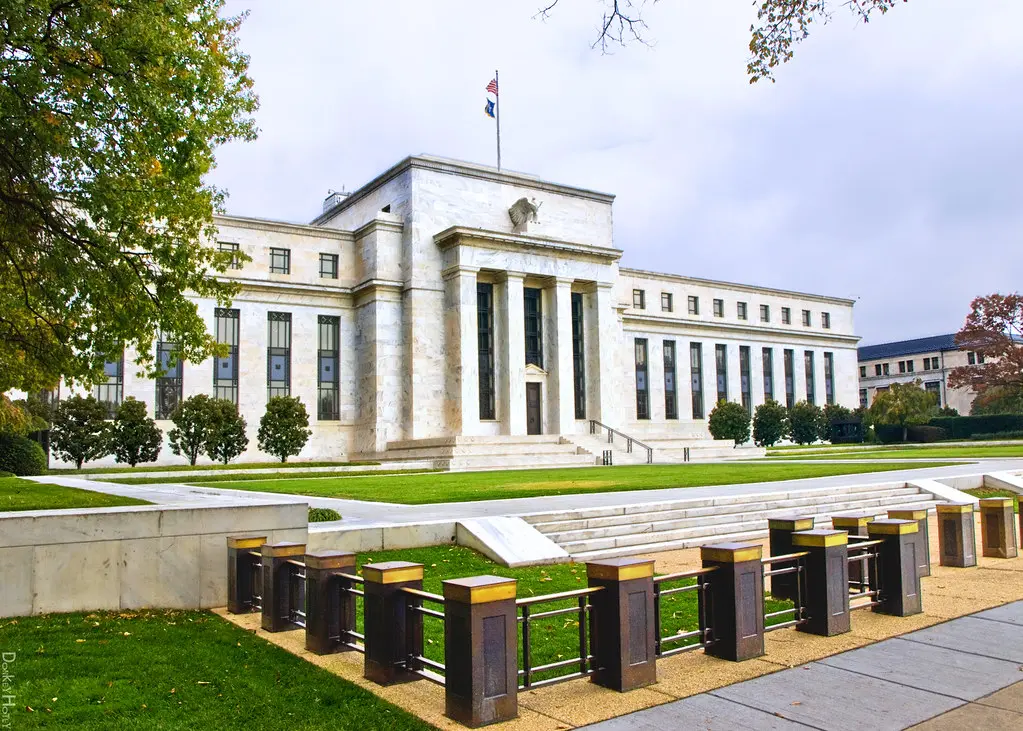
The backdrop is already challenging. U.S. Treasury yields rose sharply during the week, while sticky-inflation concerns and mixed commentary from Fed officials kept rate-hike risks alive. Persistent U.S.-Iran tensions add another source of uncertainty that could curb demand for riskier assets even if the jobs report offers relief.
That combination matters for Bitcoin’s exposure to rising Treasury yields: higher yields can make less risky, interest-bearing assets more attractive and weigh on crypto sentiment. Bitcoin ETF flows are another useful confirmation signal.
U.S. spot Bitcoin ETFs took in a net 1,230 BTC, about $102.7 million, on October 1, CoinGlass data shows. That reversed a 1,780 BTC outflow on September 30.
Demand was uneven, though. BlackRock’s IBIT added 2,340 BTC, while Fidelity’s FBTC, Grayscale’s GBTC, and several smaller funds saw outflows. Cumulative ETF inflows stand near $58.05 billion, with total net assets of about $111.15 billion.
BTC Price: Which Levels Will Decide October?
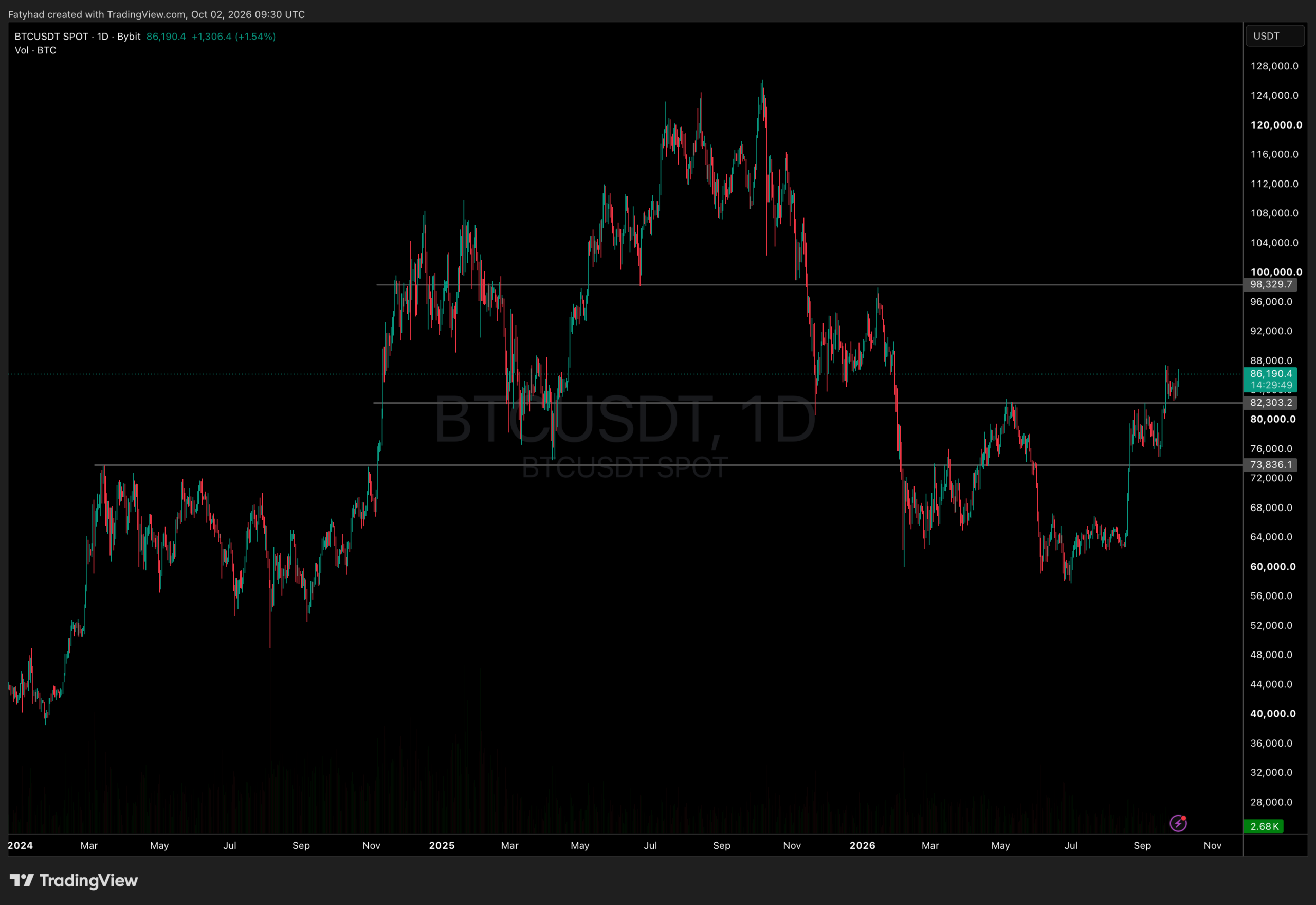
The daily chart shows Bitcoin holding above its $82,300 breakout level since late September. The next major hurdle is $87,400, the September 21 high.
- Bull case: Weaker payrolls cool hike expectations. If Bitcoin clears $87,400, the $90,000 level comes into view, with $98,300 as the next major resistance. September’s rally, three monthly gains and October’s track record would all support that move.
- Bear case: Strong payrolls revive hike bets and push yields higher. A drop below $82,300 would weaken the recovery and expose $74,000, where Bitcoin last broke out in August.
For now, Bitcoin’s three-week climb shows a recovery, not a confirmed breakout. Until the jobs data and price reaction confirm direction, Uptober remains a plausible upside scenario, not a certainty.
You’re Still Early: 10 AI Agent Coins That Could Win Big Next Bullrun