




 Some of the links on this site may be affiliate links. ICOBench may receive advertising commissions when users visit recommended platforms via our affiliate links, at no additional cost to you. All recommendations are based on a comprehensive review process.
Following XRP news today, Ripple’s price fell nearly 10% to about $1.265 during Asian morning hours on Sept. 16, 2026, after the U.S. Senate’s 49-50 procedural vote failed to advance the CLARITY Act.
Bitcoin slipped nearly 3% to just above $76,000 over the same window, a comparatively muted decline that underscores how much harder the setback landed on XRP and the broader altcoin complex than on the largest cryptocurrency.
Today, the Clarity Act failed to advance in the Senate, a tremendous missed opportunity for American consumers, the digital asset industry, and U.S. competitiveness.
What it doesn't change: Ripple and $XRP stand on settled ground.
The Clarity Act may have fallen short, but the…
— Ripple (@Ripple) September 15, 2026
You’re Still Early: 10 AI Agent Coins That Could Win Big Next Bullrun
XRP News Today: Ripple Leads Losses as the Senate Vote Falls Short
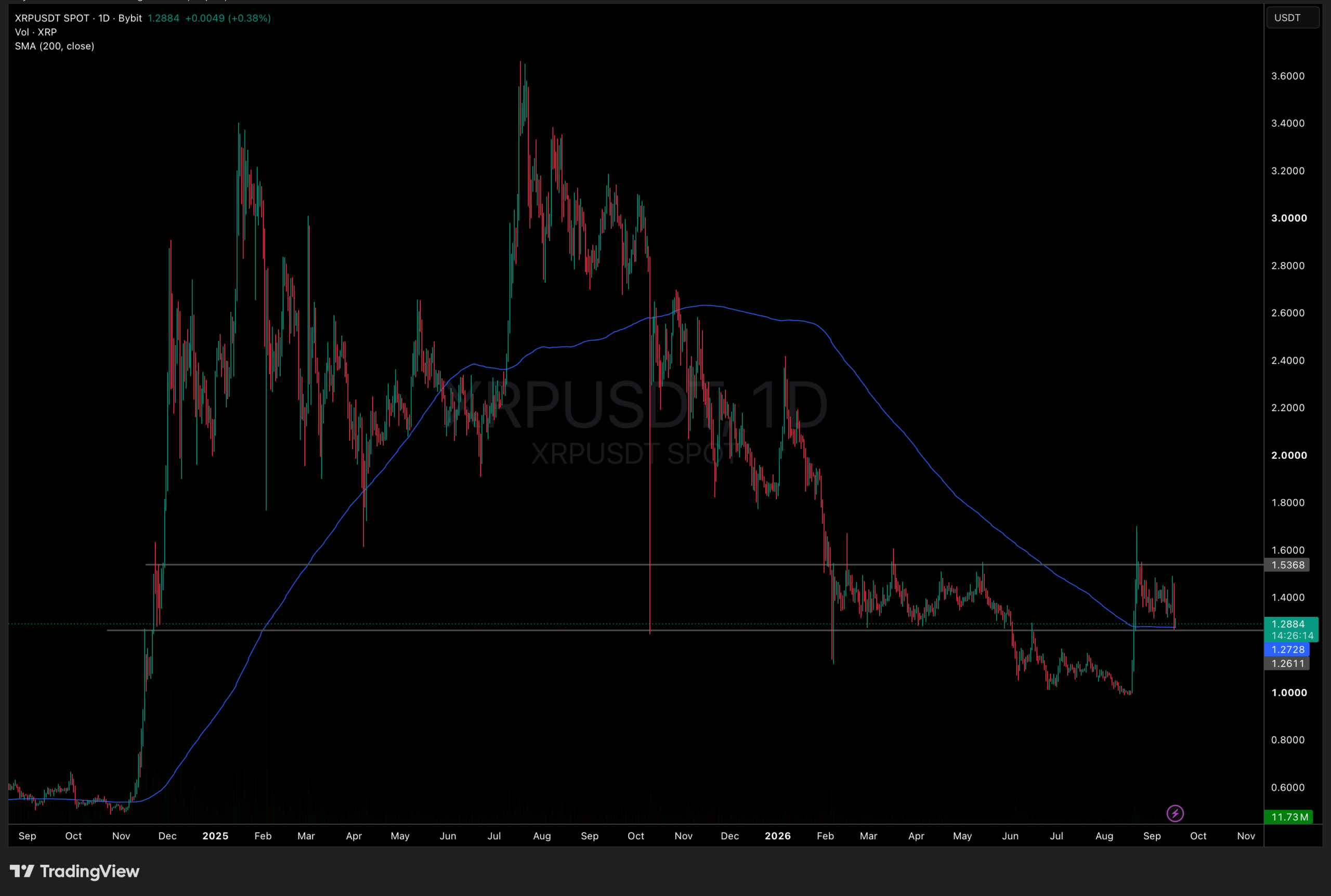
In XRP news today, price’s slide made it the worst performer among major tokens, but it did not fall alone. ETH dropped nearly 5% to about $2,410, Solana fell 5% to just above $97, and Dogecoin lost close to 5%. Zcash and Hyperliquid’s HYPE each declined roughly 4%, while BNB and Tron held up better, down only about 1% apiece.
The cloture vote itself needed 60 senators to move the crypto market-structure bill to debate; it landed at 49-50, meaning the legislation was blocked from advancing rather than formally rejected on its full text. Negotiators had reportedly assembled more than 600 pages of compromise language before the effort collapsed.
The disputes were centered on ethics safeguards, staffing at the Commodity Futures Trading Commission, and gaps in provisions targeting money laundering and terrorist financing. For traders tracking XRP’s price resistance around prior CLARITY Act headlines, this drop confirms the token remains unusually reactive to Washington’s regulatory signals.
Crypto Stocks Absorb the Bigger Hit
Publicly traded crypto companies took an even sharper beating than the tokens themselves. Coinbase fell nearly 9% to $174.42, and Circle dropped more than 9% to $88.26, while Galaxy Digital lost 8% and Gemini fell 7%.
Bullish and Riot Platforms each declined 5%, eToro fell 4%, and Robinhood, MARA Holdings, CleanSpark, IREN, and Core Scientific all fell between 3% and 4%. The pattern suggests investors treated the failed vote as a direct hit to business models built around U.S. regulatory clarity, not just as a sentiment shock to spot prices.
Sen. Elissa Slotkin, a Michigan Democrat, said she voted no because she viewed the bill’s ethics provisions as too weak, pointing to President Donald Trump, his children, and his Cabinet earning income from crypto activity. She also argued the CFTC lacked the staffing needed to implement the framework and that the legislation left unresolved gaps around illicit-finance risk.
Today, I voted no on the Clarity Act, legislation meant to regulate cryptocurrency in America.
The ethics provisions in this bill are simply too thin. President Trump, his children, and his Cabinet are making billions of dollars in the crypto space, in part from bilking everyday…
— Sen. Elissa Slotkin (@SenatorSlotkin) September 15, 2026
Don’t Miss: ETF Experts Predict The Next Crypto to Explode in 2026
Regulators and the Fed Take the Baton
With the CLARITY Act stalled, attention shifts to the agencies the bill was meant to constrain. The Securities and Exchange Commission is already advancing its proposed Reg Crypto framework and rules for tokenized securities.
The framework now stands as the industry’s remaining path toward the kind of crypto regulation certainty Congress failed to deliver, as detailed in this breakdown of what SEC and CFTC action could mean next.
Today, nearly all Senate Republicans voted to advance the Clarity Act, but the motion fell short because of Senate Democrats.
We moved the ball forward, and now it’s time for the @SECGov and @CFTC to set clear rules of the road for digital assets until Congress legislates.
My…
— Senator Tim Scott (@SenatorTimScott) September 16, 2026
Industry political action committees, including Fairshake, must now decide how to treat the senators who voted no before the Nov. 3 election, with a new Congress set to convene in January 2027. Adding to the pressure, the Federal Reserve was due to announce its rate decision later on Sept. 16, with traders leaning toward a quarter-point hike landing on a market already shedding risk after its legislative bid collapsed.
For XRP holders, the setup is binary rather than comfortable: further SEC and CFTC clarity could rebuild confidence quickly. Another quarter of legislative limbo leaves the token exposed to the same regulatory overhang that just cost it a tenth of its value in a single session.
Bitcoin’s smaller drawdown suggests capital is rotating toward the asset with the clearest existing regulatory footing while it waits for Washington to finish what it started.