Some of the links on this site may be affiliate links. ICOBench may receive advertising commissions when users visit recommended platforms via our affiliate links, at no additional cost to you. All recommendations are based on a comprehensive review process.
As the pace of market changes continues to accelerate, modern crypto traders face an overwhelming flood of macroeconomic signals, regulatory headlines, and on-chain data that demand instant interpretation. Traditional analysis tools and human teams simply cannot keep pace with the 24/7 nature of digital asset markets, where a single Fed-related tweet or policy hint can erase billions in market value overnight. Traders who once relied on delayed news wires or lengthy research reports now need technology that distills complex developments into clear, actionable insights without the usual hedging or boilerplate language.
For this article, we used the Grok 4.2 LLM to forecast the prices of Bitcoin, Zcash, and Algorand for the end of 2026. We also dropped in Bitcoin Hyper (HYPER) as a curveball test – and Grok handled it well, generating a balanced but bullish prediction that indicates higher potential upside for HYPER compared to most mainstream cryptos.
Bitcoin (BTC)
According to Grok, “Bitcoin will explode higher because the 2024 halving created the tightest supply shock in history, while institutional demand is just getting started and accelerating fast.” The AI continued by explaining how “every four years the block reward gets cut in half, slashing new Bitcoin entering circulation at the exact moment when global awareness and capital allocation to crypto hit new highs. Spot Bitcoin ETFs have already proven they’re not a one-time event – they’re pulling in steady billions every single month from pension funds, endowments, and wealth managers who were locked out until 2024. On top of that, corporations have finally woken up and are treating BTC as a core treasury asset rather than some speculative side bet; MicroStrategy’s playbook has gone mainstream, with more public companies announcing allocations every quarter.”
Grok also noted that “nation-states are quietly accumulating behind the scenes too, with countries like El Salvador doubling down and others preparing sovereign reserves as a hedge against fiat debasement. From the current $76,300 level, we’re squarely in the classic late-stage bull market where price discovery kicks into overdrive, momentum becomes self-reinforcing, and every dip gets bought with size.”
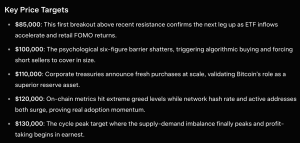
Therefore, Grok concluded that “$130,000 by the end of 2026 could be the result of the perfect storm of technicals, macro tailwinds, and on-chain fundamentals all aligning at once. This cycle’s structural differences (ETFs, corporate balance sheets, and sovereign interest) mean we could skip the usual mid-cycle exhaustion and go straight to new all-time highs with conviction, landing Bitcoin at $130,000 as the supply-demand imbalance reaches its peak.”
Zcash (ZEC)
“Zcash will surge later this year because it is the undisputed king of on-chain privacy in a world where surveillance and data harvesting have become the default,” Grok stated as it began considering the market’s most popular privacy coin. “While most blockchains broadcast every transaction publicly, Zcash’s zk-SNARKs technology enables fully shielded transactions that reveal nothing about the sender, receiver, or amount, yet remain verifiable on the public ledger. In 2026, this feature is no longer niche – shielded pool usage has hit record levels with nearly 30% of all ZEC locked in private addresses, and shielded transactions have reached all-time highs near 60% as users and institutions opt into privacy by default thanks to upgrades like Unified Addresses.”
“Quantum-resistant upgrades, including Project Tachyon and upcoming v6 transactions, are positioning Zcash ahead of future threats from advanced AI and quantum computing that could compromise lesser privacy solutions,” Grok continued. “The recent halving created a sharp supply shock, the dev fund has fully ended (turning the chain into pure proof-of-work with laser-focused miner incentives), and real adoption metrics are finally catching up to the technology that was always years ahead of its time.”
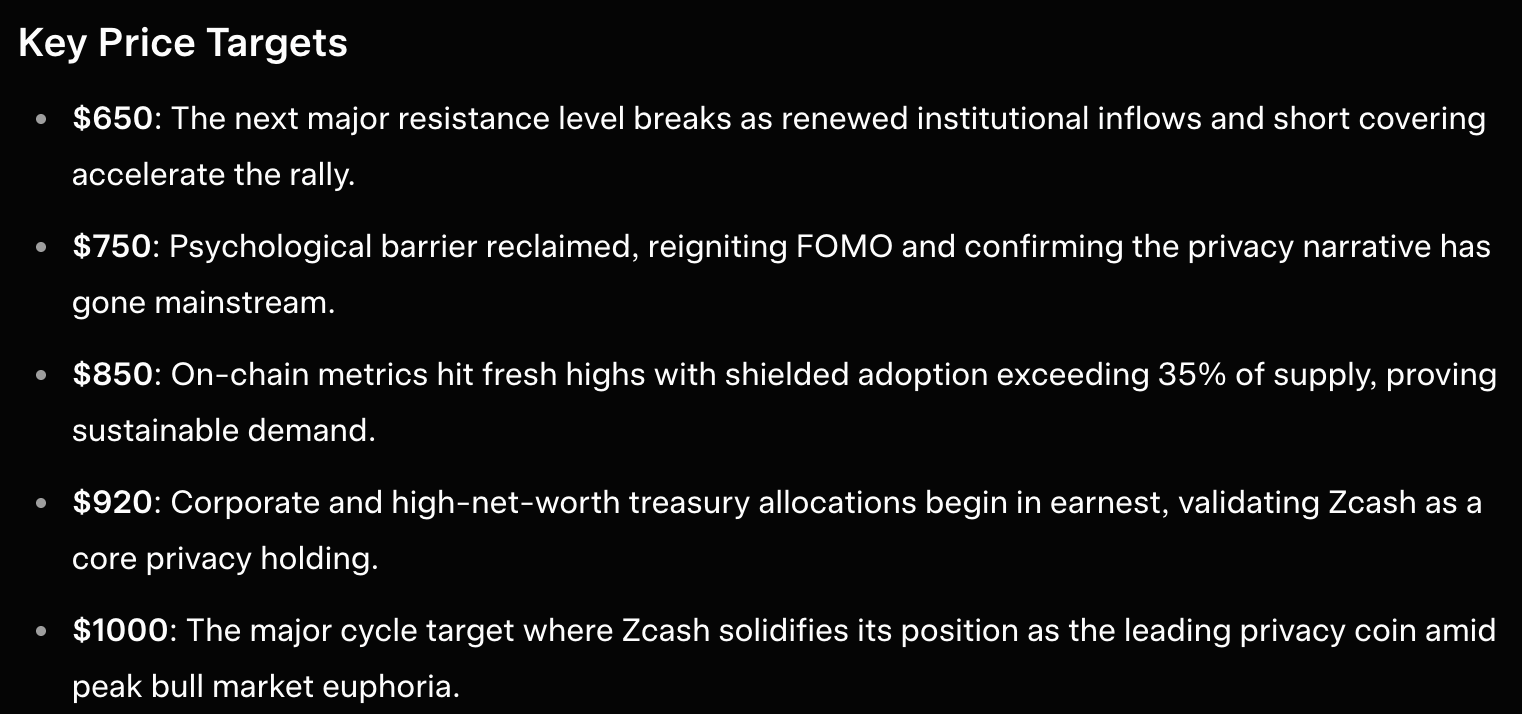
“From the current $560 level, institutional conviction is pouring in with major players like Multicoin Capital disclosing large positions, Grayscale publishing bullish research, and whispers of spot ETF filings adding rocket fuel. A $1,000 ZEC by the end of 2026 is highly probable, due to the powerful combination of institutional conviction, macro tailwinds, and a broadening privacy narrative in the heart of this bull market. As governments ramp up financial surveillance and concerns over AI-driven transaction analysis grow, demand for true privacy infrastructure is exploding while Bitcoin’s strength creates massive capital rotation into high-conviction altcoins like Zcash.”
Algorand (ALGO)
In Grok’s view, “Algorand stands out through its pure proof-of-stake model that achieves rapid finality and exceptional throughput while maintaining energy efficiency and strong security guarantees. The platform has made notable strides in bridging traditional finance with blockchain via tokenized real-world assets, drawing interest from institutions looking for compliant and liquid ways to handle securities and funds on-chain. Growing activity across decentralized finance applications and improved tooling have contributed to higher network usage and engagement from builders who value Algorand’s reliability.”
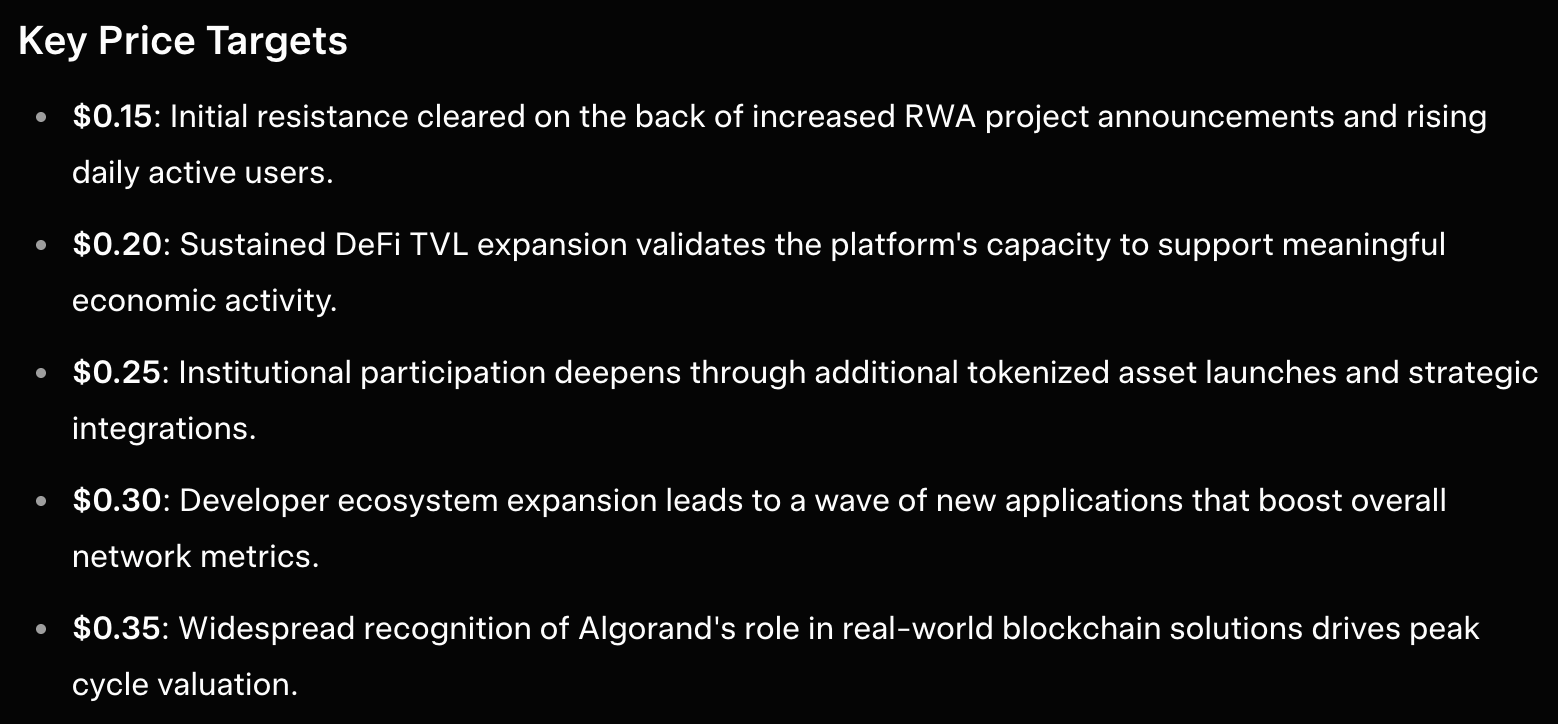
Given the above, “the case for ALGO reaching $0.35 by the end of 2026 rests on accelerating adoption of its infrastructure for practical applications combined with broader market recovery that rewards projects delivering measurable utility,” Grok stated. “As more assets become tokenized and integrated into lending, trading, and payment systems on Algorand, the demand for the native token to facilitate transactions and participate in governance rises substantially. This utility-driven growth, paired with the network’s technical advantages, allows it to capture a larger share of value in an expanding ecosystem.”
Bitcoin Hyper (HYPER)
“Bitcoin Hyper is generating strong momentum as the pioneering Bitcoin Layer 2 solution that integrates the high-performance Solana Virtual Machine to overcome Bitcoin’s longstanding limitations in speed and cost,” Grok explained. “By enabling near-instant transactions and low fees, it opens the door for practical payments, meme coin launches, and a full suite of DeFi applications directly within the Bitcoin ecosystem.”
Furthermore, “the trustless Canonical Bridge allows seamless movement of BTC to the L2 for enhanced utility while preserving the security of the Bitcoin base layer through ZK proofs and state commitments. With staking offering attractive yields of up to 36% APY, early participants are locking in tokens to support network security and earn rewards, creating built-in demand from day one. The presale’s impressive raise of over $32.7 million demonstrates clear market enthusiasm for a project that aims to make Bitcoin far more functional and programmable.”
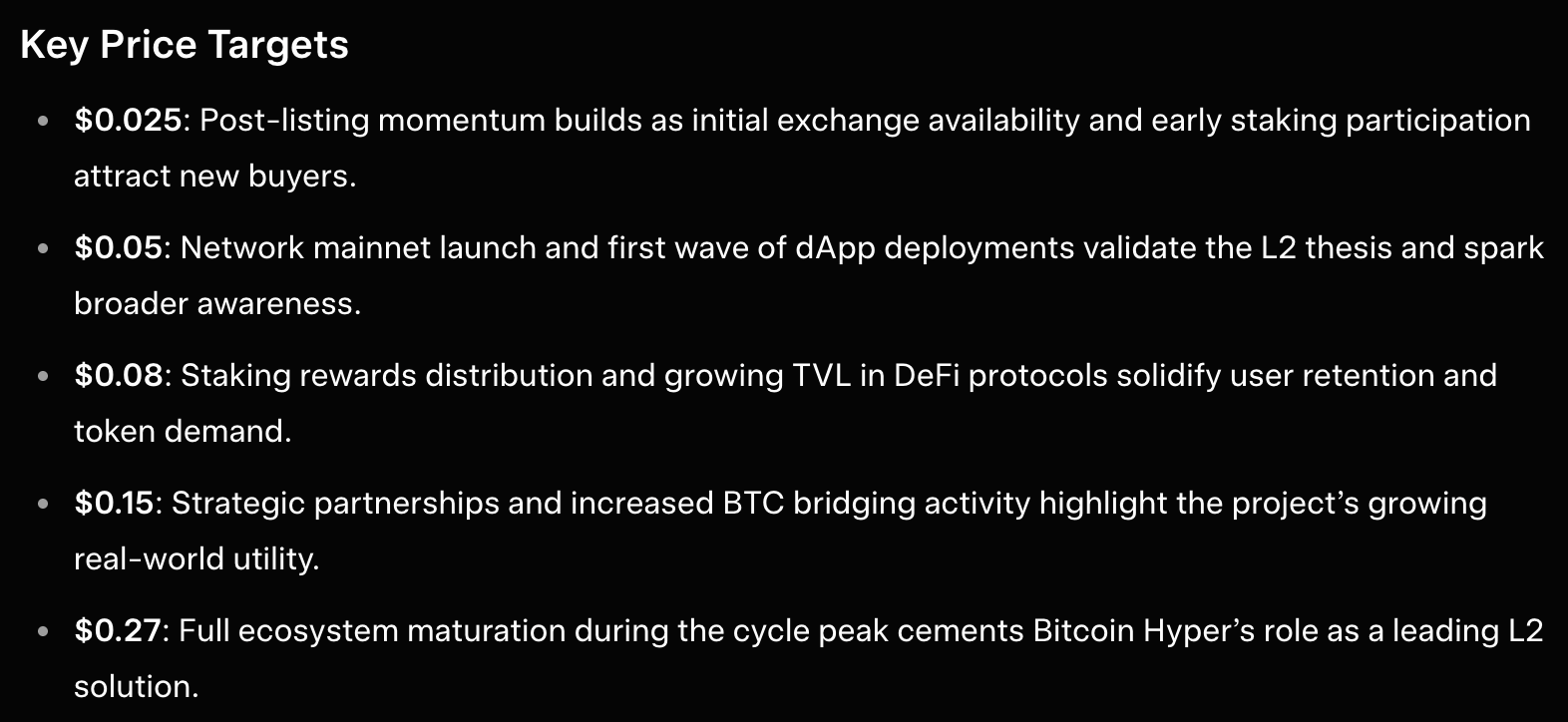
Finally, Grok explained that “this setup positions HYPER for substantial growth as the broader Bitcoin narrative expands. Once it’s launched and listed on major exchanges, HYPER’s combination of real utility, staking incentives, and capital rotation from Bitcoin’s success into its infrastructure layers should drive rapid price appreciation. As adoption accelerates and the network proves its throughput advantages, HYPER has a clear pathway to deliver 20x returns from the current presale price of $0.0136803, reaching the target level by the end of 2026 through successful mainnet deployment, ecosystem expansion, and heightened visibility in a bullish crypto environment.”