


 Some of the links on this site may be affiliate links. ICOBench may receive advertising commissions when users visit recommended platforms via our affiliate links, at no additional cost to you. All recommendations are based on a comprehensive review process.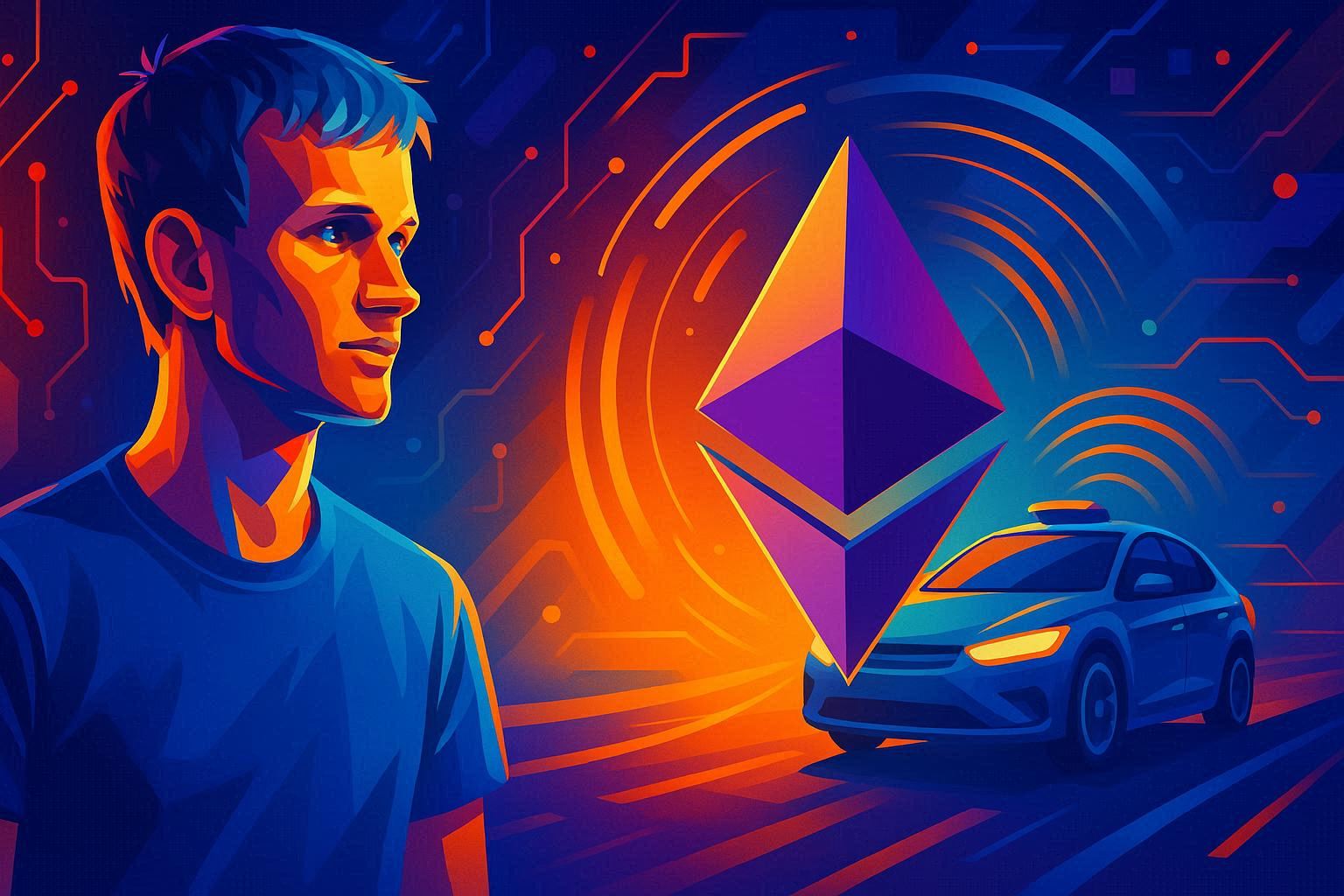
Ethereum co-founder Vitalik Buterin has called for the creation of open-source, verifiable autonomous driving systems, arguing that transparency and public accountability are essential to restoring trust in self-driving technologies.
We need open source and verifiable self-driving cars
— vitalik.eth (@VitalikButerin) November 2, 2025
In a post shared on his social media channel on November 2, Buterin wrote:
“We need open-source, verifiable autonomous driving systems.”
His remarks , first reported by ChainCatcher , are being widely interpreted as a critique of the lack of transparency in the autonomous vehicle (AV) industry, where proprietary systems dominate the market and regulatory scrutiny has intensified following several high-profile accidents.
A Call for Transparency and Independent Verification
Buterin emphasized that autonomous driving systems should not only be publicly auditable, but also independently verifiable to ensure both safety and reliability. This stance aligns with his long-standing advocacy for open governance, decentralization, and verifiable technology, principles that also underpin Ethereum’s blockchain design.
However, his direct engagement with the automotive and mobility sector marks a notable expansion of his transparency agenda beyond the crypto ecosystem.
Open-Source Systems Could Cut Costs and Boost Safety
According to a report by AInvest, open-source software for autonomous vehicles could significantly reduce development costs and technical risks for startups and automakers alike.
The report notes that modular, pre-verified open-source components “enable lower-cost innovation and minimize duplication of effort,” while enhancing public confidence and cybersecurity through independent code audits.
These benefits mirror the ethos of blockchain technology ( transparent, verifiable, and resistant to single points of failure ) which Buterin has championed for over a decade.
The call also comes amid growing public skepticism toward proprietary autonomous driving systems, following a string of fatal crashes and investigations into system reliability.
AInvest’s report further revealed that the open-source autonomous driving software market grew at an annual rate of 45% between 2020 and 2024, signaling a strong market shift toward transparent development models.
Industry at a Crossroads: Proprietary vs. Open Development
Buterin’s statement comes at a time when the global self-driving industry is split between closed, corporate-led systems and open collaborative platforms.
According to AInvest analysts, open-source frameworks can mitigate the “winner-takes-all” dynamics of closed ecosystems by promoting shared innovation and competitive fairness.
Startups such as driveblocks and Tripleeye are already leveraging open-source modules for 3D perception, mixed-traffic navigation, and environmental awareness, demonstrating real-world viability.
This broader context suggests that Buterin’s comments go beyond theory. They reflect a market and regulatory moment where transparency could accelerate innovation while addressing the trust and safety issues that have slowed mainstream adoption of autonomous driving technologies.
Bridging Blockchain Principles and Automotive Innovation
Buterin’s remarks are being viewed as part of a growing trend where blockchain concepts like decentralization, auditability, and verifiability are being applied to real-world technologies beyond finance from energy management to AI and mobility.
Analysts say his intervention could influence how both governments and automakers think about data transparency and algorithmic accountability in self-driving systems.
If adopted, an open-source autonomous vehicle standard could redefine not only how AVs are built but also how they are trusted, regulated, and improved over time. Does it affect our cryptocurrencies price in the future? We will see.