





 Some of the links on this site may be affiliate links. ICOBench may receive advertising commissions when users visit recommended platforms via our affiliate links, at no additional cost to you. All recommendations are based on a comprehensive review process.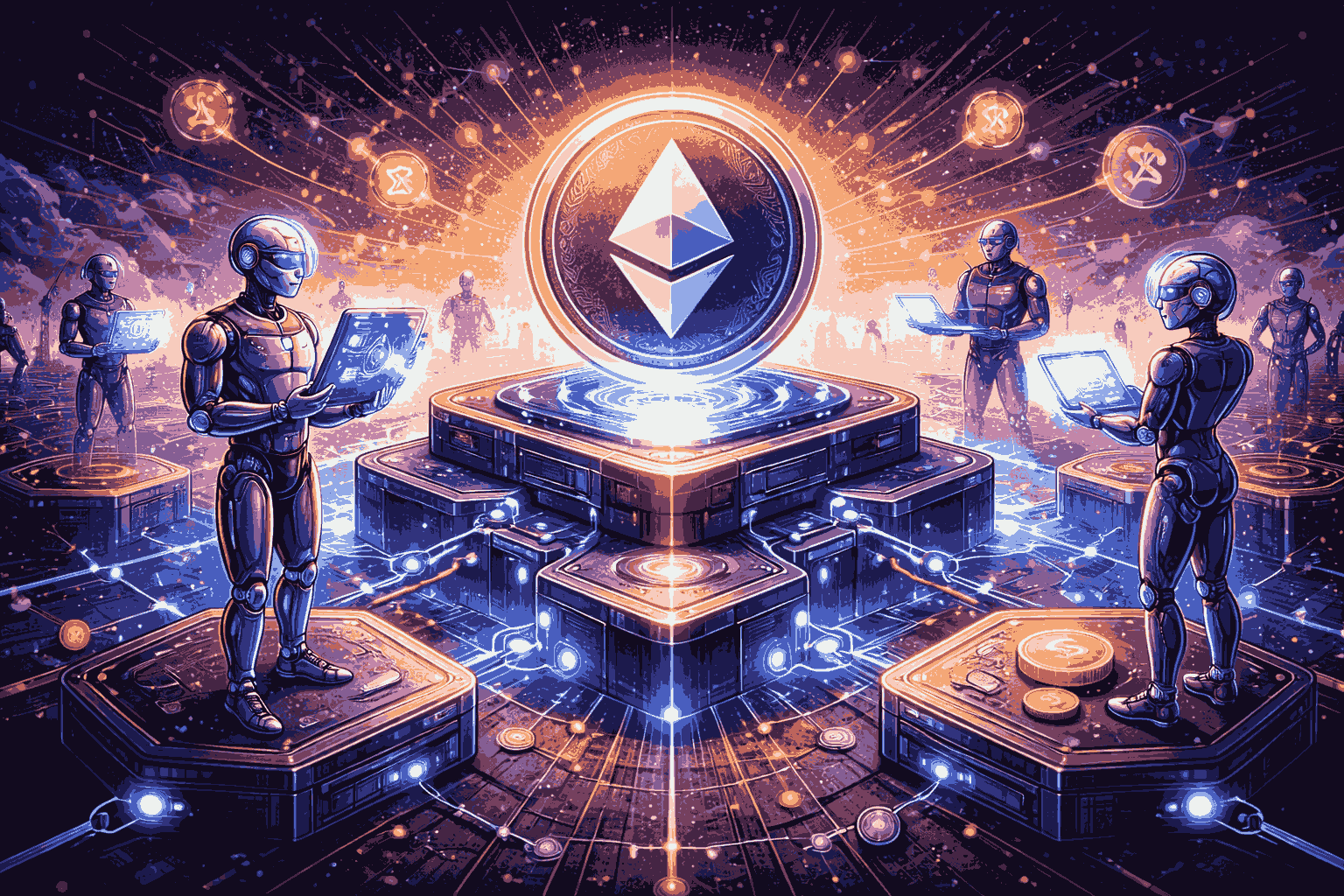
The Ethereum Foundation announced on December 30, 2025, the official launch of the “dAI Team,” a new initiative dedicated to building infrastructure for artificial intelligence (AI) agents on Ethereum.
Tomasz Stanczak: Ethereum Foundation Launches dAI Team to Focus on Underlying Standards
In an interview with ETHPanda Talk, Nethermind founder Tomasz Stanczak revealed the Ethereum Foundation has established a dAI team and released ERC-80004, attracting attention from Google and… pic.twitter.com/r5STP5rvyO
— Wu Blockchain (@WuBlockchain) January 4, 2026
The project aims to position Ethereum (ETH) as a preferred settlement, coordination, and payment layer for autonomous AI agents, enabling machine-to-machine commerce without centralized intermediaries.
According to an interview with Tomasz Stańczak, founder of Nethermind, the Ethereum Foundation does not intend to build AI applications directly. Instead, it seeks to act as a neutral infrastructure coordinator, defining open standards that developers and enterprises can build upon.
The newly formed dAI Team is led by Ethereum developer Davide Crapis and focuses on standardizing discovery, verification, and transactions between autonomous agents operating on-chain.
ERC-8004 Standard and Rising Enterprise Interest
At the core of the initiative is the development of a new Ethereum standard, ERC-8004, which aims to define identity, interoperability, and trust frameworks for AI agents.
The team is also working on the x402 protocol, both of which are expected to serve as neutral standards for what the Foundation calls “agent commerce.”
The Ethereum Foundation stated that these efforts are designed to counter the risk of AI infrastructure becoming dominated by a small number of powerful centralized players. Instead, Ethereum offers an open, verifiable, and censorship-resistant alternative.
Major technology companies, including Google and Coinbase, have reportedly expressed strong interest in the initiative. These firms recognize Ethereum’s potential role as a neutral coordination layer for machine-to-machine interactions, particularly as demand grows for tokenized AI marketplaces and autonomous trading agents.
Unlike Bitcoin, Ethereum continues to expand a programmable economic ecosystem, enabling complex interactions beyond simple value transfer.
The Foundation compares the current convergence of AI and blockchain to the early days of DeFi, where grassroots adoption preceded institutional integration. It expects enterprise-level adoption to follow, especially as companies seek alternatives to centrally controlled AI systems.
Roadmap Toward 2026 and the Machine Economy
The dAI Team is currently developing a comprehensive roadmap toward 2026, with the long-term goal of transforming Ethereum into a global decentralized settlement platform for AI agents.
The Foundation is actively consulting with teams building AI-related applications to determine which areas require priority support.
Several major Ethereum upgrades are scheduled as part of this roadmap, including “Glamsterdam” in Q1 2026 and “Hegota” in Q3 2026. These upgrades will introduce features such as Enshrined Proposer-Builder Separation (ePBS) and Verkle Trees, which are expected to enhance network efficiency, security, and AI integration.
The Ethereum Foundation ultimately envisions a “machine economy” where AI agents can operate autonomously without intermediaries. While safeguards such as proof size limits and security targets will remain in place to mitigate risk, the Foundation emphasized maintaining network resilience during this technological transition.
Users will be able to access these AI-powered services securely through Web3 wallets, reinforcing Ethereum’s role as the backbone of decentralized AI coordination.