


 Some of the links on this site may be affiliate links. ICOBench may receive advertising commissions when users visit recommended platforms via our affiliate links, at no additional cost to you. All recommendations are based on a comprehensive review process.
The latest CLARITY Act news: Polymarket recently put the odds of the CLARITY Act being signed into law this year at roughly 14%, down from a peak above 90% earlier in the legislative cycle. The decline comes ahead of the Senate’s first procedural test on the bill: a cloture vote expected on September 15.
Even if the Senate clears that step, senators would still need to complete their version of the legislation, reconcile it with the House version, and send a final measure to the president’s desk. The September 15 vote is therefore important, but it would not by itself guarantee passage.
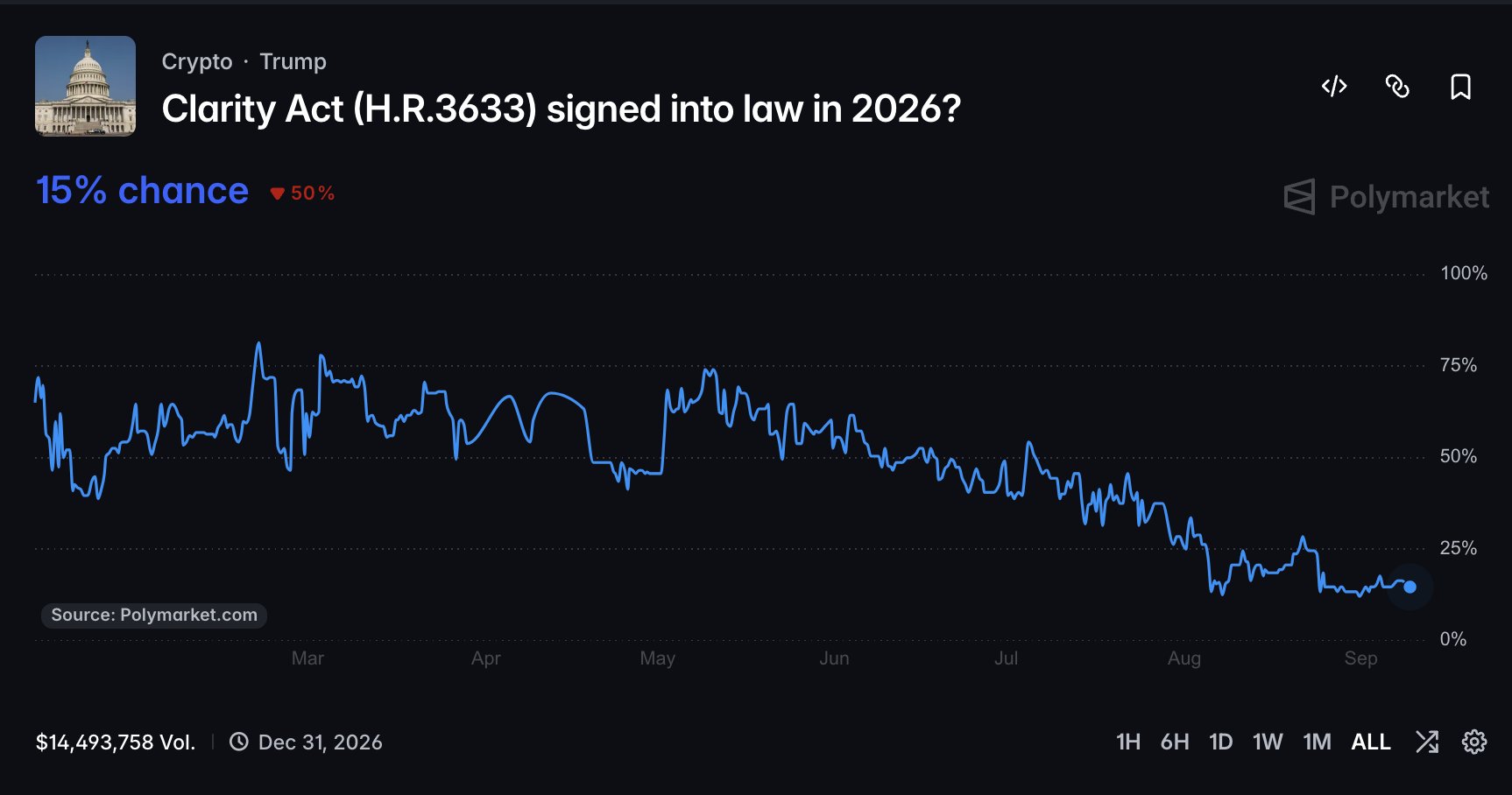
CLARITY Act News: How CLARITY’s Odds Collapsed
The CLARITY Act is intended to give the digital-asset sector a clearer federal framework for determining when a token is treated as a security under Securities and Exchange Commission jurisdiction and when it is treated as a commodity overseen by the Commodity Futures Trading Commission. The bill also outlines protections for developers and rules for crypto-involved financial institutions.
Early optimism reflected an expectation in crypto circles that the legislation had a meaningful chance of becoming law. That sentiment weakened as the bill became caught in a lobbying dispute between crypto companies and traditional banks over stablecoin rewards and related provisions. In January, Coinbase CEO Brian Armstrong withdrew support for an early Senate draft, arguing that the industry would prefer no bill to a bad one. The disagreement highlighted that the industry was not fully aligned behind the legislation.
Republican senators have also pointed to weak legislative momentum and limited constituent interest. Those concerns have added to the obstacles facing a bill that must move through a compressed legislative calendar.
The Clarity Act passed out of @BankingGOP Committee on a bipartisan 15 to 9 vote because my colleagues and I know that we must ensure the United States leads the way on digital asset regulation, and time is running out to secure America’s leadership. Every moment we wait to get…
— Senator Cynthia Lummis (@SenLummis) September 8, 2026
Don’t Miss: New Binance Listings That Could Erupt This Year
CLARITY Act: The Ethics Standoff at the Center of the Stall
An unresolved dispute over ethics restrictions tied to President Trump and his family’s crypto ventures, including World Liberty Financial, remains a central obstacle. Reuters reported in March that negotiations had reached an impasse over a Democratic push to bar elected officials from profiting from crypto ventures. Later reporting described the ethics provision as a central holdup, and concerns over public officials’ crypto conflicts remained unresolved in the revised Senate package.
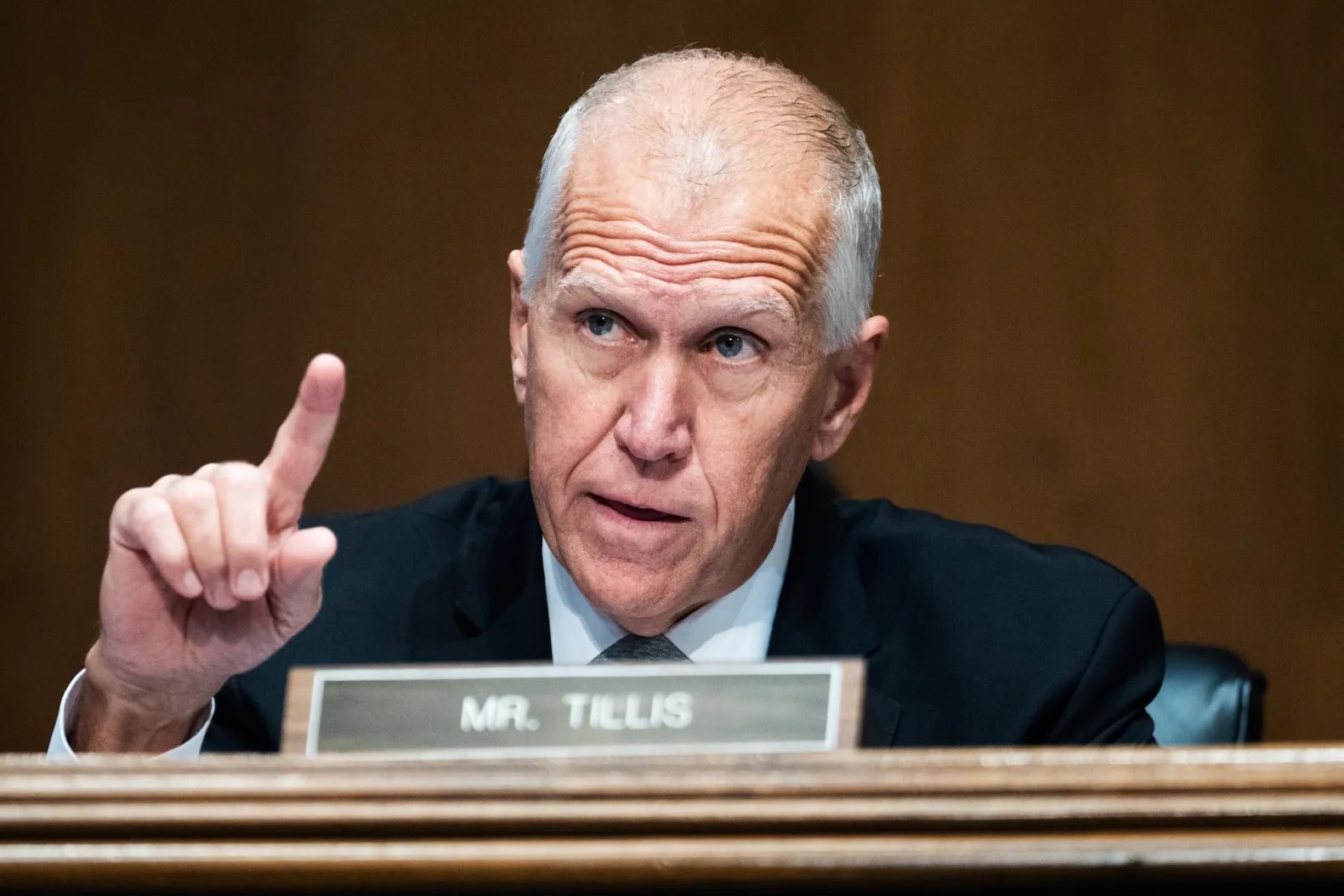
Sen. Thom Tillis told Semafor that the bill is likely to fail without White House engagement to bridge the gap on ethics language. The White House, according to Semafor, has maintained that Congress should pass the CLARITY Act to support U.S. competitiveness and innovation. Sen. Roger Marshall, meanwhile, cited a lack of interest from constituents as a sign of the bill’s weak political footing.
What a Delay Leaves Unresolved
Without CLARITY, crypto businesses would keep operating under a patchwork of agency interpretation, enforcement priorities, and existing rules rather than a broader market-structure law. Congress passed the GENIUS Act last year, creating a federal stablecoin framework, while the SEC under Chairman Paul Atkins has moved toward a more permissive crypto stance through regulation. Those approaches can be reversed more easily by a future administration than legislation passed by Congress.
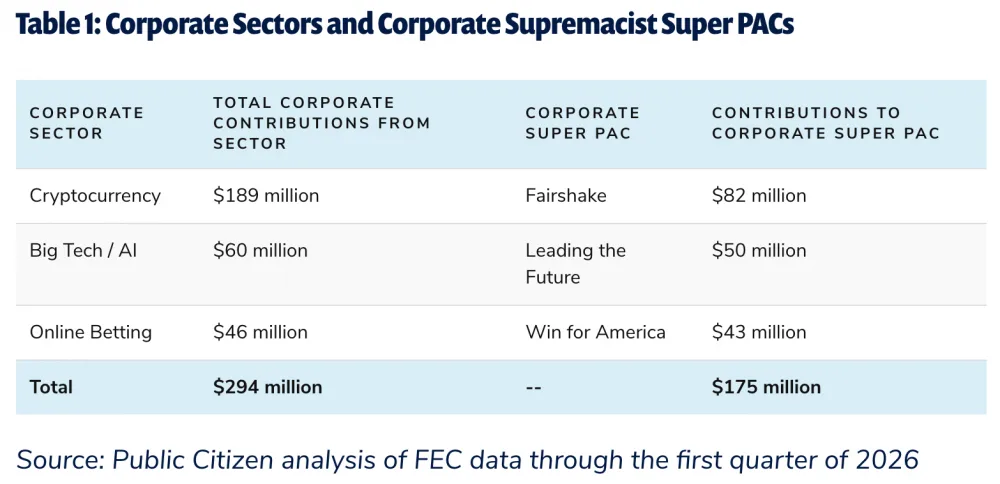
The industry has invested heavily in this fight. By early July, crypto companies and affiliated political groups had poured $189 million into the 2026 midterms, per a Public Citizen analysis, making crypto the largest identifiable source of corporate election spending in the cycle so far.
Even a successful September 15 vote would leave little time to finish the work before the midterm period. A delay could push the industry’s goals into future legislative sessions while the current patchwork of statutory and agency-based regulation persists. Prediction-market odds reflect sentiment, not certainty, but the swing from above 90% to roughly 14% shows how sharply expectations have weakened.
Don’t Miss: The Secret Meme Coins Smart Money Are Stacking For Next Year