


 Some of the links on this site may be affiliate links. ICOBench may receive advertising commissions when users visit recommended platforms via our affiliate links, at no additional cost to you. All recommendations are based on a comprehensive review process.
Crypto has spent years arguing about whether utility matters to price. This week offers a fairly convincing answer.
Chainlink (LINK) has climbed 47.03% over seven days to $12.01, while Stacks (STX) has surged 104.47% to $0.2751. Neither token is immune to speculation, but both are of infrastructure that is actually being used.
Chainlink has just deepened its role in Wyoming’s Frontier Stable Token (FRNT), with the state adopting Chainlink Proof of Reserve for near-real-time verification of FRNT’s backing. The state also made Chainlink’s Cross-Chain Interoperability Protocol (CCIP) its exclusive cross-chain infrastructure. Coinbase did similar, selecting Chainlink technology for its tokenized-stock push in August.
Stacks has its own burst of tangible adoption, with Asset manager 21shares joining its Genesis Bond Bitcoin staking program using company BTC holdings, while STX and sBTC were added to institutional crypto exchange Bullish this week. BitGo also added support for sBTC in August.
There is a useful lesson here for anyone searching for the best crypto to buy: narratives attract attention quickly, and use cases give that attention somewhere to stay.
It is useful intel for those tracking Bitcoin Hyper (HYPER), which, like Stacks, is built around a question crypto has wrestled with for years: Bitcoin holds enormous value, so why is comparatively little built on using it?
Chainlink and Stacks Show What Infrastructure Looks Like Once People Need It
Chainlink’s role has always been fairly unglamorous by crypto standards: move reliable information between blockchains and the outside world. But it becomes much more valuable once serious assets start moving on-chain.
Wyoming’s FRNT needs reserve data that users can verify, and tokenized equities need dependable pricing and cross-chain communication. Financial applications need to know that data from elsewhere can be trusted before smart contracts act on it.
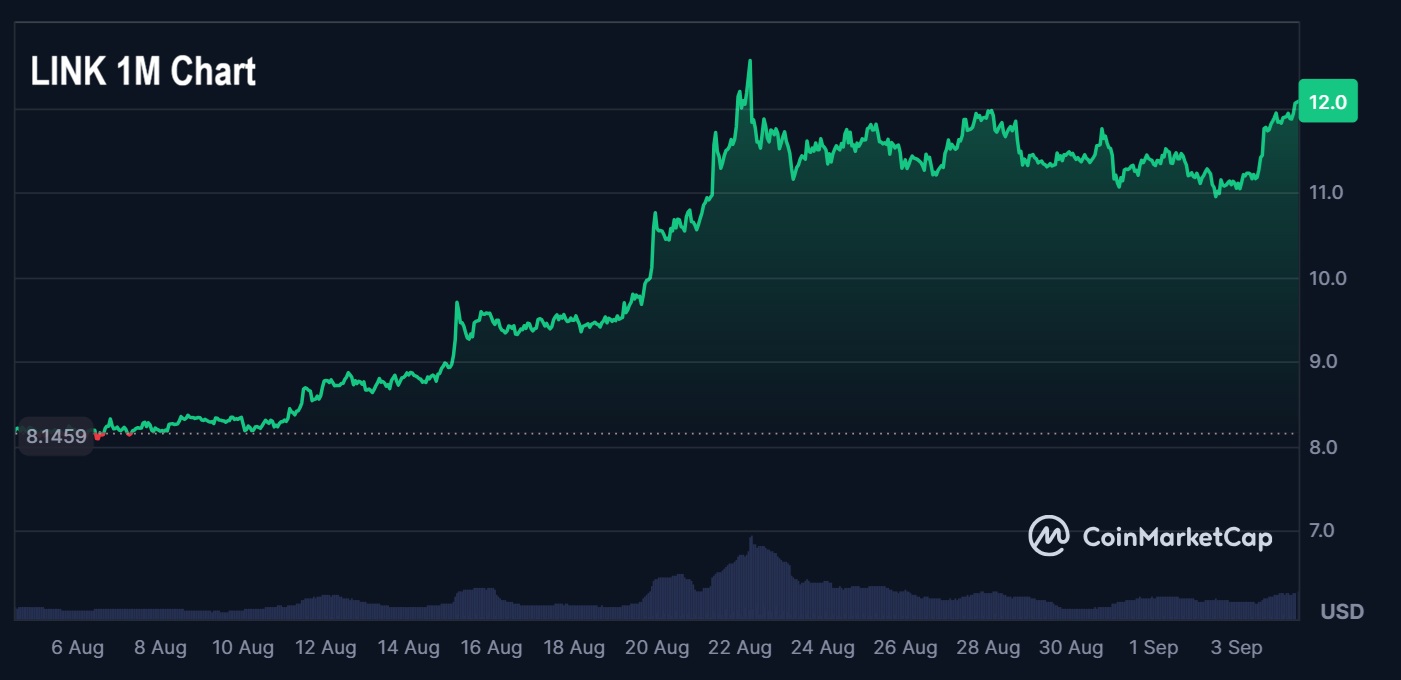
LINK’s 47% weekly rise does not prove that every infrastructure token automatically wins, but it does show why investors pay attention when technology moves from an abstract roadmap into recognizable financial use.
Stacks is even closer to the HYPER story, centered on making Bitcoin productive without forcing holders to sell their BTC or abandon the Bitcoin network.
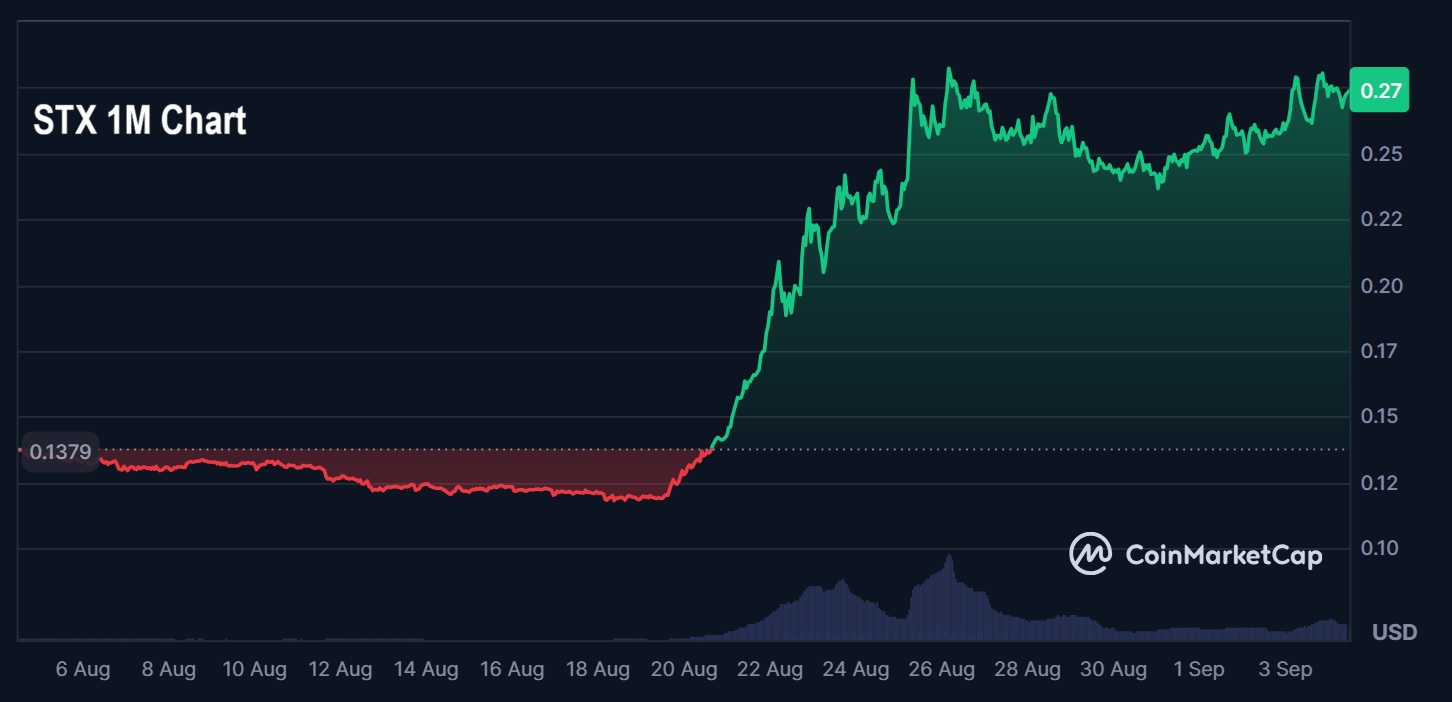
Stacks says its incoming Bitcoin Staking system lets BTC holders lock Bitcoin for a fixed period while retaining control of the asset and earning rewards in BTC. The Genesis Bond brings that mechanism into an institutional environment, with 21shares among the first participants.
Bitcoin itself does one job exceptionally well, but a growing group of projects now sees the larger opportunity in everything Bitcoin does not do natively.
Is Bitcoin Hyper the Next Best Crypto to Buy?
Bitcoin Hyper approaches that opportunity with a noticeably different technical toolkit, with a Layer 2 that integrates the Solana Virtual Machine (SVM) and places it just above BTC.
For users, that means Bitcoin becoming practical in places where waiting for base-chain transactions makes little sense: paying at a checkout, interacting with a trading application, or moving between financial products in real time.
Bitcoin is placed on the bridge, and now its value can be moved on a Layer that can support thousands of Transactions Per Second, not Bitcoin’s ~7 TPS.
Bitcoin Hyper is refining the developer experience with clearer documentation, familiar tooling, predictable APIs, and better feedback for builders.
The goal: make the network easier to understand, connect existing tools, and start building with less friction. 🔥⚡️
Read the… pic.twitter.com/kAo1w7Xa06
— Bitcoin Hyper (@BTC_Hyper2) September 2, 2026
The project’s canonical bridge provides the connection to Bitcoin, and transactions are bundled together and periodically sent back to the Layer 1, keeping Bitcoin’s immutability intact.
For developers, the SVM brings an established smart contract environment to Bitcoin rather than requiring an entirely new programming model – and the world of DeFi opens up to BTC.
HYPER has already raised $33 million in presale funding, is currently priced at $0.01368, and offers 35% APY on staking. Coinsult and SpyWolf have already audited the contracts.
In short, the similarities with LINK and STX are not about technology – they are about where crypto appears to be finding value again.
Chainlink connects financial infrastructure; Stacks puts dormant Bitcoin to work; Bitcoin Hyper makes BTC usable currency – its original purpose.
Crypto can survive on narratives for surprisingly long periods. The projects that last usually have something tangible to them.
If this week’s LINK and STX rallies and HYPER’s presale raise are any indication, then investors are paying attention to that idea once again.