




 Some of the links on this site may be affiliate links. ICOBench may receive advertising commissions when users visit recommended platforms via our affiliate links, at no additional cost to you. All recommendations are based on a comprehensive review process.
Japan ETFs have made a positive step after the Upper House committee approved a bill to legalize Bitcoin exchange-traded funds (ETFs) and lower cryptocurrency taxes to a flat 20%.
The bill advances Japan’s regulatory framework by reclassifying cryptocurrencies as financial instruments under the Financial Instruments and Exchange Act (FIEA), following approval by the Lower House and setting the stage for final approval, government promulgation, and subsequent rulemaking by the Financial Services Agency (FSA).
BREAKING: 🇯🇵 JAPAN The world's 4th-largest economy just approved Bitcoin ETFs.
Japan's Upper House committee approved the bill reclassifying crypto as a financial instrument, the same category as stocks and bonds.
It already passed the Lower House, and a full chamber vote is… pic.twitter.com/hMuUP6d2Hk
— Bull Theory (@BullTheoryio) July 15, 2026
The reclassification is expected to be implemented in fiscal 2027, which could pave the way for the first crypto ETF listings on the Tokyo Stock Exchange by late 2027 or 2028.
Market indicators suggest that this development could enhance Bitcoin’s adoption and legitimacy, potentially influencing price movements. Current prediction markets price the chance of Bitcoin reaching $200,000 by the end of 2026 as low, with YES odds around 2% across various sub-markets.
FIEA Reclassification: What Moving Crypto Out of the Payment Services Act Actually Reveals About Japan’s Institutional Architecture
💥 BREAKING: Asia is going ALL-IN on crypto.
President Trump warned that other nations could outpace the U.S. on crypto regulation.
South Korea has now recognized crypto as a “national asset” and plans to tokenize state-owned real estate.
Meanwhile, Japan is paving the way for… https://t.co/EaQXfLDR8R pic.twitter.com/uPhw0VrDIH
— Crypto Rover (@cryptorover) July 15, 2026
Context significantly enhances the raw figure. The FIEA reclassification is a regulatory update that reclassifies cryptocurrencies as financial instruments under the Financial Instruments and Exchange Act (FIEA), following approval by the Lower House.
The bill’s passage in the Upper House follows its approval by the Lower House and sets the stage for final approval, government promulgation, and subsequent rulemaking by the Financial Services Agency (FSA). The reclassification is expected to be implemented in fiscal 2027.
It is worth noting that the bill still requires additional steps, including rulemaking by the Financial Services Agency (FSA), before the new framework is implemented.
That implementation is expected for fiscal 2027, with the possibility of the first crypto ETF listings on the Tokyo Stock Exchange by late 2027 or 2028.
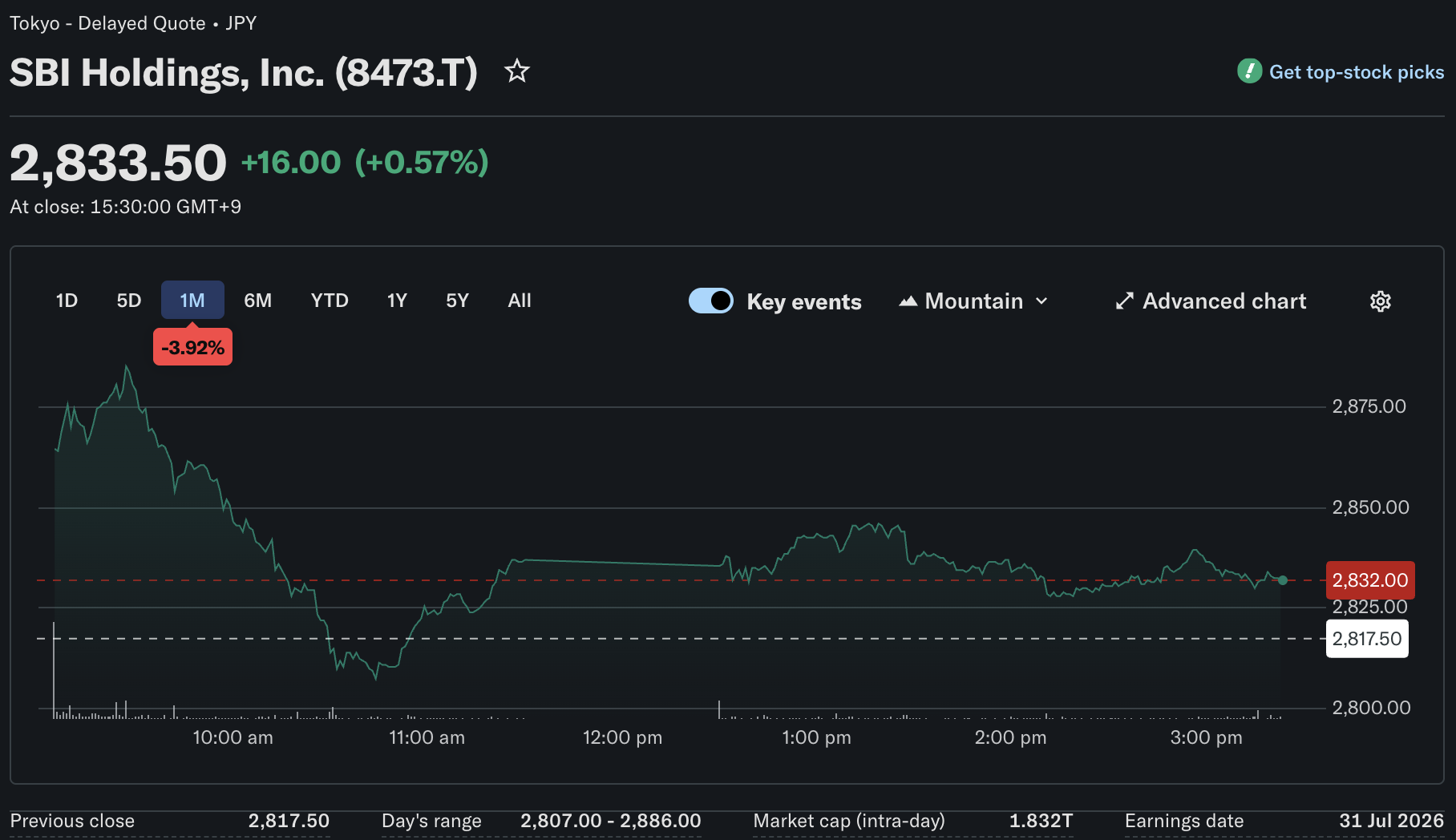
SBI Holdings’ ¥5 Trillion AUM Target and the $130B Household Allocation Thesis: What the Filing Architecture Actually Reveals About Japan’s Institutional Demand Stack
The reclassification is expected to be implemented in fiscal 2027, which could pave the way for the first crypto ETF listings on the Tokyo Stock Exchange by late 2027 or 2028.
Market participants will be closely observing the bill’s final approval process and subsequent regulatory developments by the FSA.
Any announcements regarding the timeline for ETF listings on the Tokyo Stock Exchange could influence market sentiment.
BTC Price and Japan ETFs Listing Timeline: Three Scenarios for How Japan’s Reform Flows Into Institutional Bitcoin Demand
Here's why I think Bitcoin drops lower first.
Whales are stacking massive $BTC bids below the current price.
There's a HUGE wall of buy orders stretching from around $57K down into the high-$40Ks.
One single bid alone is worth $81 million at $61,500.
Smart money appears to be… pic.twitter.com/lNiHU6ZCRz
— Crypto Rover (@cryptorover) July 15, 2026
- Bull case: This assumes Japan’s remaining legislative and regulatory steps progress without major delays, supporting ETF listings on the Tokyo Stock Exchange beginning in late 2027.
- Base case: This assumes ETF listings arrive later, with the first listings shifting toward 2028 while Japan’s ETF-related rulemaking continues.
- Bear case/invalidation: This assumes delays in the legislative or regulatory steps extend beyond the late-2027/2028 window, limiting near-term catalysts from Japan ETF access.
Japan’s FIEA reclassification is a major regulatory step that lowers crypto taxes to a flat 20% and reclassifies cryptocurrencies as financial instruments under FIEA.
What remains unresolved is how quickly the remaining approval process and FSA rulemaking move forward before ETF listings begin on the Tokyo Stock Exchange.