

 Some of the links on this site may be affiliate links. ICOBench may receive advertising commissions when users visit recommended platforms via our affiliate links, at no additional cost to you. All recommendations are based on a comprehensive review process.
Bitcoin News Today: BTC price fell as much as 2.4% to $62,600 as of 12:45 p.m. Singapore time on Monday after the US launched fresh strikes on Iran, sending oil prices surging and reigniting inflation fears across global risk markets.
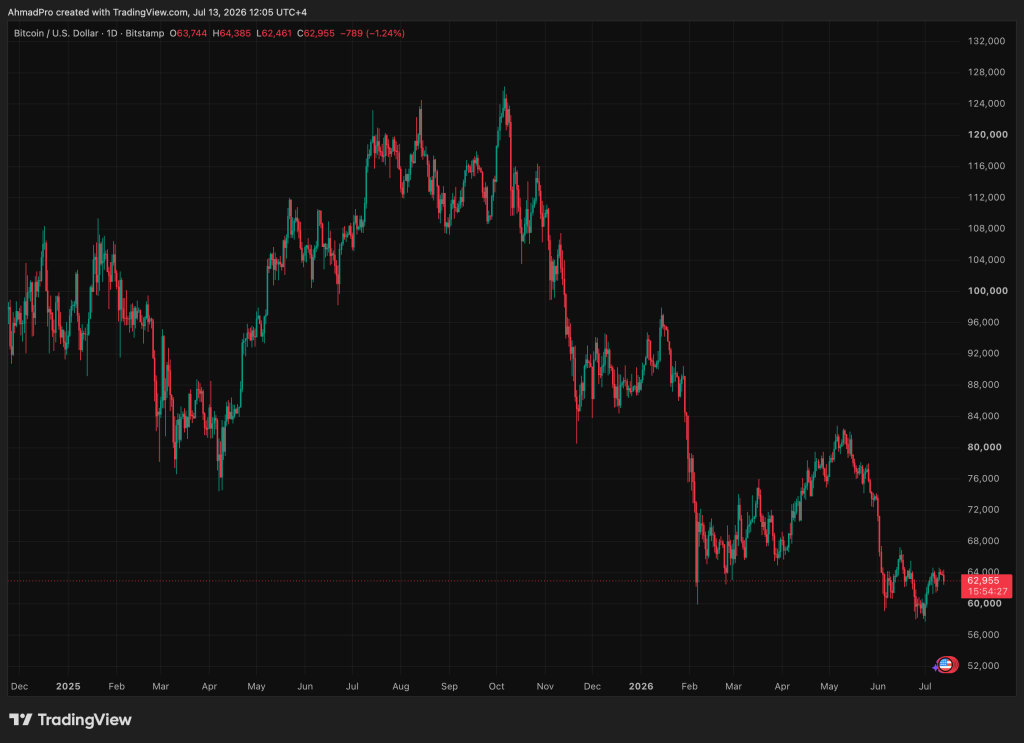
The BTC price move dragged Ethereum down 2.5% in the same session, with the broader crypto market absorbing another macro shock on top of an already deteriorating technical structure. The selloff returned Bitcoin below its 200-week moving average, a level Bloomberg describes as one that ‘can signal a prolonged bear market’, compounding a year that has already erased nearly half of BTC’s value from its all-time high near $122,000.
BITCOIN IS DOWN 3% AS MARKETS OPEN TO A WAR.
The US hit Iran again this weekend.
Oil +4.25%. Nasdaq futures −1.24%. S&P −0.56%.
First session since the escalation.Hold 63,000 and it's a shakeout. Lose it, oil runs the tape.
Watching: 63,000. pic.twitter.com/Diy1kkO8Xe
— Merlijn The Trader (@MerlijnTrader) July 13, 2026
The open question the market must now resolve is whether the 200-week moving average holds as a floor from which Bitcoin can stage a durable recovery, or whether the confluence of geopolitical escalation, persistent inflation pressure, and structural ETF selling accelerates a move toward the $57,950 21-month low printed in early July, and potentially lower.
EXPLORE: Best Memecoins Presales to Watch Right Now
Bitcoin News Today: Oil, Iran, and the Inflation Feedback Loop: What Monday’s Move Actually Reveals About Bitcoin’s Macro Exposure
The causal chain behind Monday’s BTC price drop is direct and well-established: US strikes on Iran pushed oil prices sharply higher, which in turn stoked inflation expectations, applied pressure on front-end Treasury yields upward, triggered risk-off positioning across equities and crypto, and drove spot Bitcoin selling.
It is the same transmission path that has hit the crypto market repeatedly in 2026, and the speed at which BTC repriced Monday confirms how little buffer exists at current levels.
The 200-week moving average has served as a definitive bear market boundary across Bitcoin’s prior cycles. BTC traded materially below this level during the 2018–2019 bear market and again during the 2022 capitulation, both periods that ultimately resolved into major accumulation zones before the next cycle’s advance.
BTC recorded its first weekly close below the 200WMA since 2023 in late June, with the subsequent bounce bringing price back into the low $63,000s. Monday’s move threatens to give back that recovery.
Layered on top of the technical deterioration is a structural demand problem in the ETF market. Per Intellectia, US spot Bitcoin ETFs recorded approximately $4.5 billion in net outflows during June 2026 alone, the highest monthly outflow figure since their inception.
Intellectia characterizes the shift as ETFs moving from a consistent demand driver into a persistent source of selling pressure, a structural reversal that removes one of the primary institutional demand pillars that defined the 2024–2025 bull cycle.
The macro backdrop reinforces the bearish read. According to Yahoo Finance, the hawkish Fed environment has dampened appetite for risk assets, and BTC has demonstrated acute sensitivity to inflation signals. A prior Fed hold decision triggered a 5.2% intraday drop in the same session it was announced, per Yahoo Finance. With oil prices spiking on fresh Iran conflict escalation, the prospect of continued rate pressure keeps risk appetite suppressed.