




 Some of the links on this site may be affiliate links. ICOBench may receive advertising commissions when users visit recommended platforms via our affiliate links, at no additional cost to you. All recommendations are based on a comprehensive review process.
IN CZ Hyperliquid news today, Binance founder Changpeng Zhao called Hyperliquid’s model ‘awesome’ and a ‘truly great invention’ on the Galaxy Brains podcast this week, then immediately followed with a warning that no other voice in crypto could deliver with the same authority: ‘They don’t have KYC. They claim they’re decentralized… I would never do what they do, given what I’ve experienced… I assume they have good lawyers.’
HYPE, Hyperliquid’s native token, hit an all-time high of $76.70 on June 16, 2026, up over +10% on the day, as the platform rode the momentum of the SpaceX IPO. The tension in CZ’s statement is difficult to overstate.
CZ on Galaxy Brains this week. Coming soon. pic.twitter.com/oVlesTSTtK
— Galaxy Research (@glxyresearch) June 16, 2026
This is a man who pleaded guilty to anti-money laundering violations in November 2023 and served four months in a US federal prison, making his ‘good lawyers’ remark one of the most loaded regulatory warnings the decentralized exchange space has ever received.
The open question the market must now resolve is whether CZ’s comments function as validation of Hyperliquid’s competitive model, a genuine regulatory risk signal that HYPE holders need to price in – or, crucially, both at the same time.
CZ Hyperliquid Drama: What CZ’s Prison Record Actually Communicates About Hyperliquid’s Regulatory Exposure
unreal recovery in $HYPE 🔥
after ~33% retracement from the ATH, Hyperliquid has bounced back and already trading into price discovery mode
– more better chart structure
– consistent growing volume & ETF inflows
– crazy institutional demand
– growing Hyperliquid RWA… pic.twitter.com/59S23iGOqD— 🦧Mr. APE aka GEM Hunter💎 (@deg_ape) June 17, 2026
Context significantly enhances the impact of Changpeng Zhao’s remarks on crypto regulation, especially given his own experiences.
As Binance faced a $4Bn resolution and his personal incarceration due to failures in KYC and processing transactions for users in sanctioned areas, his insights carry weight.
Hyperliquid, a no-KYC decentralized exchange for perpetual futures contracts, highlights the lack of identity verification as a feature of decentralization. However, this absence raises regulatory concerns.
The UK Financial Conduct Authority issued a warning in May 2026, labeling Hyperliquid and the Hyper Foundation as unauthorized and noting that users would lack protection from the Financial Ombudsman Service or the Financial Services Compensation Scheme.
This reflects a broader trend in which regulators scrutinize the “decentralized” label, emphasizing the importance of context in discussions of crypto regulation.
HYPE ATH, $172M in ETF Inflows, and $1.4B SPCX Volume: The Bull Case in Numbers
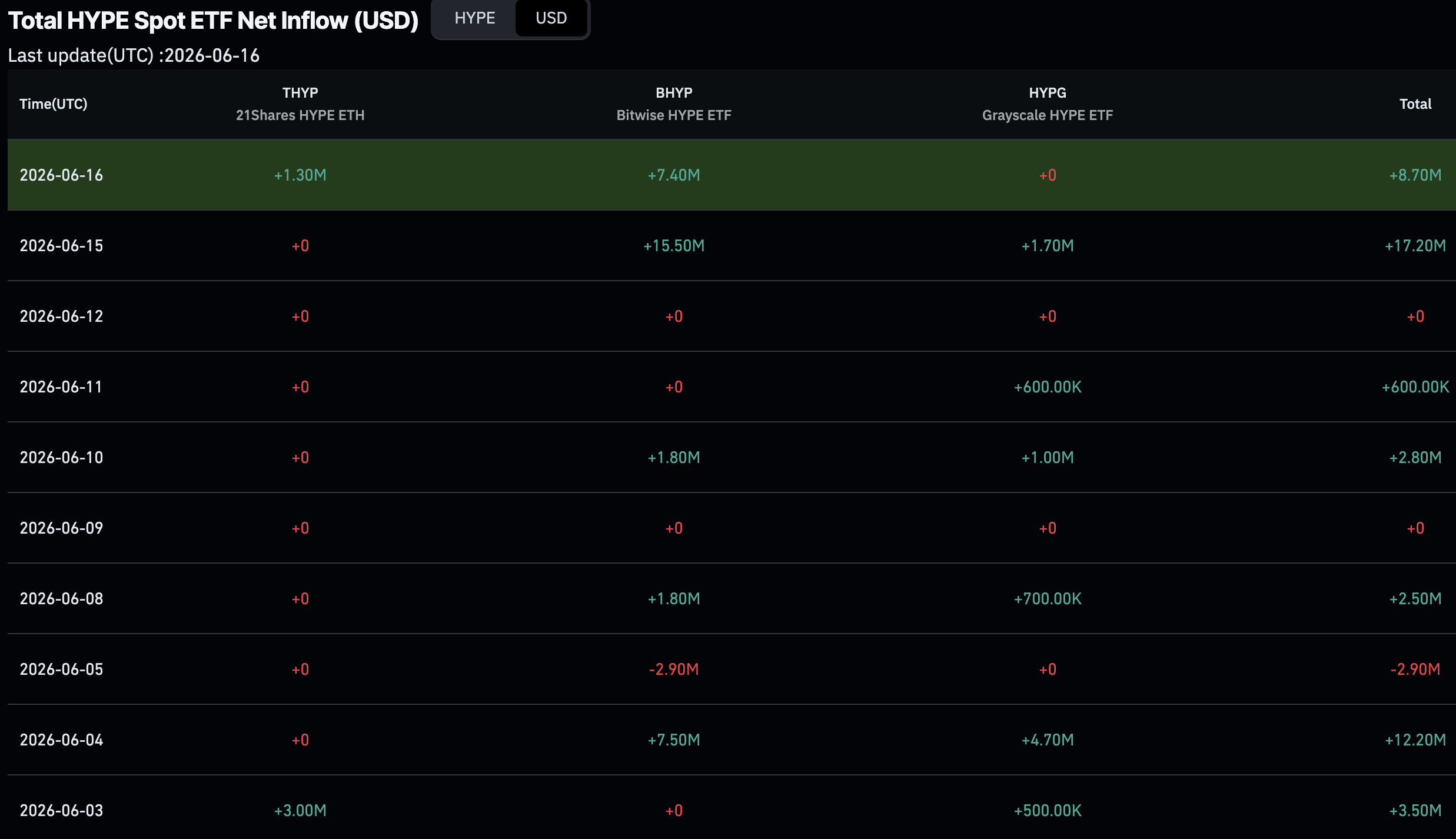
Despite regulatory challenges, the market is supporting HYPE, which reached an all-time high of $76.70 on June 16, 2026, following the SpaceX IPO, the largest in Wall Street history.
When major exchanges like Binance and Bybit canceled their tokenized SpaceX products, Hyperliquid successfully utilized synthetic perpetual futures, achieving $1.4Bn in SPCX volume on IPO day without real shares.
Spot HYPE ETFs garnered about $172 million in their first month. Analyst price targets range from $83 to $98 in the short term, with a longer-term target of $300, as Hyperliquid captures around 70% of the decentralized perpetuals market and 13% of Binance’s derivatives.
The institutional infrastructure for HYPE parallels the ETF approval dynamics that aided Bitcoin and Ethereum, as seen in the SEC’s approval of T. Rowe Price’s multi-asset crypto ETF, paving the way for regulatory legitimacy.