


 Some of the links on this site may be affiliate links. ICOBench may receive advertising commissions when users visit recommended platforms via our affiliate links, at no additional cost to you. All recommendations are based on a comprehensive review process.
As of this afternoon, crypto prices are pulling back in the face of heavy volatility and uncertainty around the conflict in Iran, with speculation ongoing about the US deploying ground troops and attempting to occupy islands within the Strait of Hormuz. The crypto market’s total value has fallen 3.18% in the last 24 hours, while Bitcoin hovers near $69,250 following a 3.3% dip, and altcoins are feeling the heat. Ethereum slipped 5.4% to roughly $2,070, and Cardano has dropped around 5.5% to $0.26.
These short-term moves are nothing out of the ordinary given the circumstances, but the altcoin sector in general continues to show real fundamental strength. Protocol upgrades keep rolling out, adoption metrics have mostly held steady, and builders are focused on delivering actual utility. Investors who tune out the daily noise often find the best entries right here.
This is partly why crypto presales have held up especially well through the swings, and now look like one of the sharper ways to put fresh capital to work. They typically offer lower entry prices, as well as staking rewards that can run circles around what most live tokens return in the current climate.
When it comes to the best crypto to buy with $1,000, Ethereum, Cardano, and LiquidChain (LIQUID) are all exceptional options that bring something different to the table. All three have shown potential for clear paths higher – but LiquidChain’s current presale pricing and massive early staking yields could make it the top pick for smart money buyers.
Ethereum (ETH)
Ethereum has been the backbone of smart contracts and decentralized applications since it launched back in 2015 – and ETH still powers the majority of DeFi activity, NFT trading, and countless dApps that move billions in volume every single day. The Layer 1’s switch to proof-of-stake in 2022 dramatically reduced energy consumption and opened the door to staking rewards that have now locked up more than 38 million ETH, giving holders both network security exposure and steady income.
The blockchain’s upgrades have also kept coming, almost without a pause. Recent hard forks have already lowered fees and boosted speed, and the Glamsterdam release planned for the first half of 2026, along with the longer-term roadmap stretching into 2029, aims for instant finality, improved privacy features, and even better scalability. These changes keep Ethereum squarely in the spotlight for institutions and everyday users alike.
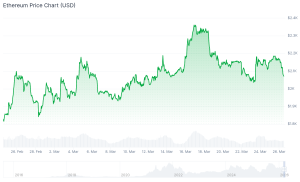
Priced at around $2,070 after today’s 5% dip and with a market cap north of $250 billion, ETH still trades with healthy volume behind it. As the gas token for every transaction and the main collateral across DeFi, it stands to gain directly whenever network activity picks up. Related Layer 2 solutions have continued to expand their capacity, and total value locked in decentralized finance remains solid at roughly $55.14 billion, which means any market rebound will almost certainly drive higher demand for ETH.
Cardano (ADA)
Cardano took a measured, research-first approach when it launched its proof-of-stake blockchain in 2017. The Ouroboros consensus mechanism puts security, scalability, and sustainability at the core of Cardano, which has always set it apart from networks that chased speed at all costs. ADA, the project’s native token, handles staking, governance voting, transaction fees, and direct participation in Cardano’s treasury system.
Behind the scenes, the Cardano team is on track to launch the Midnight sidechain for privacy-focused apps by the end of March 2026 – and the upcoming van Rossem hard fork will bring additional efficiency gains. Real-world use is expanding too, with ADA now accepted for payments at more than 130 SPAR stores across Switzerland. These steps show the project translating its academic roots into everyday applications across finance, supply chains, and digital identity.
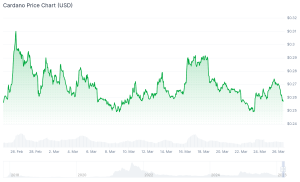
Trading near $0.26 following today’s 5.5% decline and carrying a market cap of around $9.3 billion, ADA sits at levels that still offer plenty of upside if the upgrades hit their marks. High staking participation rates should also keep the network secure while delivering rewards straight to holders.
LiquidChain (LIQUID)
LiquidChain (LIQUID) is building a Layer 3 blockchain that solves one of crypto’s biggest headaches: fragmented liquidity spread across Bitcoin, Ethereum, and Solana. It runs a high-performance virtual machine that matches Solana’s speed while adding secure cross-chain proofs for atomic, risk-free asset movement.
The result is unified liquidity pools where tokens from all three networks interact natively, opening the door to deeper markets, faster trading, and more powerful dApps without the usual bridging headaches.
The LIQUID presale is already live at $0.01435 per LIQUID token. Fundraising has crossed $623,000 (toward the next target of $728,651), and staking is available right away with an APY of up to 1,723%. More than 34 million tokens are already locked in, which shows how fast early participants have moved.
A new layer emerges. Only a few see it first.
The future is LiquidChain 👁⟁https://t.co/vqvBcdSj94 pic.twitter.com/R7ZeZ0NPGl
— LiquidChain (@getliquidchain) March 24, 2026
Token holders will gain governance rights and priority access to those unified pools once the mainnet launches.
In a market where many altcoins have taken a hit today, a $1,000 allocation at LIQUID’s presale price would buy a solid stack that can start compounding immediately through staking. LiquidChain’s focus on fixing real liquidity fragmentation fits perfectly with the growing demand for seamless multi-chain experiences from both retail traders and institutions – making it the best crypto to buy right now.