




 Some of the links on this site may be affiliate links. ICOBench may receive advertising commissions when users visit recommended platforms via our affiliate links, at no additional cost to you. All recommendations are based on a comprehensive review process.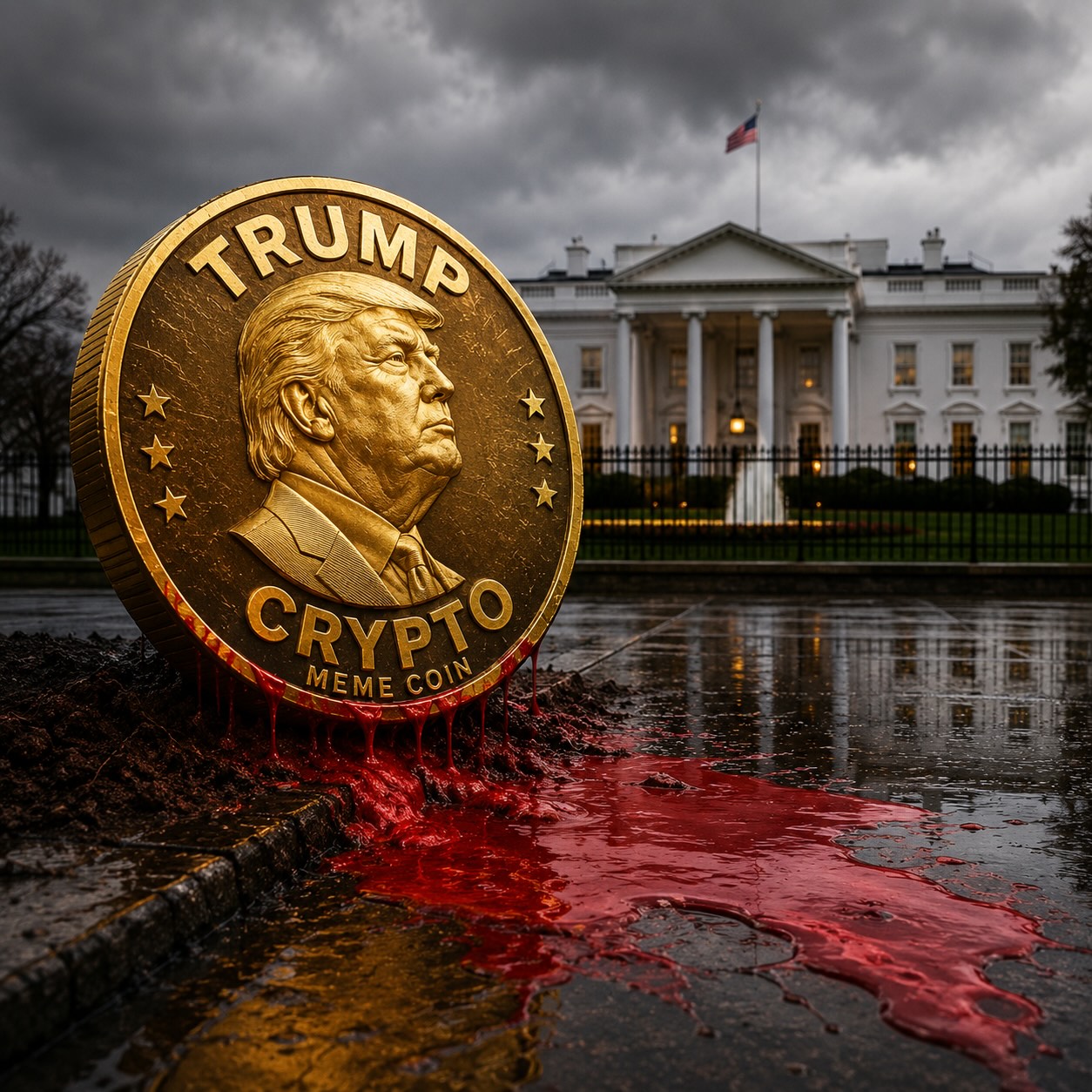
In Trump crypto news toady, Senators Elizabeth Warren and Richard Blumenthal urged SEC Chair Paul Atkins to investigate President Trump’s $TRUMP meme coin, citing blockchain data indicating nearly one million investors lost about $3.8Bn as the token plummeted -97% from its January 2025 peak.
They alleged the token may be an “illegal scam,” highlighting the $636M earned by Trump-linked entities amidst significant retail losses. The SEC’s response remains uncertain, especially as memecoins are seen as outside its jurisdiction.
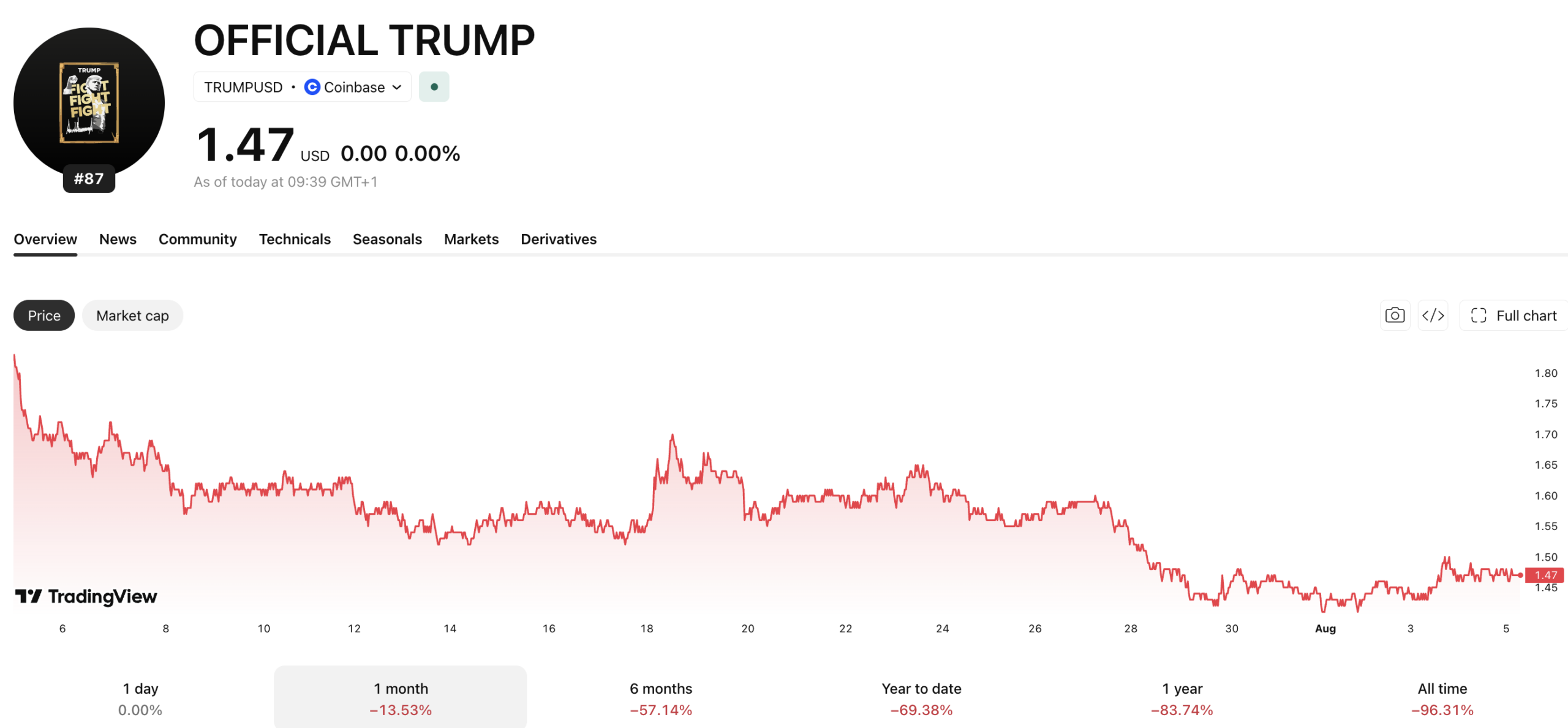
Launched on January 17, 2025, just before Trump’s inauguration, the $TRUMP token once peaked at a $9Bn market cap but now trades around $1.47, with its market cap falling below $400M. Trump’s substantial earnings from the token have become a major hurdle for US crypto regulation efforts.
🚨WARREN DEMANDS SEC PROBE TRUMP MEMECOIN AS POSSIBLE “ILLEGAL SCAM”!
Sens. Elizabeth Warren and Richard Blumenthal have written to SEC Chair Paul Atkins calling for an investigation into President Trump’s $TRUMP memecoin, per CNN.
They argue the project, which peaked near $9… pic.twitter.com/MvzpeaJMKO
— Crypto Banter (@crypto_banter) August 4, 2026
Warren and Blumenthal Letter: What the $3.8Bn Loss Data Actually Reveals About the Retail Investor Asymmetry
The $3.8Bn aggregate loss estimate, drawn from blockchain analytics cited by The New York Times and referenced directly in the senators’ letter, represents the combined losses of nearly one million wallets that purchased the TRUMP crypto token between its January 2025 debut and the end of June 2026.
Against that figure sits the $636M collected by Trump-linked entities, a ratio of roughly six dollars lost by retail buyers for every dollar earned by the president’s side.
Warren and Blumenthal express concerns in their letter about potential “fraudulent enrichment schemes” related to the token $TRUMP, particularly due to its profit structure.
Unlike regular investors, the president’s entities earned revenue from transaction fees on every trade, making their income independent of the token’s price fluctuations.
The senators also highlight the risk of a “soft rug pull,” where founders gradually exit while appearing to maintain an active project, with investor testimony calling $TRUMP an “abandoned project.”
SEC Jurisdiction Question: What the Atkins Memecoin Signal Actually Reveals About the Investigation Probability
The Warren-Blumenthal SEC investigation faces three major obstacles that hinder formal enforcement action. First, the SEC, under Chair Paul Atkins, stated in February 2025 that memecoins, like the TRUMP crypto token, fall outside its jurisdiction, as they do not meet the Howey test for securities.
Second, the Atkins-led commission has shifted from an enforcement-first approach to one focused on rulemaking, pausing many crypto enforcement actions and potentially rolling out an innovation exemption for tokenized equities without revisiting the memecoin carve-out.
Lastly, Atkins, appointed by Trump, complicates any investigation into the president’s financial interests, making it a political issue.
The senators’ letter primarily serves as a political tool in the crypto regulation debate rather than a realistic enforcement trigger, targeting key senators whose votes will affect the Digital Asset Market Clarity Act.
Retail Investor Risk: What the SEC Probe Demand Actually Reveals About Political Risk for TRUMP Crypto Token Holders
JUST IN: 🇺🇸 US Senators call for SEC investigation into President Trump's crypto memecoin, accusing him of a "rug pull."$TRUMP coin is down 95% since launch. pic.twitter.com/9ZW6th4C1I
— Watcher.Guru (@WatcherGuru) August 4, 2026
The Warren-Blumenthal letter does not provide a clear solution for the nearly one million wallets still exposed to TRUMP, highlighting the regulatory gap around politically branded tokens.
TRM Labs concluded in January 2025 that while the Trump memecoin’s insider ownership requires monitoring, it doesn’t show clear signs of fraud.
Ari Redbord, TRM Labs’ global head of policy, noted that the concentrated supply among a few individuals with many retail investors facing losses will likely appear more negative over time, regardless of whether it was a rug pull.
The three scenarios for TRUMP crypto holders from this point forward break along the legislative and regulatory calendar:
Bull case: Congress passes the Clarity Act with a substantive ethics provision, creating a legal framework that forces disclosure requirements and trading restrictions on government-official tokens, which retrospectively validates concerns about TRUMP and elevates compliance standards across the politically branded token category.
Base case: The SEC issues a formal but brief dismissal of the Warren-Blumenthal request, citing its February 2025 memecoin guidance, the Clarity Act stalls through the fall legislative window, and TRUMP continues trading as an unregulated speculative asset with no federal oversight pathway.
Bear case: The Clarity Act dies in this session, Congress restarts from committee in the new session, and the absence of any regulatory framework leaves retail crypto losses in the TRUMP category with no federal investigative or remediation mechanism.