


 Some of the links on this site may be affiliate links. ICOBench may receive advertising commissions when users visit recommended platforms via our affiliate links, at no additional cost to you. All recommendations are based on a comprehensive review process.
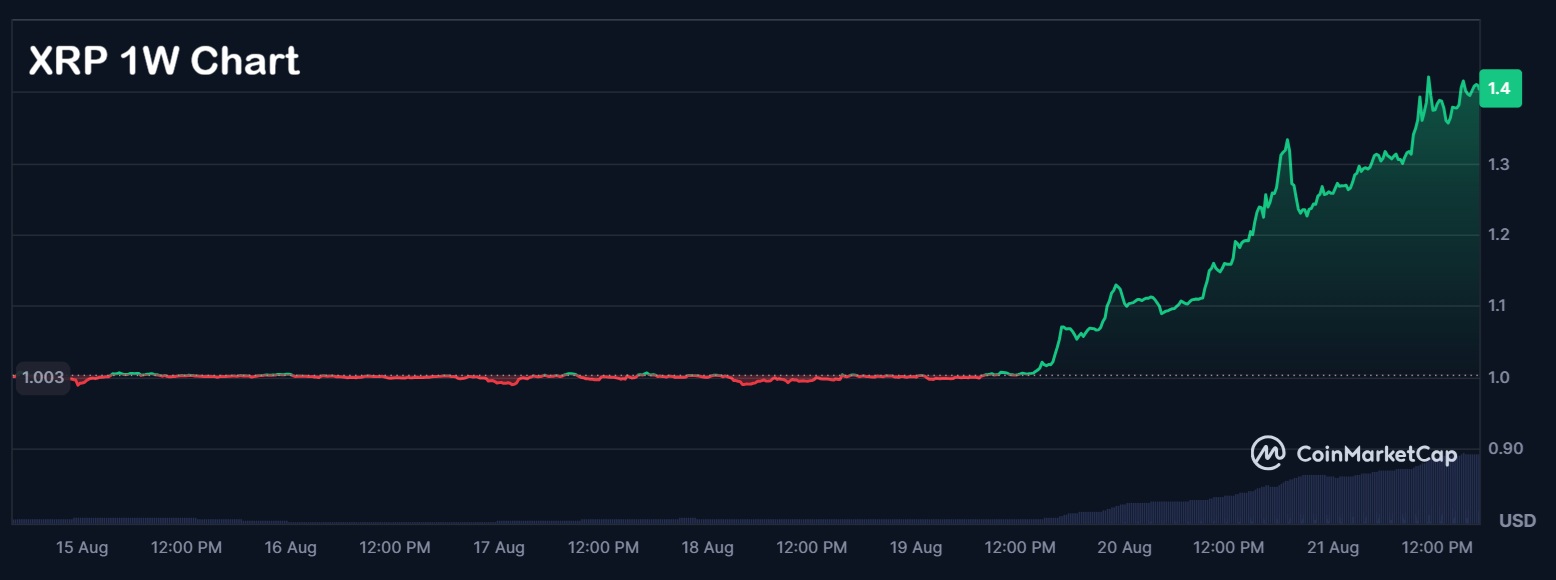
XRP has become one of the top performers in the latest crypto rally, climbing 12.99% over the past 24 hours to $1.40.
The move comes alongside a massive rebound across digital assets, but XRP has also benefited from renewed optimism around U.S. crypto regulation and institutional adoption. Ripple CEO Brad Garlinghouse was among the industry executives at this week’s White House crypto meeting, while on-chain data also points to significant accumulation by larger XRP holders.
For investors hunting the next crypto to explode, XRP’s rally offers a useful clue. Some of the strongest narratives in crypto remain tied to making digital assets genuinely usable. So, top of the list is Bitcoin Hyper (HYPER), introducing a Layer 2 designed to make BTC faster and considerably easier to use for payments, trading, and other financial activities.
XRP Rally Puts Crypto Utility Back in Focus
XRP has always had a more transactional identity than many major cryptocurrencies. Ripple spent years building infrastructure around payments and settlement, and XRP can be transferred quickly and cheaply across the XRP Ledger. The token’s latest rally does not prove that utility alone is driving the market, but it arrives as investors are again paying attention to projects with practical use cases.
That is particularly relevant for Bitcoin – it has established itself as crypto’s dominant store of value, but the base network was never designed for the speed or transaction volume expected for payments.
Bitcoin Hyper is adding that missing layer without changing Bitcoin itself, using a Layer 2 based on the Solana Virtual Machine that handles transactions at nearly 1000x the speed of the base chain.
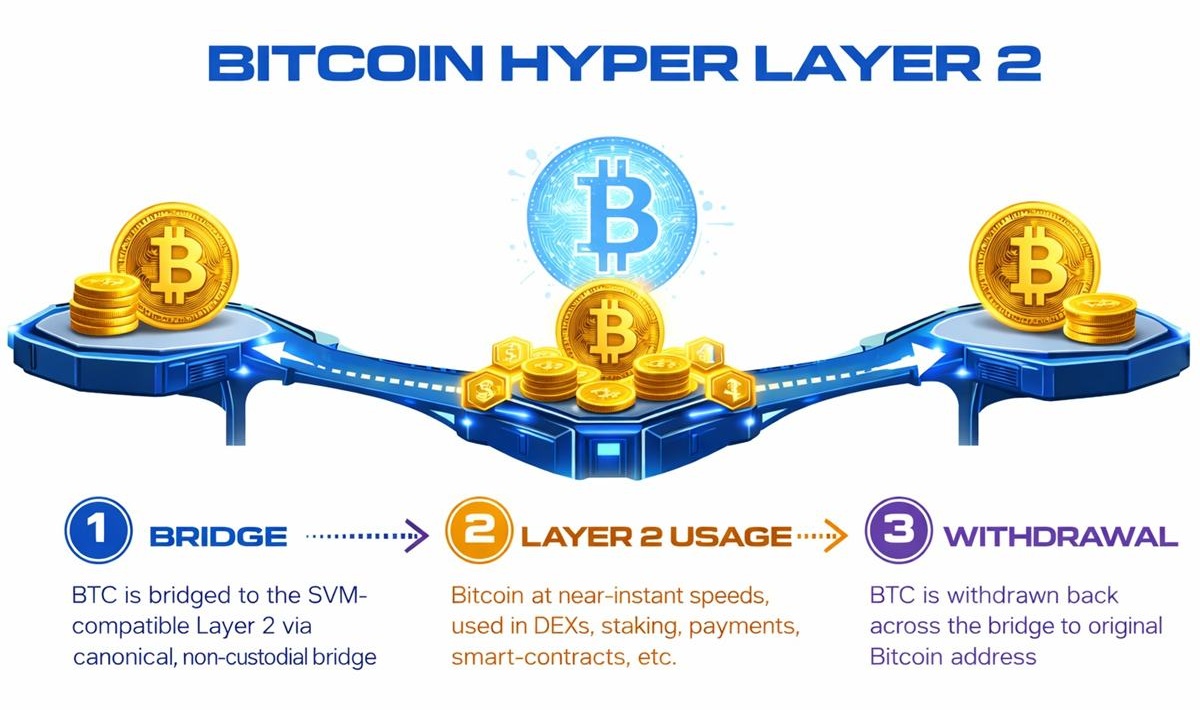
BTC can be bridged to Layer 2, while HYPER serves as the gas token for activity on Layer 2. Batches of Layer 2 transactions are ultimately anchored back to Bitcoin for settlement.
For a user, the objective is straightforward: make Bitcoin capital easier to pay with – instantly, in the real world, without any 10-minute confirmation times.
Faster transfers are one part of that, but Bitcoin Hyper also aims to support trading, lending, DeFi, and other financial tools that are difficult to run directly on Bitcoin’s Layer 1.
XRP and HYPER are both arriving at payments from very different directions. XRP already has an established network and market. HYPER is an early-stage thesis that Bitcoin holders will increasingly want similar freedom to actually use the value they own.
Can Bitcoin Hyper Be the Next Crypto to Explode?
That thesis has already attracted substantial presale demand. Bitcoin Hyper has raised $33 million, with HYPER currently priced at $0.01368. Staking offers 35% APY at this stage, and Coinsult and SpyWolf have audited the project’s contracts.
The size of the raise is notable because Bitcoin Hyper has yet to reach the stage at which network adoption can be properly judged. Buyers are effectively backing the idea that Bitcoin’s enormous capital base can support more activity above the base layer.
And that is where XRP’s latest move becomes relevant – crypto does not have to choose between assets designed to hold value and networks designed to move it. The market increasingly contains both.
Cross-network transfers should feel simple from start to finish. ⚡
Bitcoin Hyper is refining transaction handling, state tracking, and ecosystem integration to make moving assets between supported networks more predictable and reliable.
Read the full article: 👇… pic.twitter.com/MWSjnwh758
— Bitcoin Hyper (@BTC_Hyper2) August 21, 2026
Bitcoin Hyper suggests that Bitcoin can occupy both worlds as well – remaining the monetary foundation while a faster Layer 2 handles the activity above it.
HYPER’s real test will come after launch, when transaction volumes and actual users replace presale fundraising as the meaningful metrics. But $33 million suggests the idea has already found an audience.
XRP has spent years proving that crypto users care about moving money efficiently, and Bitcoin Hyper says there is room to bring much more of that activity to BTC.