


 Some of the links on this site may be affiliate links. ICOBench may receive advertising commissions when users visit recommended platforms via our affiliate links, at no additional cost to you. All recommendations are based on a comprehensive review process.
This week has offered several reminders of how many moving parts crypto traders now have to track at once. Bitcoin slipped back below $78,000 as US inflation data and a possible Federal Reserve rate increase came into view, oil prices rose amid fresh geopolitical tension, and US Treasury yields climbed in response to the government’s latest bond buyback announcement. At the same time, a meme coin created by Hunter Biden (LAPTOP) lost nearly all of its value within minutes of launch, causing whale-sized investors and retail buyers alike to lose up to 98% of their funds.
As crypto trades around the clock, huge liquidation waves can cascade in a single session, and capital can leap from one asset to another on the same day, high-speed AI tools such as SpaceXAI’s Grok LLM have become indispensable for anyone who struggles to keep up with the market’s constant flood of complex (and often conflicting) information.
For this article, we summoned Grok 4.6 and asked it to forecast end-of-year prices for Bitcoin, Ethereum, and XRP, and threw it an extra curveball in the form of a presale project called Bitcoin Hyper (HYPER), which is building a new Bitcoin Layer 2 and planning to launch it later this year. Keep reading to see what Grok had to say about each coin’s prospects for the next few months.
Bitcoin (BTC)
“In 2026, Bitcoin has a buyer base that earlier cycles did not have,” Grok began. “US spot Bitcoin exchange-traded funds and corporate treasuries now create demand whenever net creations turn positive. New issuance after the 2024 halving is small next to those institutional flows. If creations stay positive through Q4, the market does not need a retail surge to grind higher.”
“Long-term holder supply has remained sticky,” the AI continued, ”and peak-to-trough losses this cycle have been shallower than the 75–85% declines of earlier eras. That pattern fits an asset that is now held inside regulated products and company balance sheets, not only on crypto exchanges.”
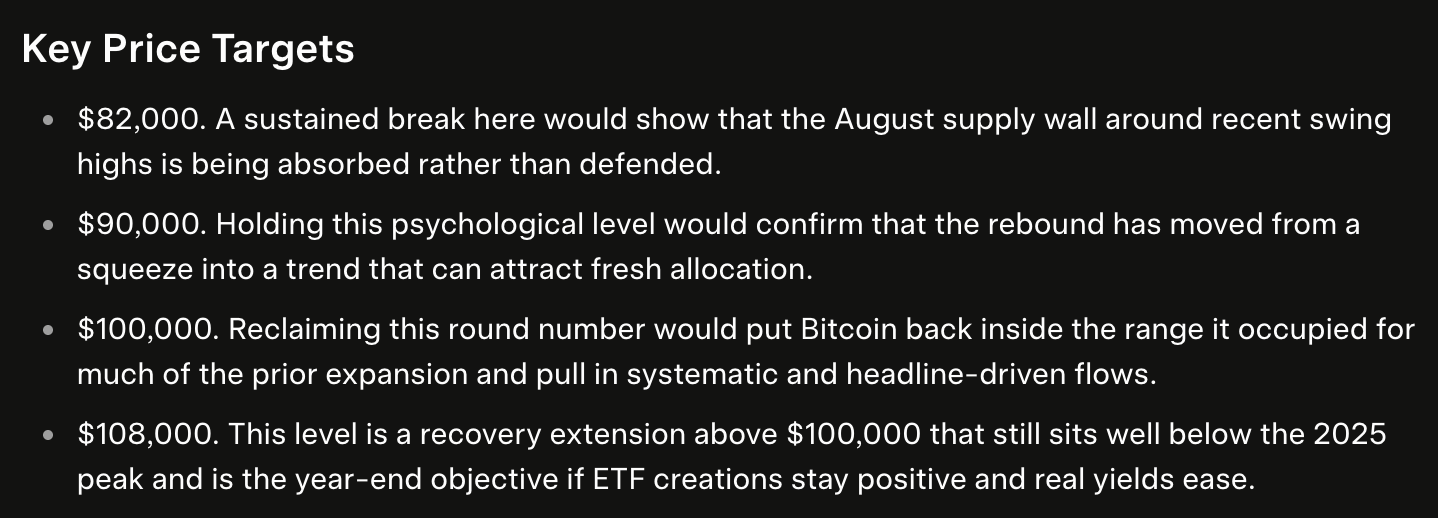
“Macro policy is the swing factor for the last quarter of the year,” Grok explained. “As the federal funds rate sits at 3.50–3.75% and inflation remains above the Fed’s official target, a September increase is still in play after firm payroll data earlier this month. Bitcoin has generally sold off when hike odds have jumped, but the bullish case does not require emergency rate cuts. Softer inflation data, a hold rather than a hike, or a single increase that markets treat as the last tightening step would ease real yields and take pressure off the dollar.”
“I currently anticipate a move to $108,000 for BTC this year, which would reclaim ground already traded in 2025,” Grok concluded. “That target is ambitious, but certainly possible if ETF demand persists and the Federal Reserve does not deliver a sequence of further increases.”
Ethereum (ETH)
“Ethereum now behaves less like a free-floating asset and more like a reserve that is hard to move,” Grok said. “About a third of circulating ETH sits with validators; 1.9 million tokens wait in the entry queue, and the exit queue is only about 6,400 ETH. That wait exists even though staking pays less than cash.”
“Funds and treasuries are parking inventory they do not intend to flip. BlackRock’s staked product, Grayscale’s reward-paying trust, and Fidelity’s plan to stake almost all of FETH put that lockup inside vehicles that compliance teams can hold. Coins that earn rewards on-chain are not sitting on order books.”
“The Ethereum chain itself is still being upgraded on a fixed cadence,” Grok noted. “Pectra and Fusaka already lifted blob capacity and let large operators merge validator balances. Glamsterdam, planned for Q4, is designed to write proposer-builder separation into the protocol and raise mainnet throughput. Hegota is generally anticipated later in the year, or possibly in 2027.”
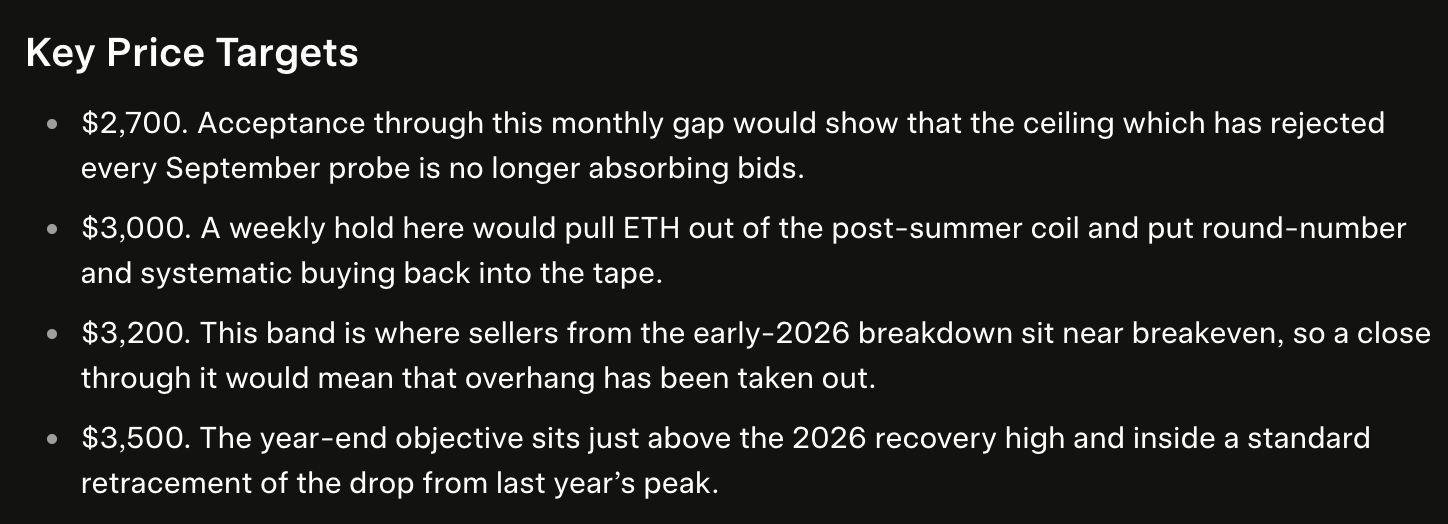
“Most user activity already lives on Layer 2 networks at fees of a few cents, with Ethereum as the settlement layer those chains post back to. A clean Glamsterdam delivery would let institutions treat the stack as working infrastructure rather than a project still proving itself.”
“A separate bid has come from corporate treasuries,” Grok continued. ”Bitmine holds close to 5.9 million ETH, nearly 5% of supply, and has kept adding under $2,500. Other digital asset treasuries have copied the same approach, and coins have left exchanges even as smaller wallets sell into every bounce. That is why my EOY 2026 target for ETH is currently set around $3,500.”
XRP (XRP)
“XRP (XRP) has spent half a decade as an asset many US desks would not touch – but that constraint ended when the SEC dropped its remaining appeals in 2025 and left standing the ruling that exchange sales of the token are not investment contracts,” Grok began. “XRP is now mostly being treated as a digital commodity, so brokerages, advisers, and funds can now book it the way they book other listed crypto products.”
“Importantly, the XRP Ledger is being used for a different job than smart-contract platforms,” said Grok. “It has already been tested as a way to power near-real-time cross-border redemption of tokenized US Treasury funds, and Ripple Payments runs across more than 60 markets. The RLUSD stablecoin has grown into a dollar-pegged token with more than a billion dollars outstanding and a significant share of that supply sitting on the same ledger.”
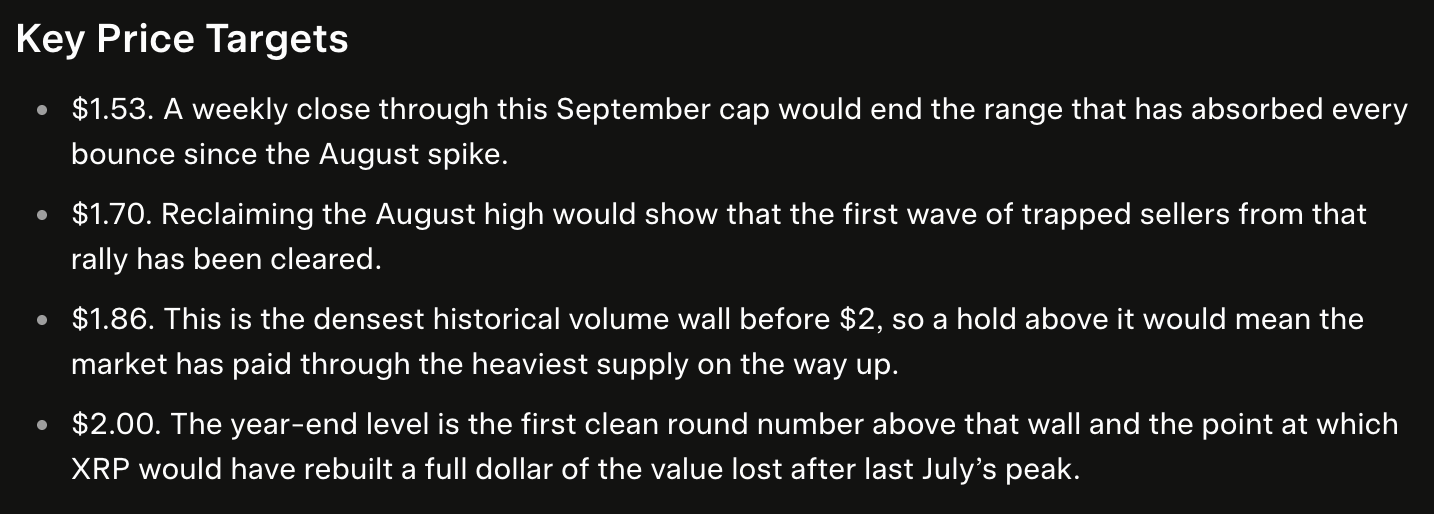
“XRP’s price action since it rebounded from its mid-August low near $1 has already shown how fast this coin can travel when that bid appears. If listed-fund buying manages to outrun XRP’s monthly escrow print and key resistance levels give way, a series of new support shelves could be established and put $2 XRP back on the board by the end of 2026.”
Bitcoin Hyper (HYPER)
“Bitcoin Hyper (HYPER) is still in a public presale stage, with HYPER tokens priced at $0.013686, more than $33 million raised, and a Bitcoin Layer 2 mainnet expected to launch later in 2026,” Grok noted. “The design is based on a high-speed execution layer that settles back to Bitcoin. BTC will be sent to the L2 through a canonical bridge, before a relay program on the Solana Virtual Machine checks Bitcoin block headers and transaction proofs, then mints an equivalent balance on the Layer 2.”
“Activity on that layer will be batched, compressed, and posted to Bitcoin with zero-knowledge proofs. Withdrawals will burn the Layer 2 balance and release BTC on the base chain.”
“Fees on the new network will be paid in HYPER,” Grok stated, “which also has a total supply of 21 billion tokens, and a tokenomics plan assigning 30% to development, 25% to a treasury, 20% to marketing, 15% to rewards, and 10% to exchange listings.”
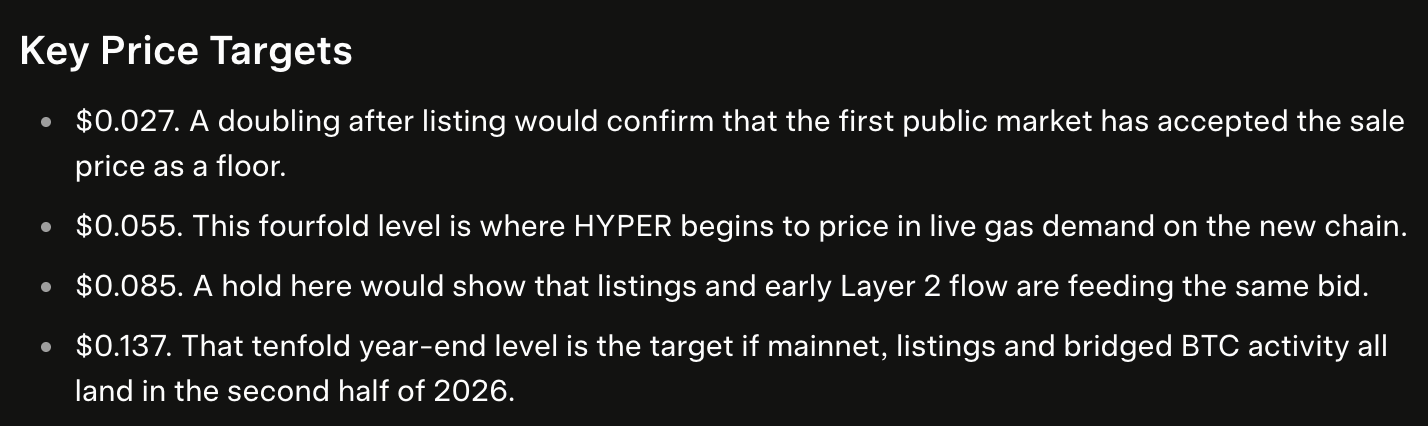
“At its core, Bitcoin Hyper is designed to enable Web3 builders and users to work with BTC inside applications that the base chain cannot host on its own,” the AI pointed out. “Key use case examples would range from DeFi to meme coin launchpads, games, NFTs, and more – all essentially built on Bitcoin. Provided BTC itself remains strong throughout the rest of the year, and the Bitcoin Hyper team delivers a working Layer 2 that successfully attracts a critical mass of users and developers, a 10x move for HYPER could easily be achievable over the coming months.”