


 Some of the links on this site may be affiliate links. ICOBench may receive advertising commissions when users visit recommended platforms via our affiliate links, at no additional cost to you. All recommendations are based on a comprehensive review process.
Bitcoin has just absorbed another difficult macroeconomic test without giving up much ground.
U.S. consumer prices rose 0.4% in August and 3.4% from a year earlier, keeping inflation well above the Federal Reserve’s 2% target. Core prices also rose 0.3% during the month, while futures markets priced in an approximately 85% chance of a quarter-point Fed rate hike next week.
Normally, hotter inflation and the prospect of higher interest rates are uncomfortable company for speculative assets, but Bitcoin is doing a respectable job of ignoring them. BTC is currently trading at $78,600, up 1.80% over 24 hours and down just 0.99% across the week.
That strength suggests a good future for projects building around Bitcoin, and Bitcoin Hyper (HYPER) is benefiting from people looking further into BTC’s future. The project has now raised $33 million at a presale price of $0.01368, making it an increasingly difficult project to overlook when searching for the best crypto to buy before the next round of exchange launches.
Bitcoin Shrugs Off a Difficult Macro Backdrop
Friday’s inflation report arrived after an already uncomfortable week for markets. Oil prices have surged amid geopolitical tensions, Treasury yields have pushed toward multi-year highs, and the Fed is once again considering tighter monetary policy.
The U.S. 10-year yield briefly approached 5% this week, while the latest CPI report strengthened the case for another rate increase.
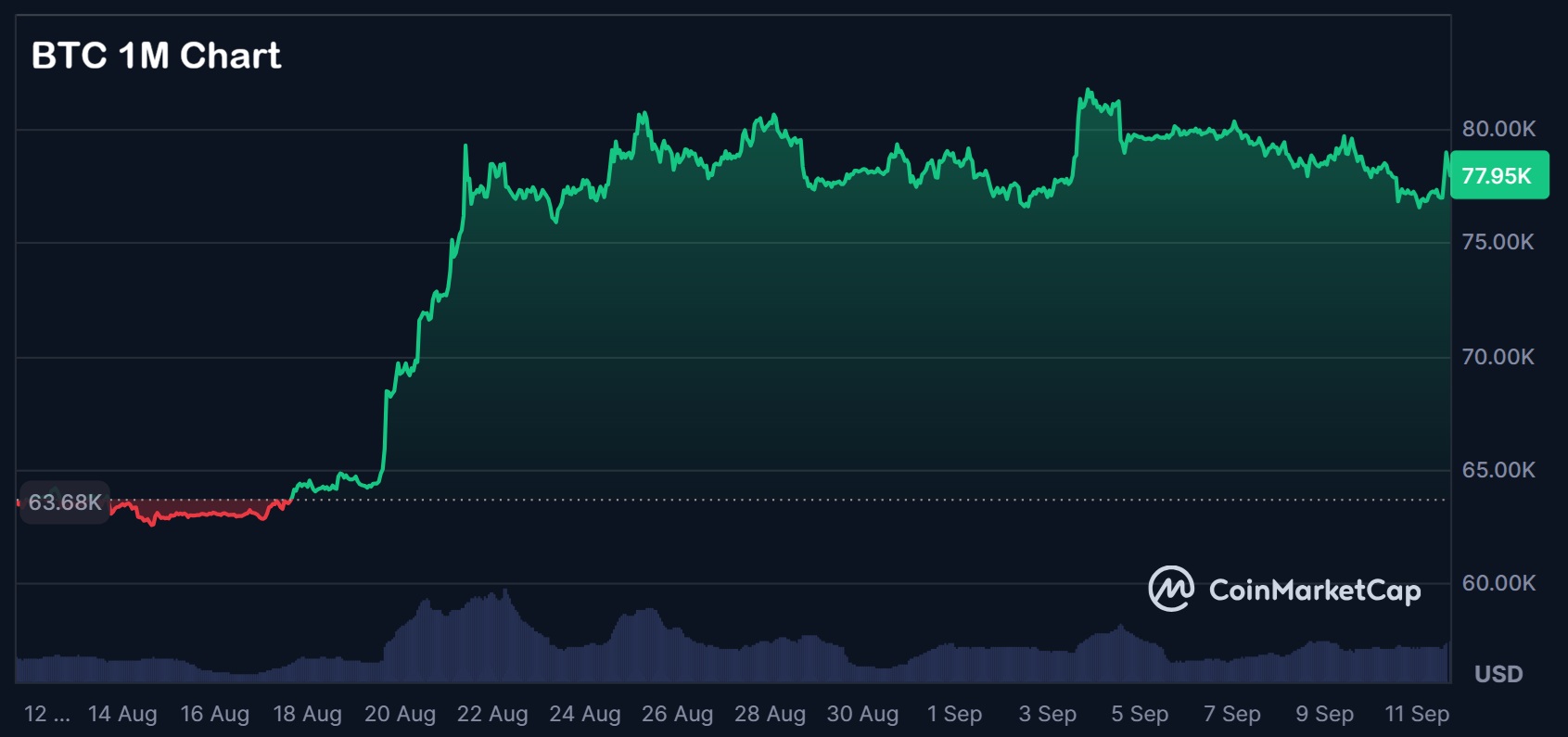
Bitcoin’s response is interesting precisely because it isn’t spectacular – there is no enormous breakout to explain. BTC is simply holding around $78,000 despite a collection of conditions that would normally give traders plenty of reasons to sell.
That also comes after Bitcoin’s 50-day moving average crossed above its 200-day average earlier this week, creating the bullish “golden cross” watched by technical traders.
If Bitcoin can keep attracting capital through a difficult macro environment, the next question is what holders can do with all that BTC.
HYPER Wants Bitcoin to Do More Than Sit in a Wallet
Bitcoin Hyper starts from the fact that Bitcoin’s greatest strengths also impose limits – its base network is intentionally conservative, which is useful when the job is maintaining a secure record of scarce digital money.
However, it is less useful when someone wants a payment confirmed quickly, or an app to perform several actions in seconds.
So HYPER adds a separate Layer 2 for that faster activity, using the Solana Virtual Machine (the execution environment behind Solana smart contracts), as the foundation for apps around Bitcoin.
That gives developers a familiar toolkit for building things Bitcoin was never designed to handle directly: decentralized trading, lending, payment services, and other interactive financial products.
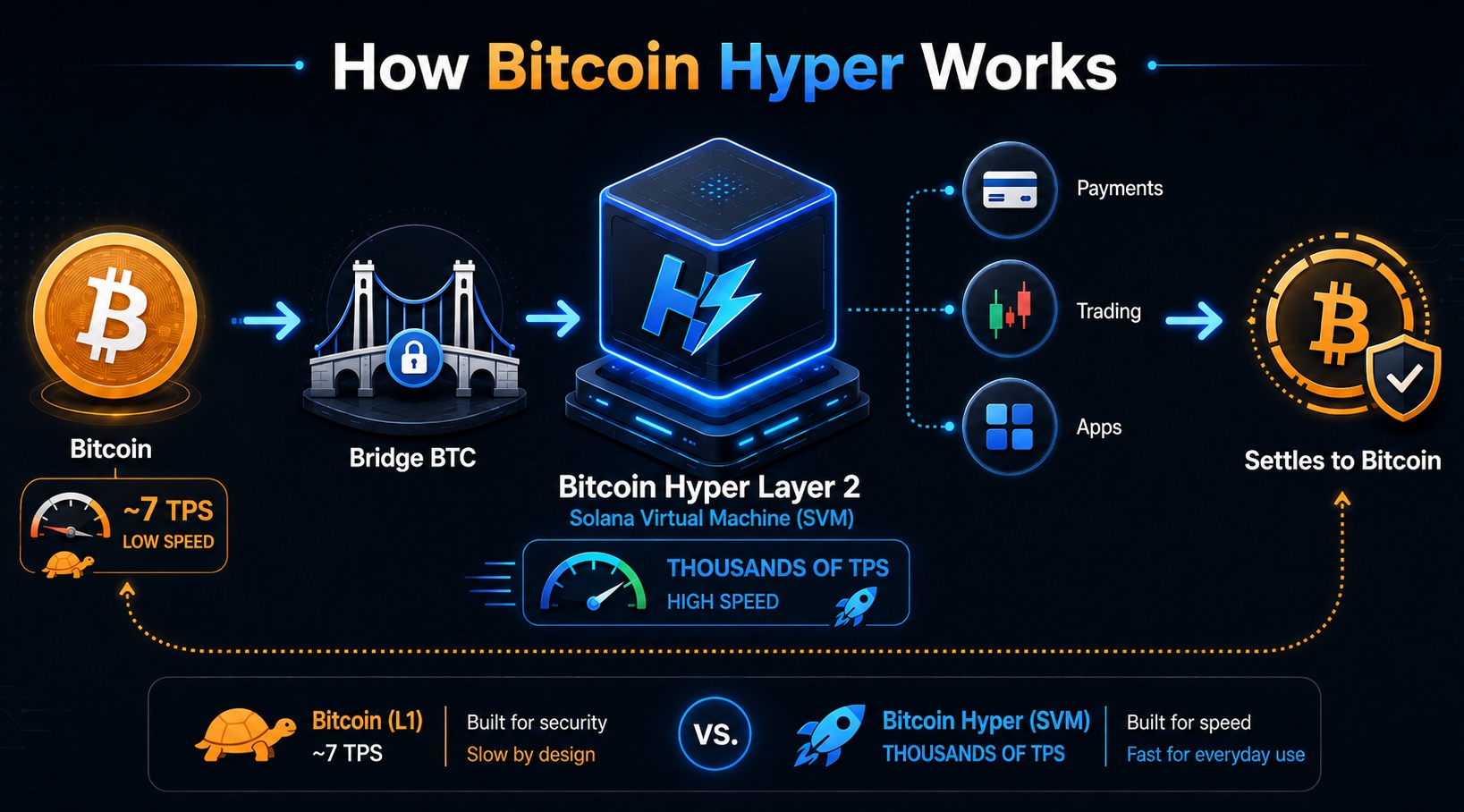
In terms of speed, HYPER’s bridge allows users to deposit BTC and then use its value on the Layer 2. Rather than making someone wait for Bitcoin’s 10-minute settlement time whenever they press a button, those interactions take place in the faster HYPER environment.
Think about the difference at a checkout – Bitcoin already works if somebody wants to send value from one address to another. But standing around waiting for Bitcoin confirmations is a poor substitute for tapping a card. A faster execution layer brings the original idea of real-world Bitcoin payments much closer to the experience consumers already expect.
Trading also becomes another obvious use case – BTC represents an enormous pool of capital, yet much of decentralized finance developed elsewhere because Ethereum and Solana were better suited to programmable applications.
HYPER is asking whether Bitcoin holders should have to choose between owning BTC and accessing those faster financial tools.
A $33M Presale Gives HYPER a Serious Starting Point
The scale of the presale is impressive in its own right – Bitcoin Hyper has raised $33 million before public exchange trading has begun, with HYPER currently selling for $0.01368.
The token will be used within the Layer 2, including for network fees, while holders can participate in staking and governance. HYPER staking currently offers 35% APY, and Coinsult and SpyWolf have audited the token contracts.
Follow the bolts. Find Hyper Speed. ⚡️https://t.co/VNG0P4GuDo pic.twitter.com/eLagJv5Lmf
— Bitcoin Hyper (@BTC_Hyper2) September 7, 2026
But the $33 million is important for another reason: Layer 2 networks need people who want to use them, and developers need an audience before spending months building applications.
Bandn Hyper will launch with a substantial group of token holders already following the project, and exchange listings will then introduce an entirely new audience.
So the project does not depend on whether BTC closes this week at $77,000, $79,000, or $82,000. It depends on Bitcoin remaining an enormous pool of digital capital whose holders increasingly want to use, rather than simply store, that value.
With $33 million already raised at $0.01368, plenty of presale buyers appear interested in that possibility.