Some of the links on this site may be affiliate links. ICOBench may receive advertising commissions when users visit recommended platforms via our affiliate links, at no additional cost to you. All recommendations are based on a comprehensive review process.
Liquid Network, a Bitcoin-linked blockchain used by exchanges for faster settlement, said roughly 4,000 of the approximately 4,200 BTC held in its federation wallet were withdrawn on September 6, 2026. The funds were valued at about US$320 million (S$405 million).
The withdrawal affected roughly 95 per cent of the wallet’s reserves and led Liquid to halt new transactions.
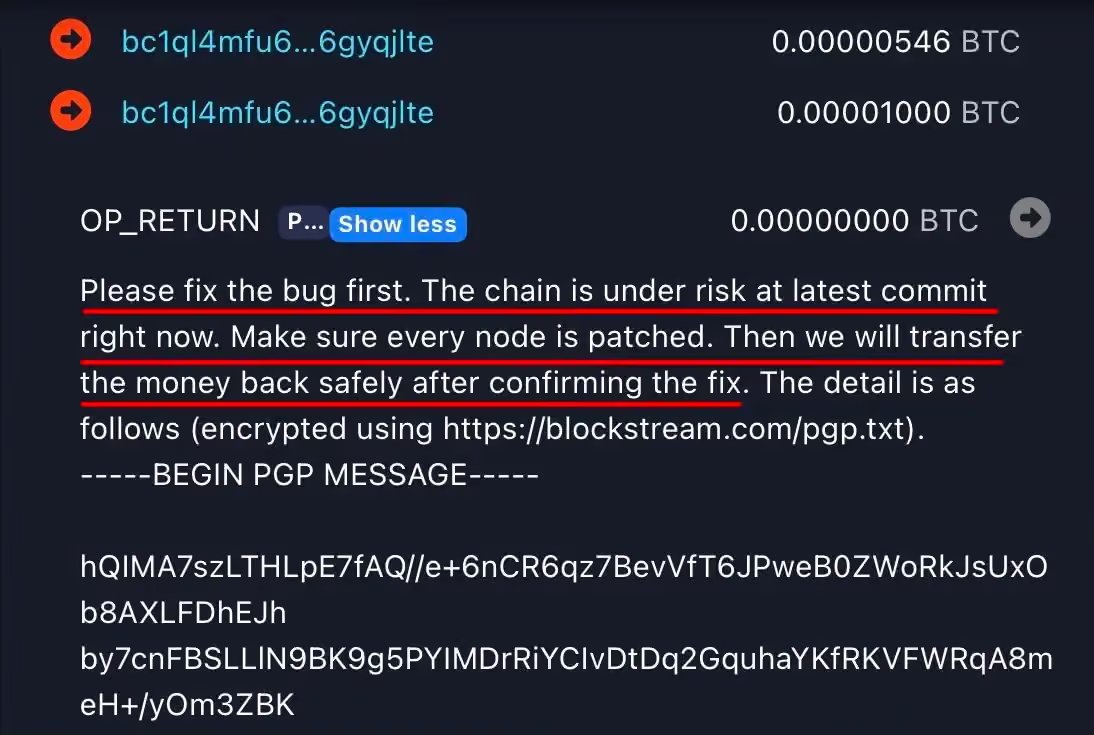
We are aware of a security incident on @Liquid_BTC. Purported white-hat hackers have withdrawn ~4,000 BTC (~$320 million) from the Liquid Federation wallet. The @Blockstream team is working on contacting them on-chain with a signed message.
What we know so far is that the funds…
— Liquid Network 🌊 (@Liquid_BTC) September 6, 2026
DISCOVER: Trade Crypto on Kraken
Liquid Network hack halts new transactions
Liquid Network described the perpetrators as purported white-hat hackers, meaning people who claim to exploit vulnerabilities with the intention of returning funds, often for a fee. The network said Liquid wallets would be affected and that federation members were working to resolve the incident and restore normal network activity.

The funds were withdrawn via SideSwap, a settlement platform authorized to handle transfers from the network. Liquid said the relevant key was not compromised. Reporting on the incident said Blockstream paused the network, and exchanges were told to halt L-BTC deposits and withdrawals while the issue was addressed.
Don’t Miss: The Secret Meme Coins Smart Money Are Stacking For Next Year
How Liquid is used for Bitcoin settlement
Liquid Network was started in 2018 by Blockstream, a blockchain technology company co-founded by cryptographer Adam Back. According to Blockstream, the network is managed by a federation of more than 80 exchanges, infrastructure companies, and asset managers.
The network issues Liquid Bitcoin, or L-BTC, against Bitcoin, which locks it up. This structure is intended to help exchanges settle transactions more quickly when the main Bitcoin blockchain experiences congestion, which can slow and make transactions expensive. Blockstream lists BTSE and Bitfinex among Liquid users. BitMEX, which has announced it is shutting down in September, was also a user.
Dear BitMEX Users,
Today, we share with a very heavy heart that BitMEX exchange will shut down its operations, effective 23 September 2026 at 04:00:00 UTC.
The owner and operator of BitMEX, HDR Global Trading Limited, has made the difficult decision to close operations… pic.twitter.com/oWuqlh547f
— BitMEX (@BitMEX) July 23, 2026
The reports concerned Liquid’s federation wallet, its peg-out process, and the network’s associated software. They did not describe a compromise of Bitcoin’s base blockchain.
What the preliminary evidence says about the breach
Details of the vulnerability remained preliminary. Aneirin Flynn, chief executive of cybersecurity technology firm FailSafe, said early evidence pointed to a bug that allowed the minting of L-BTC. Separate reporting said SideSwap identified a bug in Blockstream’s Elements software and said L-BTC involved in the peg-out had been created through that bug.
Flynn said the incident exposed a weakness in Liquid’s validation and backing model, citing the scale of the reserve drain and the decision to pause the network. The episode was reported amid other crypto-security incidents in 2026, including a US$6 million drain from a Crypto.com-linked digital-asset lending platform and an August hack involving the Coldcard offline Bitcoin wallet.
Don’t Miss: New Binance Listings That Could Erupt This Year