

 Some of the links on this site may be affiliate links. ICOBench may receive advertising commissions when users visit recommended platforms via our affiliate links, at no additional cost to you. All recommendations are based on a comprehensive review process.
Staking has become one of the most popular ways for crypto holders to earn passive income on a blockchain network. But what exactly is staking, how does it work, and is it right for you? This guide includes everything you need to know about crypto staking, from rewards and risks to how to get started.
Key Insights: What Is Staking?
✔️Staking allows crypto holders to earn passive income by locking up assets to support blockchain networks. ✔️It is similar to earning interest in a traditional bank, but operates through decentralized blockchain protocols. ✔️Staking rewards are usually expressed as APY, which can vary based on network conditions and participation levels. ✔️Many major cryptocurrencies, including Ethereum, Cardano, and Solana, support staking. ✔️While staking offers attractive returns, risks such as lock-up periods, slashing, and market volatility should be considered.
What Is Staking?
Staking is the process of locking up your cryptocurrency on a blockchain network. In return, you earn rewards in the same cryptocurrency.
Think about it like a time deposit deposit with a traditional bank, where people deposit money into a bank saving account to generate interest over time. Similarly, when you stake crypto, your assets are used to help validate transactions and secure the blockchain, and you earn staking rewards.
However, unlike banks, staking is typically decentralized, transparent, and powered by blockchain technology rather than financial institutions.
Types of Staking
There are several ways to participate in staking, depending on your technical skills and risk tolerance.
✓ Solo Staking
This involves running your own validator node. It usually requires technical knowledge, dedicated hardware, and a minimum amount of tokens. While rewards can be higher, the responsibility and risk are also greater.
✓ Delegated Staking
With delegated staking, you delegate your tokens to a validator who does the technical work on your behalf. This is one of the most common and beginner-friendly options.
✓ Exchange Staking
Many crypto exchanges (e.g. Binance, Coinbase, Crypto.com) offer two types of staking services, such as flexible staking (no lock-up but lower APY) and locked staking (higher APY with lock-up period).
Users can stake their crypto with just a few clicks, making it convenient, though it comes with custodial risks.
How Much Can I Earn From Staking?
Your staking returns are usually expressed as APY (Annual Percentage Yield). APY represents the estimated yearly return, including compound rewards.
What Is APY in Staking?
APY shows how much you could earn in a year if rewards are compounded. For example, a 6% APY means you may earn approximately 6% of your staked amount annually, assuming network conditions remain stable.
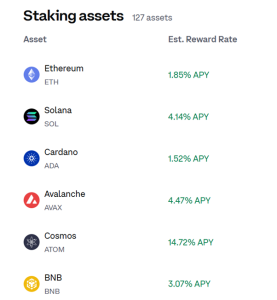
Source: Coinbase
Why Does APY Vary?
Staking APY is not fixed and can fluctuate based on several factors:
- Total amount of tokens staked in the network
- Network inflation rate
- Validator performance and commission fees
- Lock-up periods and staking demand
Because of these variables, staking rewards can increase or decrease over time.
How Does Staking Work?
Staking primarily operates under a consensus mechanism called Proof of Stake (PoS). In a PoS blockchain:
- Users stake tokens to become validators or support validators
- Validators are chosen to confirm transactions and create new blocks
- Honest behavior is rewarded, while malicious actions are penalized
By staking tokens, participants align their financial incentives with the health and security of the network.
Risks of Staking
While staking can be rewarding, it is not risk-free. There are some risks you must consider before putting your money into staking:
⚔︎ Slashing Risk: If a validator behaves maliciously or goes offline frequently, a portion of the staked tokens may be slashed (penalized).
⚔︎ Lock-Up and Liquidity Risk: Some networks require tokens to be locked for a certain period. During this time, you may not be able to sell or transfer your assets.
⚔︎ Market Risk: Even if you earn staking rewards, the market price of the token can decline, affecting the overall value of your holdings.
Is Staking Suitable for You?
Staking may be suitable if:
- You plan to hold crypto long-term
- You want passive income without active trading
- You believe in the long-term growth of a blockchain
However, it may not be ideal if you need high liquidity or prefer short-term trading strategies.
How to Start Staking on a Crypto Exchange
In this guide, we will only talk about how to start staking on a crypto exchange because it is one of the easiest and most popular ways for beginners to earn staking rewards. Most major exchanges simplify the entire process by handling the technical requirements on behalf of users.
Step 1: Choose a Reputable Crypto Exchange
Select a well-established exchange that offers staking services and supports the cryptocurrency you want to stake. Factors to consider include security, supported assets, staking APY, lock-up terms, and platform reputation.
Step 2: Create and Verify Your Account
Register an account on the exchange and complete identity verification if required. This ensures access to staking features and withdrawal functions.
Step 3: Deposit or Purchase Stakable Cryptocurrencies
Fund your exchange wallet by depositing crypto or purchasing staking-supported tokens directly on the platform.
Step 4: Select a Staking Product
Navigate to the exchange’s staking or “earn” section and choose a staking option. Exchanges often provide: Flexible staking (no lock-up, lower APY) & Fixed or locked staking (higher APY with lock-up periods).
Step 5: Confirm Staking Details
Review key information such as APY, minimum staking amount, reward distribution frequency, and redemption rules before confirming.
Step 6: Earn and Track Staking Rewards
Once staked, rewards are typically distributed daily or weekly and can be tracked directly from your exchange dashboard.
Conclusion
Staking is a powerful way to earn passive income while contributing to blockchain security and decentralization. Similar to earning interest in a traditional bank, staking allows crypto holders to put their assets to work. However, understanding APY, risks, and lock-up conditions is essential before committing your funds.
For long-term investors who believe in blockchain technology, staking can be a rewarding and strategic addition to a crypto portfolio.