




 Some of the links on this site may be affiliate links. ICOBench may receive advertising commissions when users visit recommended platforms via our affiliate links, at no additional cost to you. All recommendations are based on a comprehensive review process.
 Leverage in crypto is one of the most prominent tactics among traders seeking to boost their profit margin without investing more. Leverage lets you borrow money to open positions that are significantly larger than your initial capital, potentially increasing your profits from even slight price changes.
Although leveraging increases the excitement and rewards of trading, it also exposes investors to greater risks, such as the possibility of forced liquidation and quick losses. Before using leverage in cryptocurrency, let’s understand how it operates because, depending on how you use it, crypto leveraging can be both beneficial and harmful.
Leverage in Crypto: Key Insights
✔️ Leverage lets traders borrow funds to control larger crypto positions with limited initial capital.
✔️ Common leverage ratios range from 2x to 100x, magnifying both profits and losses.
✔️ High crypto volatility makes leveraged positions riskier compared to traditional assets.
✔️ Liquidation occurs if losses exceed the margin, wiping out the trader’s collateral.
✔️ Effective risk management tools like stop-loss orders should be used when trading with leverage.
Understanding Leverage in Crypto
Leverage is like a multiplier on your initial investment. It lets you take part in bigger market moves without having to put up the full amount right away. You put down a small amount of the total position size, aka the initial margin, and then you borrow the rest via the stock market or liquidity provider.

Using borrowed money to trade cryptocurrencies gives you more chances of earning funds. It lets you open positions that are considerably larger than your current account balance, thereby rendering both your profits and losses higher. Leveraging can significantly increase your return on investment (ROI).
If you use 10x leverage, for instance, you only need to put up 10% of the trade’s value as collateral. The trading platform will lend you the other 90%.
Since you borrowed a large portion of the investment, it makes your gains much bigger if the market goes your way.
According to the platform and how volatile the currency is, the exchange may offer you leverage ratios between 2x and 100x. Remember that using more leverage can help you make more money, but it also makes you more likely to lose everything. If your losses go above your margin, your position could be forcibly closed. When you trade with leverage, you need to be able to handle these risks.
How Does Crypto Leverage Work?
Let’s break the topic down into smaller pieces.
Margin Requirement (Collateral)
When you trade with leverage, you have to put down a margin, which is basically your collateral, to protect the money you borrowed. It is just a proportion of the total size of your trade.
Say if you trade with 10x leverage on a $1,000 trade, you only need $100 as margin, and the exchange will give you the rest. If your trade goes against you and you start to lose money close to that margin, your position could be liquidated.
Long and Short Positions with Leverage
Leverage lets you make money in both rising and falling markets. If you go long, you think the price will go up. So when the price rises, you make profits.
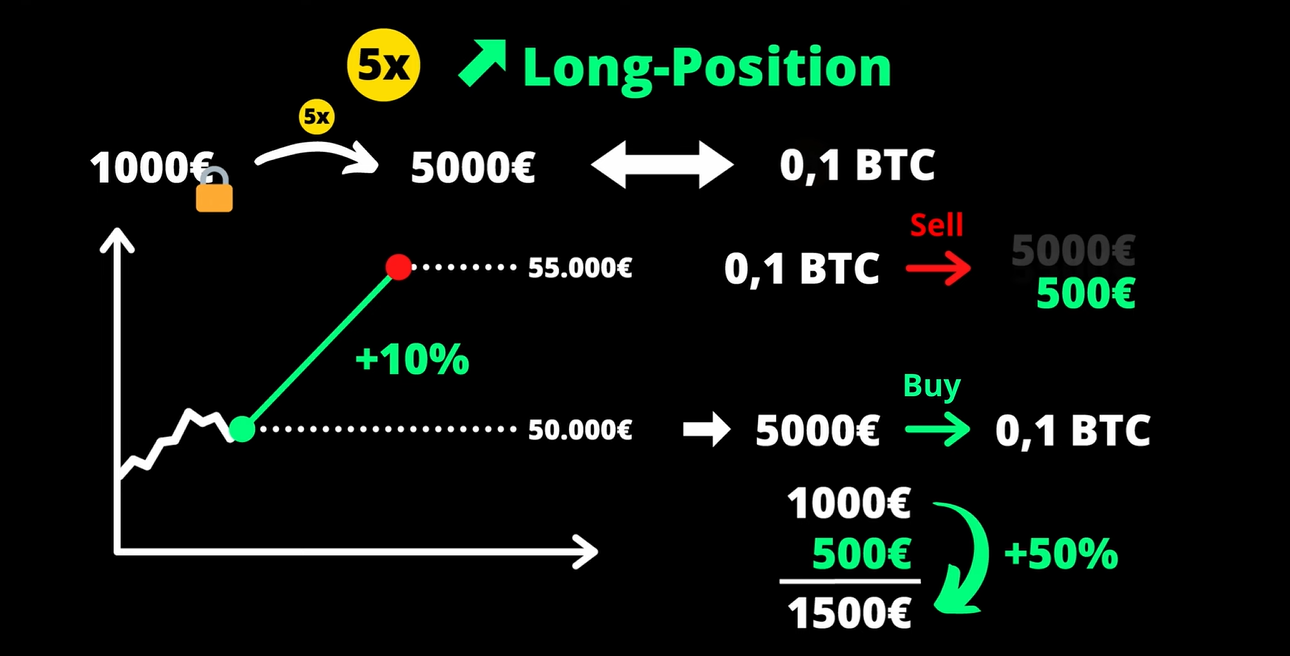
Vice Varca when you go short, you think the price will go down. And when it goes down, you make profits. With leverage, even small changes in either direction are made bigger. But keep in mind that a wrong call can quickly wipe out your margin and force you to sell.
Platforms That Let You Trade with Leverage
Binance, Bybit, OKX, Kraken, and BitMEX are just a few of the big exchanges that offer leverage. Different futures trading platforms have different rules for maximum leverage, margin requirements, and liquidation. If you’re new to trading, you should start with lower leverage levels (2x–5x) before moving on to higher-risk levels like 50x or 100x.
Leverage Example
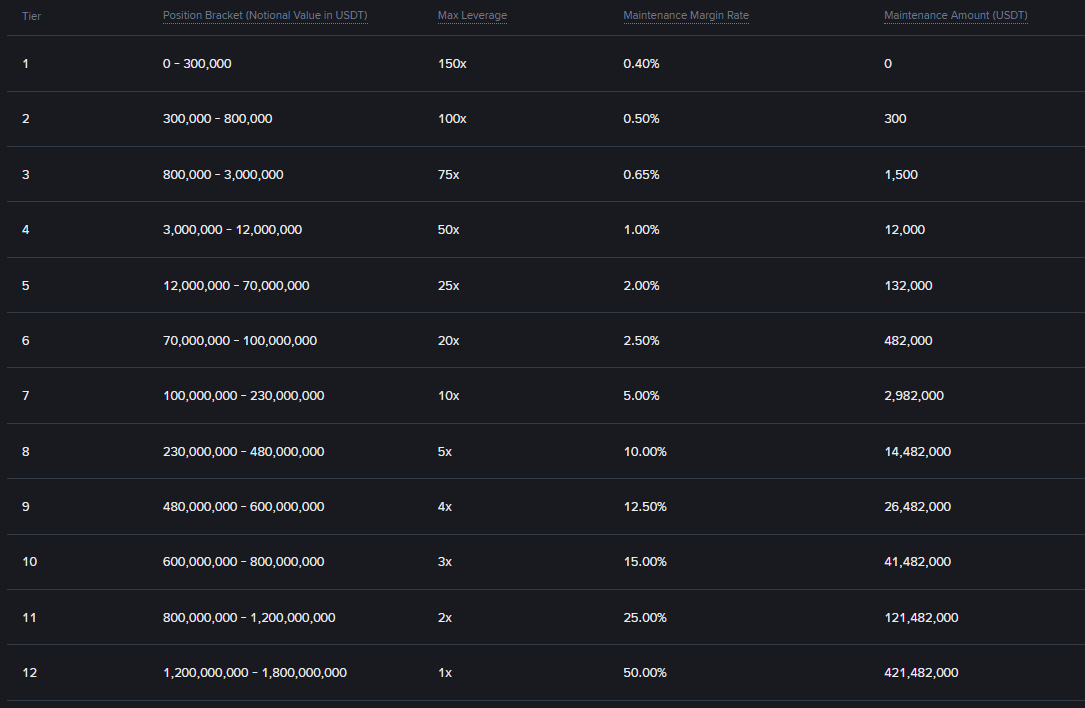
If you open a $1,000 Bitcoin position with 10x leverage and only $100 in margin, If Bitcoin goes up 5%, your position goes up $50, which is a 50% gain on your $100 investment. But if Bitcoin goes down 5%, you lose $50, which is half of your margin. So leverage poses both the higher potential and the higher risk.
Pros and Cons of Leverage in Crypto
So should you leverage or not? That’s the common dilemma. Let’s look at a side-by-side comparison of the potential benefits and risks involved.
|
Benefits |
Risks |
| ✅ Amplifies gains from small price movements, maximizes your potential profits.
✅ Lets you control larger positions with less upfront capital. ✅ Enables trading opportunities in both rising (long) and falling (short) markets. ✅ Useful for hedging strategies and portfolio diversification. ✅ Accessible across major exchanges with flexible leverage ratios. |
❌ Amplifies losses as well—wrong trades can quickly wipe out your margin.
❌ High risk of liquidation if the market moves against you. ❌ Crypto’s volatility makes leveraged trades highly unpredictable. ❌ Emotional stress and overtrading often increase with high leverage. ❌ Funding fees, margin calls, and exchange issues add hidden risks. |
Leverage in Crypto: Best Practices
If you’re still eager to start leveraging, follow these practices for a responsible approach.
Start Small: Use low leverage ratios (2x–3x) until you gain experience and confidence.
Always Use Stop-Loss Orders: Protect your margin by automatically closing trades if the market moves against you.
Risk Only What You Can Afford to Lose: Never commit more capital than you’re comfortable losing.
Manage Position Sizes: Avoid overexposure; diversify trades instead of going all-in on one position.
Factor in Fees & Funding Costs: Account for trading fees and overnight funding rates, which can reduce profits over time.
Keep Emotions in Check: Stick to your strategy; don’t chase losses or make impulsive high-leverage trades.
Keep an eye out for based and promising cryptos. These may be more stable in price fluctuations than those riding the hype train. Market research should always be your #1 priority.
Conclusion
Crypto leverage is a double-edged sword. Use responsibly, and it can become a smart approach for earning more with your current gains. Leverage impulsively, and you may be counting losses sooner than you think. Always remember that crypto assets are way more unpredictable than traditional finance. Nothing is ever certain in this industry.