

 Some of the links on this site may be affiliate links. ICOBench may receive advertising commissions when users visit recommended platforms via our affiliate links, at no additional cost to you. All recommendations are based on a comprehensive review process.
 A Decentralized Exchange (DEX) is a peer-to-peer trading platform that allows users to buy, sell, and swap their digital assets directly from their own wallets, without relying on a central authority or intermediary.
Instead of storing user funds, a DEX operates through smart contracts, enabling secure and transparent transactions on the blockchain itself.
Unlike centralized exchanges, DEXs prioritize self-custody and privacy, letting traders maintain full control of their assets at all times.
They eliminate the need for account verification, middlemen, or third-party storage, offering a more open, autonomous, and censorship-resistant approach to crypto trading.
✔️A Decentralized Exchange (DEX) lets users trade cryptocurrencies directly from their wallets using smart contracts without banks, brokers, custodians, or central authority involved. ✔️Instead of a central order book, most DEXs use liquidity pools, often managed by automated market makers (AMMs), that rely on users providing tokens in exchange for trading fees or rewards. ✔️DEXs promote self-custody and transparency, allowing users to retain full control of their assets without exposing private keys to a platform. ✔️While offering freedom and privacy, DEXs can involve higher gas fees, potential smart-contract risks, and limited fiat on-ramps compared to centralized exchanges.Decentralized Exchange (DEX): Key Insights
What Is a Decentralized Exchange (DEX)?
A Decentralized Exchange (DEX) is a blockchain-based marketplace that allows users to trade cryptocurrencies directly, without the need for intermediaries.
Unlike centralized exchanges, a DEX does not store your funds, control your private keys, or require personal verification.
Instead, trades occur automatically through smart contracts, pieces of code that execute transactions when predefined conditions are met. By enabling direct peer-to-peer trades, DEXs significantly reduce counterparty risk, as there is no need to trust an intermediary or worry about default by a third party.
Definition & Core Concept
A DEX removes the middleman from the trading process. You connect your wallet (digital wallet), approve a transaction, and the platform’s smart contract executes the trade instantly.
You don’t need to deposit any digital assets into an exchange as your crypto stays under your control until the moment it’s swapped. Users can transact directly from their digital wallets without intermediaries.
This self-custodial model aligns with the original purpose of blockchain technology: decentralization, transparency, and ownership. Every trade is verifiable on-chain, creating a trustless and censorship-resistant environment.
Types of DEXs
- Automated Market Makers (AMMs): The most common type of DEX, AMMs use liquidity pools funded by users. Traders swap tokens directly against these pools instead of waiting for order matches. Examples include Uniswap, PancakeSwap, and SushiSwap (all leading DEX platforms).
- Order Book DEXs: These operate similarly to traditional exchanges but execute trades via smart contracts instead of a centralized engine. They provide more control over pricing but can have less liquidity.
- DEX Aggregators: These platforms search across multiple DEXs to find the best prices, reducing slippage and improving trade efficiency.
Each model offers different advantages, but all share the same goal, giving users full control over their funds while maintaining accessibility and liquidity in the decentralized space.
How a Decentralized Exchange (DEX) Works
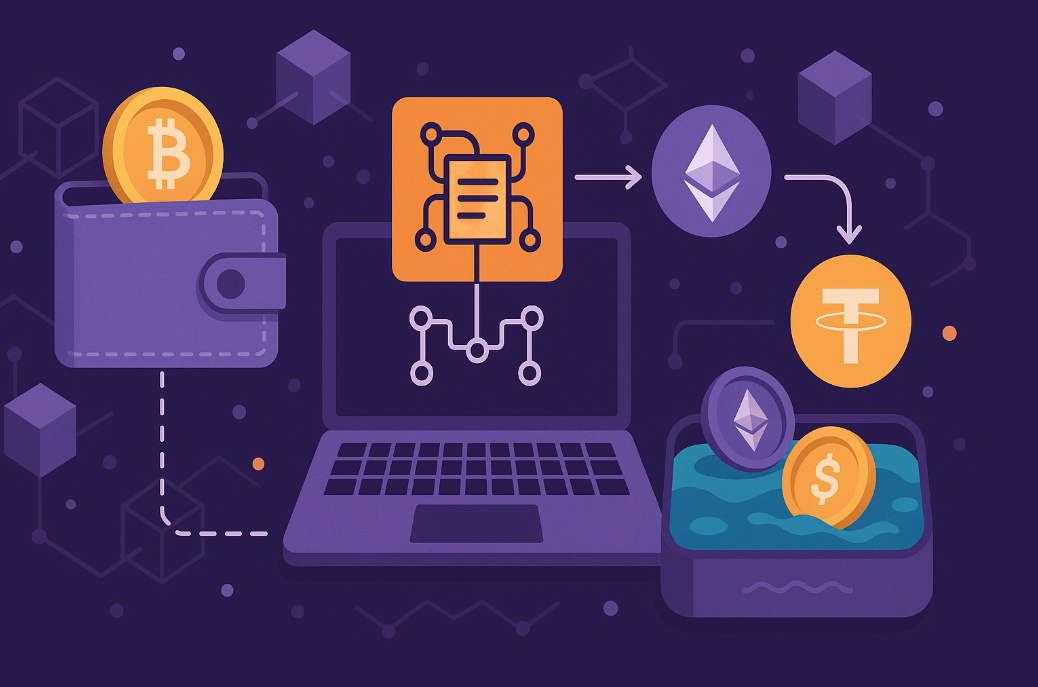
A Decentralized Exchange (DEX) replaces intermediaries with smart contracts, self-executing pieces of code that handle every aspect of trading automatically. These contracts live on the blockchain, ensuring transparency, security, and verifiable execution.
When a user connects their wallet to a DEX, they remain in full control of their assets. Instead of depositing funds into an exchange, the user’s tokens stay in their wallet until a trade is made.
Once a trade request is confirmed, the DEX’s smart contract executes it directly between the two wallets, with no third-party custody involved.
Most modern DEXs use liquidity pools rather than traditional order books. In these pools, users deposit pairs of tokens (like ETH and USDT) to provide market liquidity. These pools operate according to the rules defined by the DEX protocol. In return, users earn a portion of the trading fees generated by the pool.
Traders then swap tokens directly against these pools, with prices determined algorithmically based on supply and demand.
Transactions are recorded permanently on-chain, giving users a transparent record of every swap, pool addition, or withdrawal.
Platform Features & User Flow
A Decentralized Exchange (DEX) is designed to give users complete autonomy, yet still deliver a smooth, accessible trading experience. Many users are attracted to DEXs for their privacy and control over their assets. The potential benefits of using a DEX include access to a wide range of tokens and a reduced risk of hacks.
Behind the simplicity of clicking “Swap” lies a network of smart contracts, token pools, and decentralized infrastructure working together seamlessly.
Key Platform Features
Modern DEXs are built for flexibility, transparency, and security, offering much more than basic token swaps. Using DEXs may require specialized knowledge of blockchain technology to ensure secure and effective participation.
- Wallet Connectivity: You trade directly from your crypto wallet (like MetaMask, Trust Wallet, or Coinbase Wallet). No sign-ups, no deposits, and no centralized accounts.
- Smart Contract Automation: All trades, liquidity operations, and staking interactions are executed by on-chain code, eliminating the need for human approval or intermediaries.
- Liquidity Pools & Rewards: Users can contribute their assets to liquidity pools and earn passive income from transaction fees or reward tokens.
- Token Variety: Because DEXs are open, anyone can list a new token, making them hubs for early projects and emerging assets.
- Transparency: Every action is visible on the blockchain, ensuring open pricing, verifiable transactions, and full accountability.
User Flow: From Connection to Swap
Trading on a DEX follows a straightforward but decentralized flow:
- Connect Your Wallet: Visit the platform and link your wallet using a browser extension or mobile app.
- Select Trading Pair: Choose the two tokens you want to exchange, for instance, swapping ETH for USDC.
- Approve & Execute: Confirm the smart contract’s permissions, review the rate, and approve the swap.
- Blockchain Confirmation: The network validates the transaction, updates your wallet balances, and finalizes the trade.
This process usually takes seconds, with your tokens never leaving your wallet until the trade is confirmed, the defining difference between self-custody and centralized storage. Also, all financial transactions on a DEX are recorded on the blockchain, ensuring transparency and security.
Why Decentralized Exchanges (DEXs) Matter
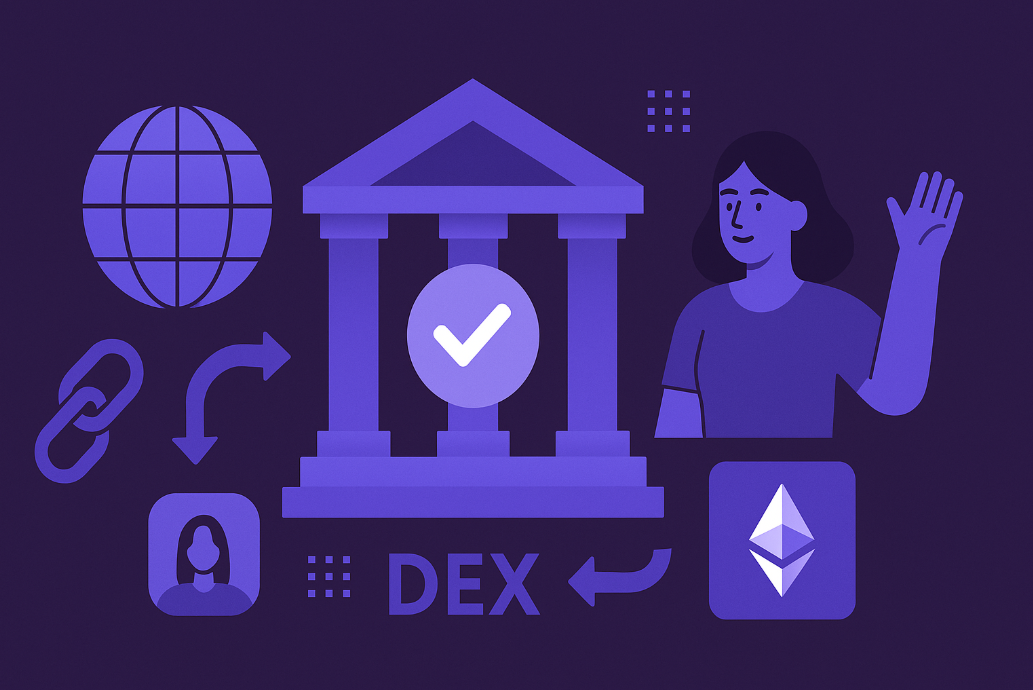
A Decentralized Exchange (DEX) embodies the core philosophy of blockchain itself: freedom without intermediaries.
Where centralized exchanges ask for trust, DEXs replace it with transparency. Every transaction, swap, and liquidity action is verifiable on-chain, meaning users no longer have to rely on a company’s solvency or honesty to access their funds.
This shift redefines financial sovereignty. DEXs empower users to trade globally without borders, censorship, or account freezes, something impossible in traditional finance.
They also drive innovation, becoming the testing grounds for new DeFi protocols, yield strategies, and token economies that later shape the broader market.
In essence, DEXs are the backbone of a more open, inclusive, and user-controlled financial future.
The Role of DEXs in the Crypto Ecosystem
Decentralized Exchanges (DEXs) play a foundational role in the modern crypto landscape. They serve as the connective tissue between digital assets, decentralized finance (DeFi) protocols, and emerging blockchain economies.
By removing centralized gatekeepers, DEXs make trading accessible to anyone with a crypto wallet, no banks, no intermediaries, and no restrictions.
Their influence extends beyond trading. DEXs power liquidity for countless DeFi applications, including lending, yield farming, and derivatives platforms.
They also enable permissionless innovation; new tokens and projects can launch instantly without needing exchange approval. This open architecture accelerates market growth and decentralization, although some DEXs have faced challenges with low trading volumes, especially in their early stages.
Institutional adoption is also rising, with hybrid models combining DEX transparency and CEX efficiency.
As regulation and infrastructure evolve, DEXs are likely to anchor the next generation of financial systems, bridging traditional markets with the decentralized web.
Pro Tip: When using a Decentralized Exchange (DEX), always double-check contract addresses and URLs before connecting your wallet. Scammers often create fake DEX clones to steal funds.
Conclusion
A Decentralized Exchange (DEX) represents the purest form of crypto trading, open, borderless, and entirely under your control. It supports a wide range of crypto assets, enabling users to trade, lend, or borrow various digital tokens within decentralized finance (DeFi) platforms.
By replacing intermediaries with code and smart contracts, DEXs eliminate the need to trust a company with your assets or data. They’re the foundation of decentralized finance and a cornerstone of user freedom.
As blockchain adoption grows, DEXs continue to define what it means to trade transparently, securely, and independently, empowering users to own both their crypto and their financial future.