

 Some of the links on this site may be affiliate links. ICOBench may receive advertising commissions when users visit recommended platforms via our affiliate links, at no additional cost to you. All recommendations are based on a comprehensive review process.
 A centralized exchange (CEX) (also known as centralized cryptocurrency exchange) is a digital platform that allows you to buy, sell and trade cryptocurrencies under the control of a single company or entity. These platforms function much like traditional brokerage firms, offering order books, fiat on-ramps, and custodial services.
Because they handle custody of users’ assets, they provide a familiar and streamlined experience. But that comes with specific risks and trade-offs you’ll want to understand.
✔️A centralized exchange (CEX) is a trading platform where a single company or entity runs the entire system and holds users’ funds. ✔️CEXs streamline access to fiat-to-crypto trading, use order books, and provide liquidity and fast execution, making them popular for beginners and traders alike. ✔️Because CEXs custody your assets and are controlled by a single entity or company, they carry special risks like hacks, mismanagement, or regulatory interference. ✔️Despite the risks, the market still relies heavily on CEXs for high-volume trading and initial access to crypto markets. Centralized Exchange (CEX): Key Insights
What Is a Centralized Exchange (CEX)
A centralized exchange (CEX) is a cryptocurrency trading platform operated by a single organization that holds custody of users’ funds, matches buy-and-sell orders via its own systems, and acts as an intermediary between users.
Unlike purely peer-to-peer platforms, you don’t trade directly with another user’s wallet, the CEX sits in the middle, acting as an intermediary between buyers and sellers.
It typically supports both crypto-to-crypto trades and fiat-to-crypto on-ramps (e.g., USD to BTC), allowing users to trade various digital assets.
Custody & Control
In centralized cryptocurrency exchanges, they control the wallets and private keys where your funds live; you own the balance in your account but not the keys to the underlying blockchain address. Centralized exchanges also store cryptocurrency on behalf of their customers, providing a convenient way for users to hold and manage their digital assets.
Because control is centralized, you rely on the platform’s security, transparency, and solvency. If the CEX fails (hack, bankruptcy, or regulatory action), that risk falls on you.
Why custody matters:
- Customers can trade faster but lose direct control of their stored cryptocurrency and private keys.
- If a CEX is hacked or frozen, withdrawals may be delayed.
- Always diversify, keep trading capital on the CEX, but store long-term holdings in a cold wallet.
Order-Matching & Liquidity
CEXs use traditional order-book mechanics: users submit orders, the platform matches them via its matching engine, and trades execute internally.
This model enables higher trading volumes, deeper liquidity, and faster execution compared to many peer-to-peer models or decentralized models. The order-book model also enables users to quickly and efficiently execute trades.
How a Centralized Exchange (CEX) Works

A centralized exchange (CEX) acts like a traditional stock-broker for crypto: you deposit funds, the platform holds custody, matches orders and lets you trade crypto assets.
Here’s a simplified breakdown of how it flows:
- You create an account on the exchange and often complete identity checks (KYC/AML).
- You deposit either fiat currency (for example, USD or EUR) or cryptocurrency into your account on the platform. The exchange takes custody of the funds.
- You access the trading interface and view the order book (your platform’s list of buy and sell orders)
- You place a buy or sell order (for example, buy 1 BTC at $30,000). If a matching counter-order exists, the platform’s matching engine executes the trade and updates your balance internally.
- After trading, you may hold your crypto or request a withdrawal. If you withdraw, the exchange sends the crypto or fiat to your external digital wallet or bank.
This model gives you ease and speed, but it also means you’re handing over control of your assets and relying on the exchange’s infrastructure, security, and honesty.
Platform Features & User Flow
Every major centralized exchanges operate as both a marketplace and a custodian, combining wallet management, liquidity provision, and trading tools into one cohesive system. These platforms also cater to institutional clients seeking advanced trading features, high liquidity, and a regulated ecosystem.
This design removes most of the complexity found in decentralized trading, making it far easier for beginners to participate in investing in crypto.
When you log into a CEX, the entire process happens within the exchange’s infrastructure. You deposit fiat or crypto, view live market prices, and execute trades through a centralized order book.
The platform manages everything, matching buyers and sellers, confirming balances, and updating ledgers internally so transactions appear instant.
Key functions you’ll find on most CEXs:
- Spot and margin trading: Buy or short assets instantly.
- Fiat gateways: Deposit or withdraw using cards or bank transfers.
- Charting tools: Track market trends in real time.
- Security features: Cold storage, multi-sig wallets, and withdrawal whitelists.
Because the exchange holds both sides of each trade, settlement happens much faster than it would on-chain.
Core Platform Systems
At the center of every CEX is its matching engine, software that constantly compares buy and sell orders to create smooth market activity.
Supporting it is the liquidity layer, which pools the capital of millions of traders, ensuring minimal slippage and reliable pricing even during volatility.
Around these systems, the exchange adds layers of user experience: dashboards, portfolio trackers, mobile apps, and fiat gateways that let users deposit or withdraw with a few clicks.
User Experience and Flow
Using a CEX feels closer to online banking than blockchain interaction. You sign up, verify your identity, and see your asset balance displayed in clear fiat equivalents.
You can place limit or market orders instantly, and your asset holdings update in real time. Because the platform handles custody, you don’t manage private keys, the trade-off being you’re trusting the exchange to safeguard your assets.
Still, for most traders, the smooth interface, fast settlements, and built-in security tools make CEXs the most accessible gateway into crypto trading. Many CEXs also provide resources to help users learn about trading and platform features.
Benefits & Risks of Using a CEX
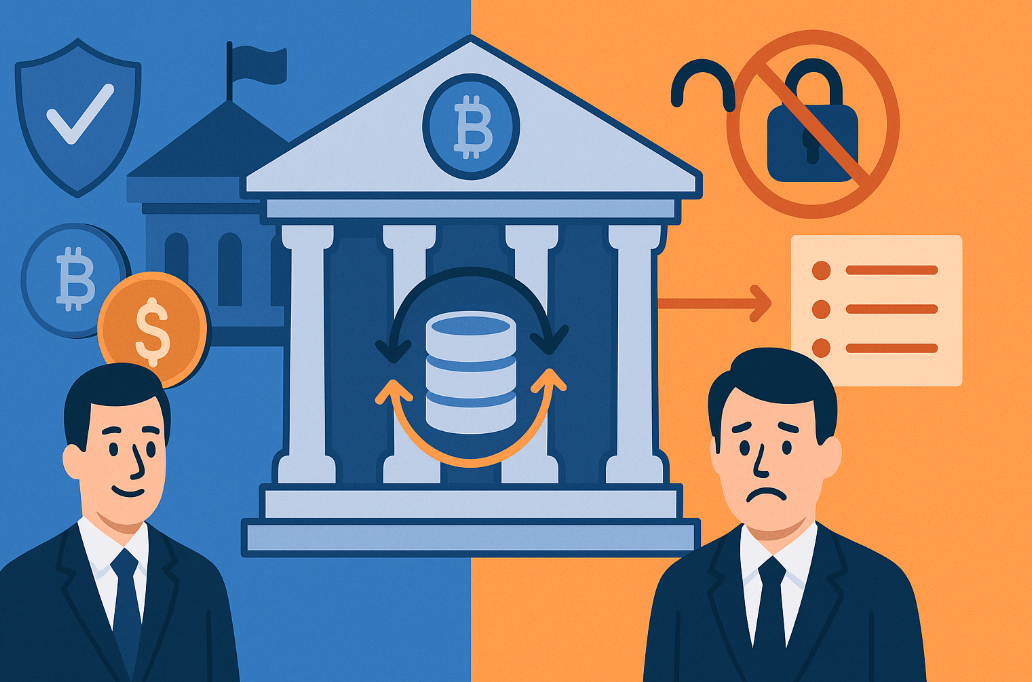
Centralized exchanges (CEXs) have become the go-to platforms for most traders thanks to their simplicity and scale. Most of them are licensed and regulated to ensure user safety, providing additional trust through regulatory oversight. They blend traditional finance familiarity with crypto’s speed and accessibility, but their structure also introduces clear limitations. However, using a regulated exchange can help mitigate some risks associated with centralized platforms.
The Advantages
CEXs offer instant access, high liquidity, and reliable execution. You can deposit fiat, trade multiple pairs, and use advanced tools without handling crypto wallets.
Strong security systems, regulatory oversight, and dedicated support make them the most beginner-friendly entry into crypto trading, serving customers around the world.
The Trade-Offs
The convenience comes at the cost of control. By storing assets on a CEX, users give up self-custody and depend on the exchange’s integrity and solvency, which directly impacts how they manage their investments and exposes them to additional risks.
Hacks, freezes, or regulatory actions can restrict access, while KYC verification compromises anonymity. In short, a CEX delivers speed and safety but demands trust in the middleman.
Other risks to consider:
- Regulatory changes can restrict trading or withdrawals.
- CEX outages during high volatility can block access to funds.
- Some platforms limit withdrawals for unverified users.
💡Pro Tip: Never keep your entire balance on a centralized exchange. After trading, withdraw long-term holdings to a non-custodial wallet where you control the private keys. Use the CEX for liquidity and execution, not as a savings account. This balances convenience with real ownership.
The Role of CEXs in Today’s Crypto Market
Despite the rise of decentralized platforms, centralized exchanges still handle the majority of global crypto trading volume. Choosing the best cryptocurrency exchange is crucial for ensuring security and a positive user experience.
Their regulatory alignment, deep liquidity, and fiat on-ramp capabilities make them essential to mass adoption. Most institutional investors, payment gateways, and retail traders begin with a CEX before exploring decentralized tools.
CEXs also serve as liquidity hubs, connecting traditional financial systems with the blockchain economy. Through these exchanges, crypto gains legitimacy, price data feeds financial indexes, and projects list tokens to reach global users.
Even as DeFi matures, CEXs continue to evolve with hybrid models, proof-of-reserves systems, and compliance upgrades aimed at building long-term trust.
In short, centralized exchanges are the backbone of crypto’s global infrastructure, bridging new technologies with mainstream accessibility.
Conclusion
A centralized exchange (CEX) remains the most common gateway into crypto trading. It bridges the gap between traditional finance and blockchain, offering speed, liquidity, and simplicity under one roof.
For beginners and active traders alike, a CEX delivers convenience that decentralized platforms still struggle to match. However, that ease comes with responsibility, trusting a third party to store and secure your funds.
As crypto adoption grows, CEXs continue to play a vital role in expanding accessibility, but understanding their trade-offs ensures you use them safely, strategically, and with confidence.
Frequently Asked Questions
What is the main purpose of a centralized exchange (CEX)?
How is a CEX different from a decentralized exchange (DEX)?
Are centralized exchanges safe to use?
However, since they hold user funds, they’re still vulnerable to hacks or operational failures, so storing large amounts long-term isn’t recommended.