




 Some of the links on this site may be affiliate links. ICOBench may receive advertising commissions when users visit recommended platforms via our affiliate links, at no additional cost to you. All recommendations are based on a comprehensive review process.
In Bitcoin news today, Glassnode estimated that $4.9 billion in fresh capital entered the market during the 30 days through October 5, while Bitcoin’s realized capitalization increased by approximately $12.8 billion. The gap shows that new money accounted for less than two-fifths of the valuation increase, with existing holders trading coins at higher prices doing most of the lifting.
That distinction puts the rally’s durability in focus: without stronger outside demand, the market’s advance depends heavily on holders continuing to accept higher prices.
Glassnode’s $4.9 billion estimate combines U.S. spot Bitcoin ETF flows, stablecoin-supply growth and corporate treasury purchases.
It is an estimate of capital entering the Bitcoin ecosystem through those channels, not a direct measure of every dollar used to buy BTC.
The US bid that led bitcoin:native has flipped.
From July to the September breakout, US trading hours drove most of Bitcoin's gains. Since then, the US session has been a net seller.
The full picture, from ETF flows to liquidations, in this week's Week On-chain 👇 https://t.co/eEeWuLwYkc pic.twitter.com/P2kNmtcuk9
— glassnode (@glassnode) October 7, 2026
You’re Still Early: 10 AI Agent Coins That Could Win Big Next Bullrun
Why Does the Gap Change Bitcoin’s Bullish Case?
Realized capitalization values each coin at the price of its most recent on-chain movement. When coins change hands at higher prices, the measure can rise even if the transaction involves existing market participants. Glassnode’s figures therefore point to holder-to-holder repricing as the dominant source of the recent valuation gain.
This distinction matters when interpreting Bitcoin price analysis. A rising market value can appear to confirm strong demand, but realized-cap growth and fresh capital inflows are not interchangeable signals. Bitcoin’s recent advance has attracted new money, yet the measured increase in that money was far smaller than the rise in realized capitalization.
ETF exposure is one route for capital to reach Bitcoin, while direct ownership is another; the distinction between Bitcoin ETFs and direct Bitcoin ownership helps clarify why the channels are related but not identical.
For this period, however, Glassnode’s estimate groups ETF flows with stablecoin growth and corporate treasury purchases rather than treating ETF activity as the whole picture.
Bitcoin: Profit-Taking And Thin Trading Test The Rally
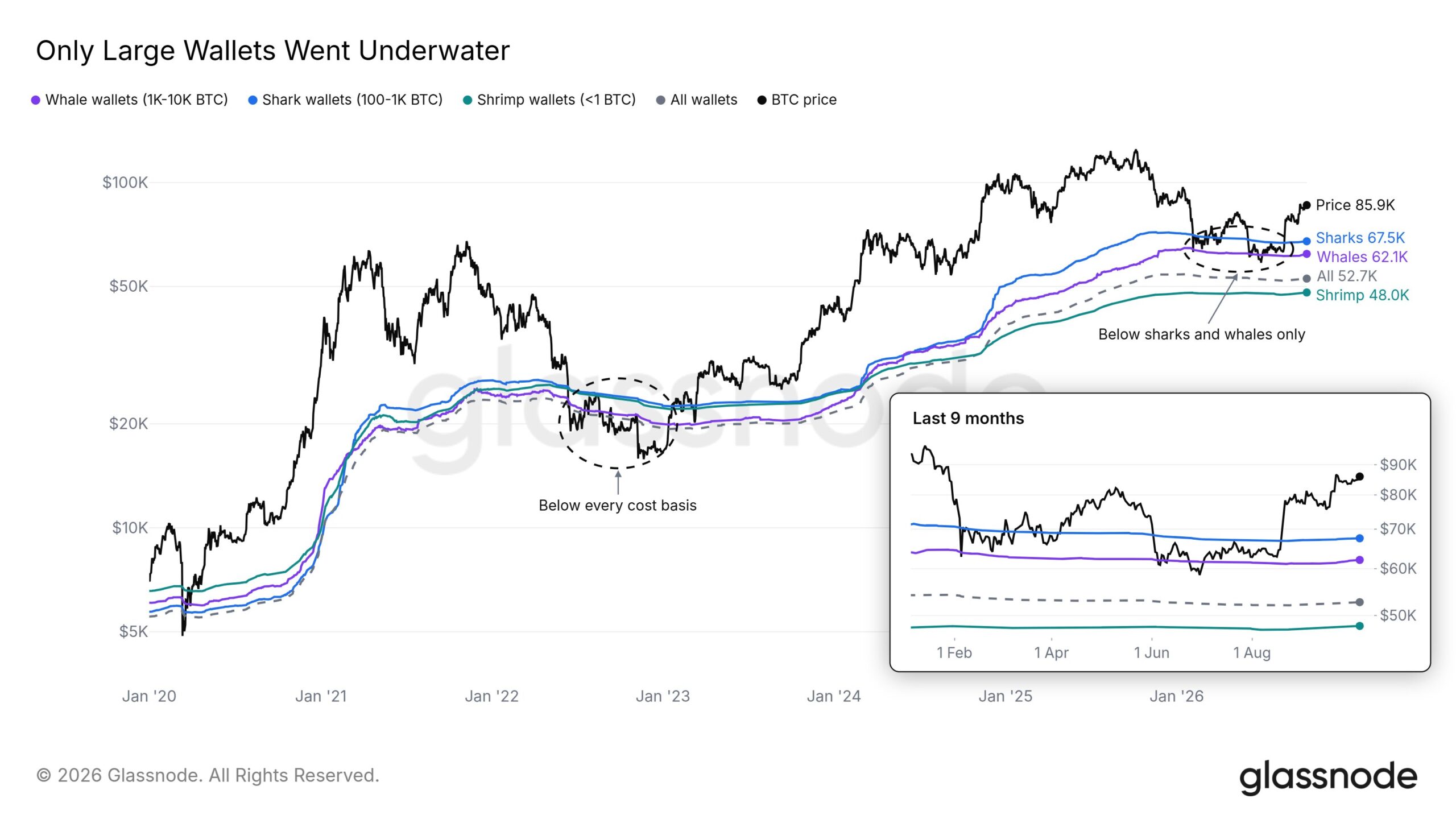
Bitcoin recorded its first daily close above $85,000 on October 4, but Glassnode’s flow data showed that strength also gave recent buyers a reason to sell. Short-term holders accounted for 86% of exchange inflows that day, with coins being sent to exchanges to realize profits. That concentration makes the short-term holders cohort a key source of potential supply if prices struggle to extend their move.
Trading activity provides another caution. Combined spot-exchange and ETF trading averaged approximately $6.8 billion per day on a seven-day basis over the prior week, a level below roughly 90% of trading days since January 2024. Glassnode warned that short-term holder selling could trigger a correction unless inflows increase meaningfully.
What Are Glassnode’s Conditions For Renewed Momentum
Glassnode identified two daily closes back above $76,700, its True Market Mean, as a technical condition for renewed momentum.
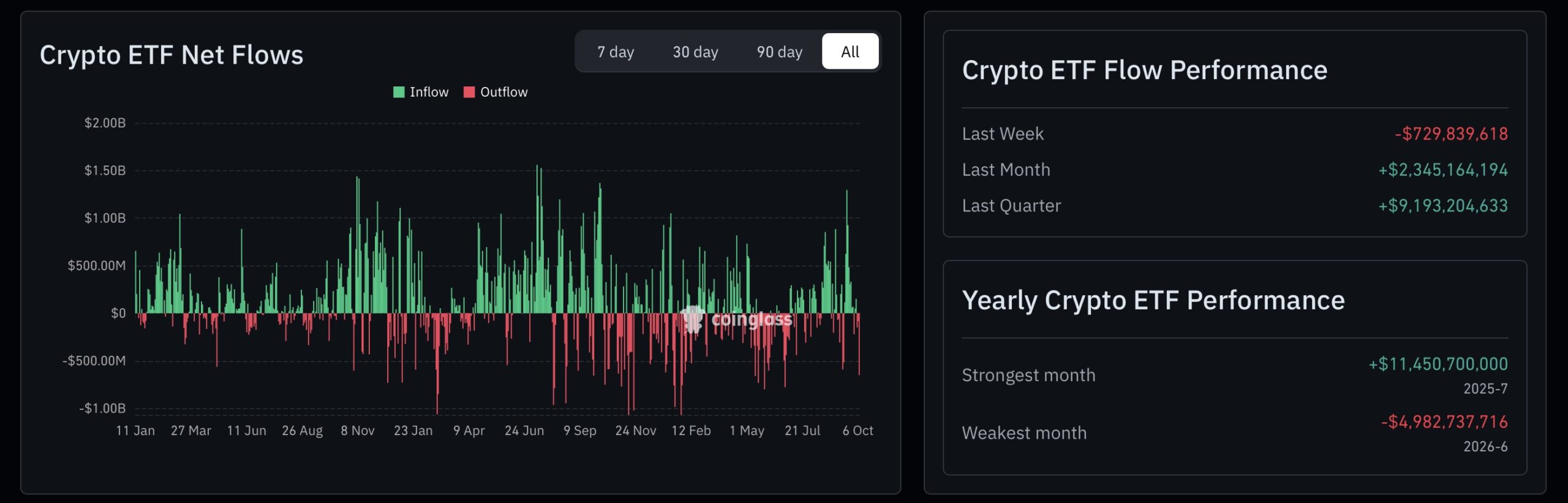
That requirement aligns with the broader debate over whether stronger ETF demand can sustain Bitcoin’s rally. ETF flows can support prices, but the primary data shows that existing holders, not new capital, accounted for most of the recent rise in realized capitalization. A durable continuation would need that balance to change.
The institutional question is equally specific: will broader participation translate into actual purchases? Institutional access to Bitcoin through IBIT can widen the market’s buying channels. Access alone does not establish that incremental demand has arrived. Glassnode’s figures set a clear threshold for the next leg: stronger spot activity and ETF inflows must begin to match the market’s valuation expansion.
For now, the rally has a measurable weak point. The $4.9 billion estimate confirms fresh capital was present; the $12.8 billion realized-cap gain and profit-taking data show that existing holders supplied most of the momentum. Unless new demand grows enough to absorb that supply, Bitcoin’s gains remain more vulnerable to selling than the headline valuation increase might suggest.
Don’t Miss: ICOBench Experts Call the Next 1000x Crypto Coins for 2027