

 Some of the links on this site may be affiliate links. ICOBench may receive advertising commissions when users visit recommended platforms via our affiliate links, at no additional cost to you. All recommendations are based on a comprehensive review process.
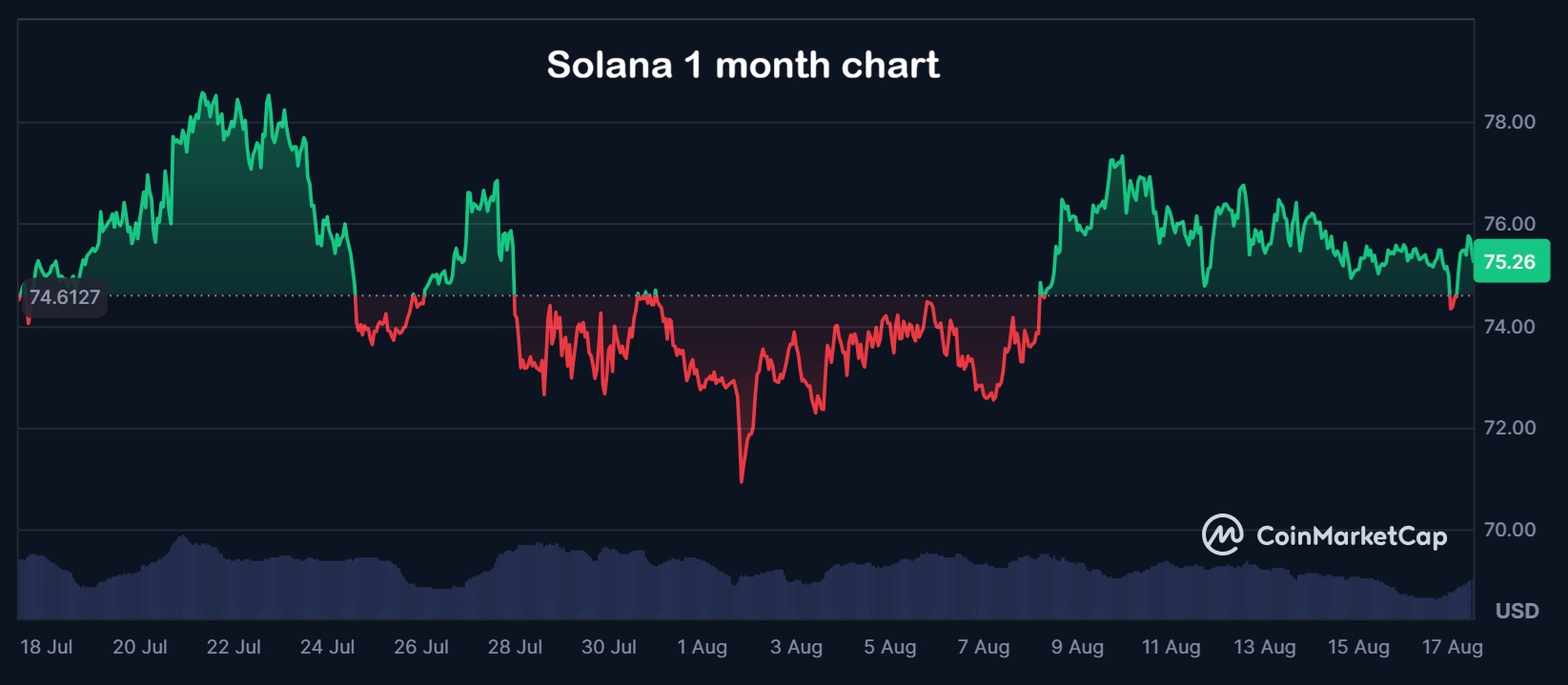
The first half of 2026 did not give crypto investors an easy trend to follow – Bitcoin is trading today at $63,425.44, up 0.68% over 24 hours but down 2.80% across the week. Solana is similarly subdued at $75.68, with a 0.40% daily gain and a 1.72% weekly decline. Both coins are down 50% to 60% on where they started the year.
The background can help inform how you reallocate your portfolio as we move through this quarter – instead of trying to predict when a broad altcoin rally begins, investors can look at projects exposed to different parts of crypto’s growth.
Despite the price action, Solana is already proving itself as infrastructure for payments and tokenized assets. Meanwhile, Bitcoin Hyper is trying to open up payments around BTC. LiquidChain is going even further, building for a market where successful blockchains increasingly need to work together.
The three projects we will explore today, therefore, all sit in different sectors and different stages. LiquidChain (LIQUID) is in presale at $0.0148 and has raised $940,000, while Bitcoin Hyper (HYPER) has attracted $33 million in presale at $0.01368. Solana is already a major public blockchain with real users and institutional activity.
For a Q3 portfolio, that gives investors three different ideas and narratives as crypto becomes more second nature in daily life.
LiquidChain Looks Beyond the Single-Chain Trade
Crypto’s major networks are no longer simply prototypes competing to prove that blockchain works – they have become established giants.
But they are all isolated from each other – that’s what LiquidChain is looking to fix. The project is developing a Layer 3 that sits above Bitcoin, Ethereum, and Solana, and coordinates activity between them. Its architecture uses cross-chain verification and a shared execution environment, with multichain operations designed to complete atomically. If one required part fails, the transaction does not simply succeed halfway through.
If that sounds complex, the purpose is to make the plumbing of crypto disappear from the user experience and unlock liquidity across all of the major ecosystems in one place.
The candles mark the circle. The L3 connects what sits outside it. 👁️https://t.co/vqvBcdSQYC pic.twitter.com/ub4TiCnHdz
— LiquidChain (@getliquidchain) August 17, 2026
Bitcoin, Ethereum, and Solana can remain different underneath – they all have different strengths – while builders gain a common layer through which their liquidity can become more useful.
The big strength is for developers, who instead of needing to support three (or more) blockchains, can simply tap into LiquidChain and access all chains at once – no need to re-code app after app with compatibility for each.
Meanwhile, liquidity becomes unlocked for all crypto users, regardless of which chain they start from.
LIQUID has raised $940,000 so far and offers a staking yield of 1,202% APY. CertiK and SpyWolf have reviewed the project contracts. The yield is an early-stage incentive – the more durable opportunity comes from developers finding shared liquidity easier to build around.
For Q3, LiquidChain is the smallest and, consequently, the most speculative of these infrastructure ideas, but its appeal is that it targets a problem that grows each day.
Bitcoin Hyper Wants to Unlock the Economy Around BTC
Bitcoin has already won an argument that new cryptocurrencies usually have to fight from scratch: people believe the asset itself is valuable. But Bitcoin Hyper starts with what remains unfinished.
Its Layer 2 uses the Solana Virtual Machine to provide a faster execution environment for BTC – that means transactions can happen on that layer with near-instant finality, including more complicated activity such as payments at the till, decentralized trading, and staking.
Bitcoin Hyper then batches Layer 2 transactions, checks their validity, and periodically commits its state to Bitcoin Layer 1.
Hard to miss $HYPER from up here. ⚡️🔥 pic.twitter.com/mIHy3xRInZ
— Bitcoin Hyper (@BTC_Hyper2) August 17, 2026
That division of labor preserves an important part of the Bitcoin proposition – the base chain does not have to be rebuilt into a high-speed application network (Bitcoin can support around seven transactions per second). It can remain the settlement foundation while frequent transactions and programmable services run above it – allowing thousands of transactions per second.
The potential market is substantial because what Bitcoin lacks is the breadth of things owners can easily do with that capital compared with newer smart-contract ecosystems.
Solana is increasingly demonstrating what fast execution can support once an ecosystem develops around it. In July, the network increased maximum block capacity by 66%, while its payments footprint expanded to merchant networks covering more than 330,000 locations. Its real-world-asset market also reached a record $3.73 billion.
HYPER is attempting to apply some of that execution philosophy to Bitcoin’s much larger capital base.
The $33 million presale raise indicates substantial early demand – HYPER costs $0.01368 and offers a 35% staking APY. Coinsult and SpyWolf have audited the contracts.
Solana Is Already Showing What High-Speed Crypto Can Become
Solana gives us evidence of what works after more than five years of operation.
The network uses a proof-of-stake system alongside Proof of History, a cryptographic timekeeping mechanism that helps validators efficiently agree on the ordering of events. Solana reports that real-world assets on the network reached $3.73 billion in July, with more than 313,000 RWA holders.
Payments also expanded: KSNET agreed to integrate Solana Pay across a Korean merchant network covering more than 330,000 locations, while $22.9 million of World Series of Poker tournament buy-ins were processed through Solana during the 2026 event.
Tokenized finance is becoming an especially interesting part of the story, and in June, Solana handled roughly 95% of tokenized-equity trading volume across blockchains in a single record week, while cumulative tokenized-stock volume surpassed $10 billion.
CoinMarketCap now reports that Solana added $378.2 million in tokenized U.S. Treasury assets over the latest 30-day period, more than Ethereum added during the same window.
At $75.68, SOL is still down 1.72% over the past week despite that network progress. Investors, therefore, have an unusual contrast between subdued market performance and increasingly broad real-world usage.
There are risks. A routing failure at an infrastructure provider on August 12 temporarily knocked offline validators representing 28.8% of staked SOL, though block production continued and validators recovered. Solana Foundation documented the infrastructure incident in its August 13 changelog.
For a Q3 portfolio, SOL occupies the more established end of the spectrum. It already has a liquid market and a functioning ecosystem. Its potential upside is consequently different from the two presales – its days of quick 10x are likely behind it – but it represents a blue chip-like investment.
Q3 Is More Interesting When the Bets Are Different
LiquidChain, Bitcoin Hyper, and Solana are interesting together because each helps to create new facilities in crypto.
LIQUID benefits if several major chains continue growing and connecting them becomes more valuable, while HYPER benefits if Bitcoin owners increasingly want applications and payments around their BTC. SOL benefits if high-throughput blockchains continue becoming infrastructure for payments, tokenized financial assets, and consumer activity.
There is overlap – LiquidChain explicitly incorporates Solana into its architecture, while Bitcoin Hyper uses the Solana Virtual Machine – but the projects are not identical. Each looks at what 2026 looks like today and builds towards what 2028 will require.