




 Some of the links on this site may be affiliate links. ICOBench may receive advertising commissions when users visit recommended platforms via our affiliate links, at no additional cost to you. All recommendations are based on a comprehensive review process.
Goldman Sachs raised its quarterly common stock dividend by 11% to $5.00 per share on June 24, 2026, effective July 1, pending board approval at the firm’s scheduled Q3 meeting.
This was after the Federal Reserve’s 2026 Comprehensive Capital Analysis and Review confirmed the bank maintained a stress capital buffer of 3.4% and a Standardized Common Equity Tier 1 ratio requirement of 11.4%, both stable through September 30, 2027.
The 25% year-on-year increase, which implies an annualized dividend of $20.00 per share if maintained, arrived alongside a parallel announcement from JPMorgan Chase of a dividend raise to $1.65 per share and a new $50 billion share repurchase program, making the CCAR 2026 cycle one of the most aggressive capital-return rounds in the post-GFC era.
Goldman Sachs $GS plans to raise its quarterly dividend 11% to $5.00/share from $4.50, beginning July 1, following the Fed’s 2026 stress test results.
Goldman said its Stress Capital Buffer will remain at 3.4% through Sept. 30, 2027, and its standardized CET1 ratio requirement…
— Wall St Engine (@wallstengine) June 24, 2026
What makes Goldman’s announcement more than a routine capital allocation decision is what runs underneath it: a disclosed crypto exposure of approximately $2.36 billion spanning Bitcoin, Ethereum, XRP, and Solana, held through ETFs and derivatives, and an April 2026 filing for a Bitcoin Premium Income ETF targeting income-seeking wealth management clients through a covered-call structure.
The open question the market must now resolve is whether Goldman’s growing financial firepower represents a structural acceleration of Wall Street crypto adoption, or whether the ETF filing and balance sheet exposure remain early-stage positions that have yet to translate into the kind of operational infrastructure deployment that moves institutional flows at scale.
Context significantly enhances the raw dividend announcement. The Fed stress test framework – formally the Comprehensive Capital Analysis and Review – subjects the largest U.S. banks to a severely adverse economic scenario and requires them to demonstrate they can absorb projected losses while maintaining capital ratios above regulatory minimums.
In the 2026 DFAST cycle, the Federal Reserve confirmed that all 32 tested banks could absorb nearly $708 billion in combined losses under the severely adverse scenario, with the aggregate CET1 ratio falling from 12.8% to a projected trough of 11.2% before recovering to 12.7%.
Goldman Sachs clearing that bar with a stress capital buffer of 3.4%, the SCB representing the gap between its projected minimum capital and its baseline, confirms the firm carries significant excess capital relative to what regulators require it to hold in reserve.
The 25% year-on-year dividend increase is the more analytically significant figure than the 11% sequential move. Goldman raised its quarterly dividend from $3.00 to $4.00 per share in 2025, itself a 33% jump that CNBC characterized as evidence that the banking sector remained adequately capitalized and boards were confident enough to step up shareholder returns despite hypothetical severe downturn scenarios.
The move from $4.00 to $4.50 and now $5.00 traces a consistent escalation pattern, consecutive double-digit increases anchored to each successful stress test cycle – that signals management is treating the Fed assessment not as a compliance hurdle but as a recurring mandate to return capital aggressively.
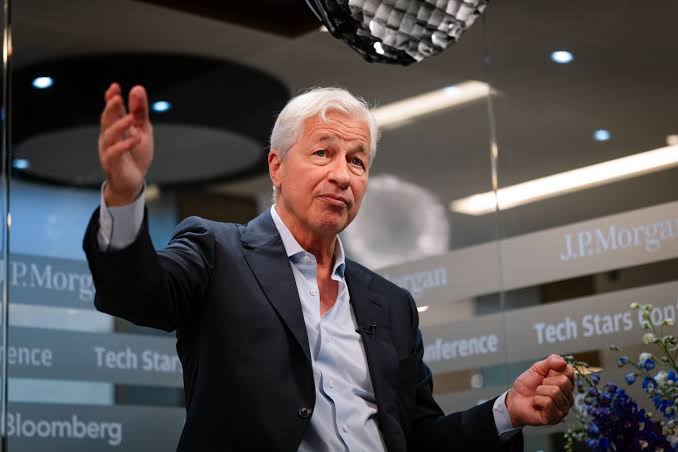
David Solomon, Chairman and Chief Executive of Goldman Sachs, stated that the planned dividend increase “reflects the strength of our franchise, our earnings power, and our confidence in our ability to support clients, invest for the long term, and deliver sustainable returns to shareholders.”
That framing, franchise strength, earnings power, and long-term investment are directional language, not maintenance language. A bank raising dividends aggressively post-stress-test is communicating that its balance sheet is a weapon positioned for deployment, and Goldman’s own disclosures make clear that institutional crypto is one of the stated deployment targets.
DISCOVER: Best Crypto Presales to Watch Right Now