


 Some of the links on this site may be affiliate links. ICOBench may receive advertising commissions when users visit recommended platforms via our affiliate links, at no additional cost to you. All recommendations are based on a comprehensive review process.
The Dutch crypto landscape is moving past its experimental phase. With Dutch Blockchain Week (DBW) 2026 scheduled for June 22–28, the event is seeing an early influx of institutional partners that marks a pivot from retail speculation toward regulated financial infrastructure. The primary anchor, the Dutch Blockchain Week Summit, will take over the Johan Cruijff ArenA on June 24–25, 2026, operating under a strictly B2B mandate.
This isn’t just another industry gathering; the roster of early sponsors indicates where the capital is actually moving. For the first time, the challenger bank bunq has signed on as a Diamond Sponsor. Their entry into a lead role reflects a broader trend: the wall between “neo-banking” and digital assets is effectively gone. While Bitvavo remains the local anchor as Main Partner, the rest of the lineup is dominated by global infrastructure providers.
The Shift to Regulated Rail Infrastructure
The 2026 partner list is weighted heavily toward firms building the plumbing of the new financial system. Platinum sponsors include Zero Hash Europe, OKX, Visa, Kraken, and Bybit EU. The presence of Visa alongside three of the world’s largest exchanges points to a specific industry obsession: the integration of stablecoins into global payment networks. These firms aren’t coming to Amsterdam to talk about NFTs; they are coming to discuss liquidity, settlement, and the transition to a MiCA-compliant environment.
The Gold tier adds further weight to this institutional pivot. Mastercard and Worldpay have confirmed their participation, appearing alongside institutional trading platform Talos and custody giant Fireblocks. Compliance and legal frameworks are represented by Deloitte and WatsonLaw, while local players like BLOX and Coinmerce round out the group. The diversity here is lopsided in favor of firms that provide the legal and technical backbone for traditional finance to enter the space.
Why Amsterdam is Winning the Post-MiCA Race
The momentum behind this edition is a direct result of the Netherlands’ regulatory positioning. The country has emerged as a primary hub for firms seeking MiCA licenses. This regulatory clarity has turned Dutch Blockchain Week into a mandatory stop for firms needing a compliant entry point into the European Union. Inbound partnership requests have spiked specifically from firms currently in the licensing pipeline who view Amsterdam as the administrative center of the European digital asset market.
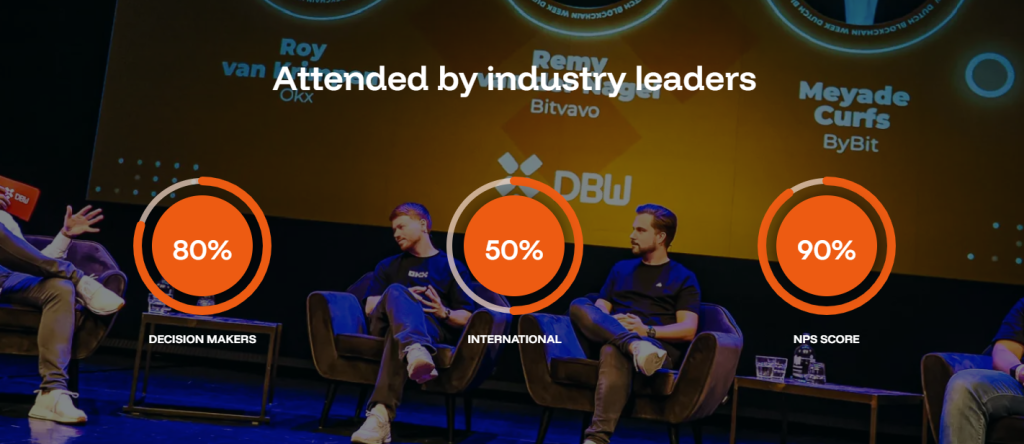
The event’s evolution mirrors the industry’s maturation. Launched in 2019 as a community-driven initiative, the summit has shed its grassroots aesthetic. It now functions as a closed-loop boardroom for infrastructure providers, banks, and regulators. The “community” elements—technical workshops, developer meetups, and niche networking—have been pushed out to the 40+ side events expected to run across Amsterdam during the week.
A Scaled-Up Ecosystem
By June 2026, Amsterdam will effectively serve as a week-long laboratory for the European Web3 industry. Professional attendees from London, New York, and Paris are expected to fill the city to navigate the local regulatory climate. The sheer scale of the confirmed sponsorship list this early in the cycle suggests that 2026 will be the largest iteration of the event to date.
The week isn’t trying to be everything to everyone. It has narrowed its focus to the practical, often dry, reality of how distributed ledger technology fits into existing financial systems.
Early Bird tickets are currently on sale for those looking to secure a spot before the full speaker list is finalized.
About Dutch Blockchain Week
Dutch Blockchain Week is the dominant Web3 and digital asset event in the Netherlands. Since 2019, it has transitioned from a localized meetup into a major European business forum. It serves as the primary networking hub for institutional stakeholders, focusing on the deployment of blockchain technology within regulated finance.