

 Some of the links on this site may be affiliate links. ICOBench may receive advertising commissions when users visit recommended platforms via our affiliate links, at no additional cost to you. All recommendations are based on a comprehensive review process.
JPMorgan analysts estimate that the mining cost to produce one Bitcoin has fallen significantly, dropping from approximately $90,000 at the start of the year to $70,000 level today. According to the banking giant, this reduction is driven by a notable decline in network mining difficulty and hashrate as inefficient operators power down.
With Bitcoin currently trading in mid-$60,000 range, market participants are closely watching whether this lowered cost basis will help establish a durable bottom.
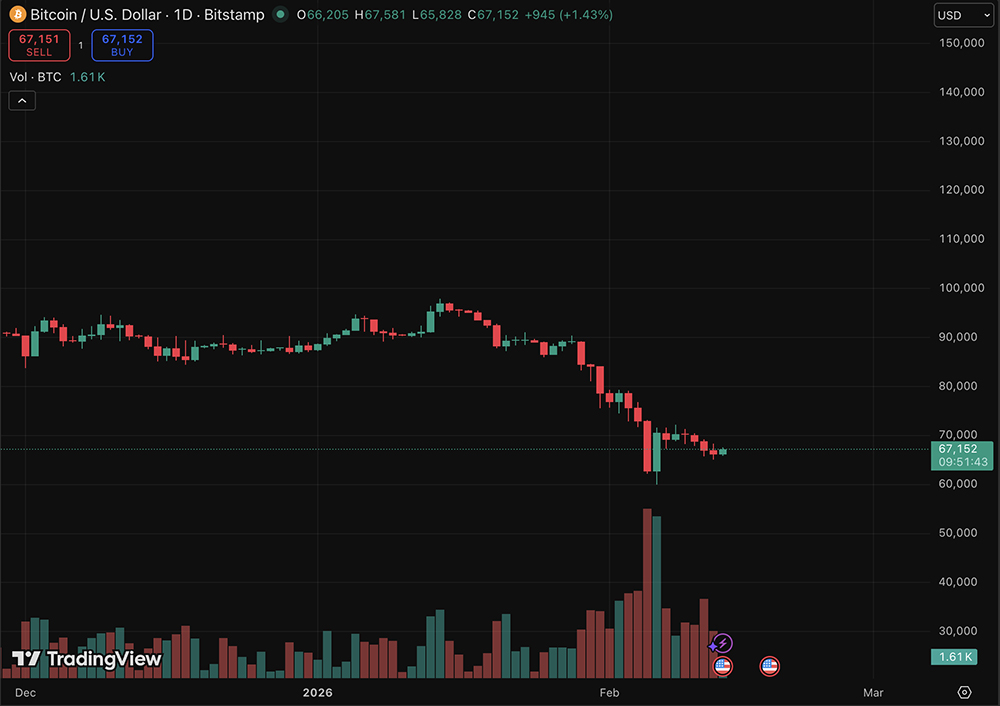
(source – TradingView)
Mining Cost Floor vs Bitcoin Price
The Bitcoin production cost is a critical metric for investors because it has historically acted as a “soft price floor.” Generally, miners are unwilling to sell their Bitcoin holdings below the cost of production, creating natural support levels.
The recent drop to $70,000 level signals that the network is adjusting to lower prices through miner capitulation, or a process where miners with less efficient hardware or higher electricity costs are forced to exit the market.
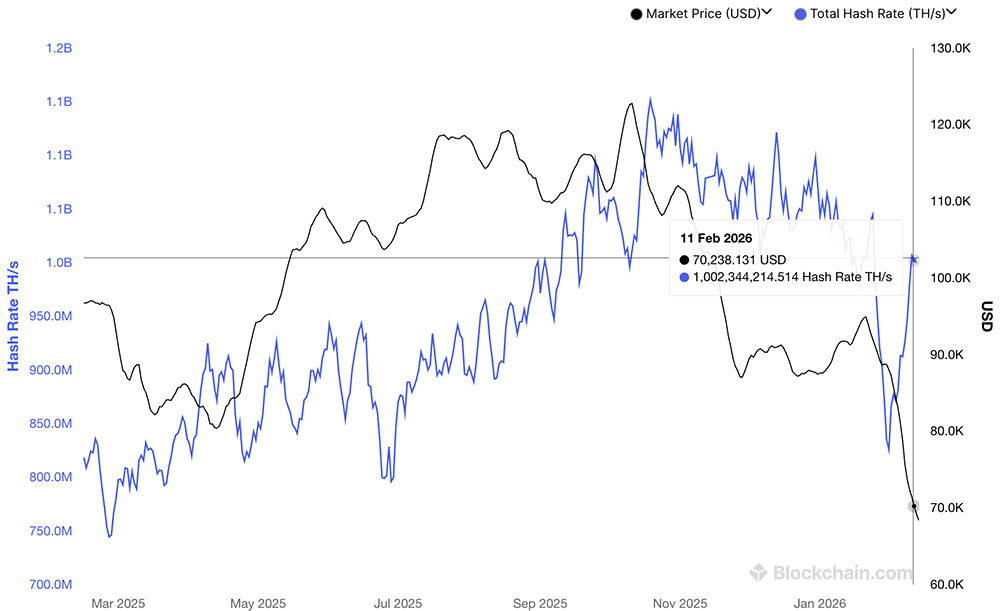
(source – Blockchain)
JPMorgan’s team, led by Managing Director Nikolaos Panigirtzoglou, notes that mining difficulty has fallen by about 15% year-to-date. This decline was exacerbated by severe winter storms in the United States, particularly in Texas, where grid operators restricted power to large mining facilities.
As mining difficulty is slashed, competition decreases, making it temporarily cheaper for the remaining participants to secure block rewards.
DISCOVER: 10+ Next Crypto to 1000X In 2026
JPMorgan’s Long-Term $266,000 Target
Despite the immediate pressure on mining economics, the bank maintains a bullish long-term outlook. JPMorgan has reaffirmed a theoretical target of $170,000 per Bitcoin this year, derived from a volatility-adjusted comparison to gold in private investment portfolios. This valuation assumes that as Bitcoin’s volatility subsides, it will match gold’s allocation in institutional portfolios.
NEW: JP Morgan analysts believe Bitcoin will be trading above $170,000 within 6-12 months and could reach as high as $240,000 over time because it is now “influenced more by macroeconomic forces than Bitcoin’s traditional four-year halving cycle.” pic.twitter.com/vmIVlDwRv9
— The ₿itcoin Therapist (@TheBTCTherapist) December 7, 2025
The bank emphasizes that future price appreciation will likely be driven by institutional flows rather than retail speculation. Analysts point to several potential catalysts for a 2026 recovery:
- Regulatory Clarity: Anticipated progress on U.S. legislation like the CLARITY Act.
- Asset Maturation: Continued adoption is causing Bitcoin to behave more like a cyclical asset.
- Valuation Models: Confidence that Bitcoin has long-term potential once volatility normalizes.
What’s Next for Miners and Us Holding?
For the mining sector, the drop in difficulty provides a welcome respite. JPMorgan sees relief for miners who have survived the downturn, as their profit margins improve with fewer competitors vying for rewards. However, with the spot price currently trading below the $70,000 production cost, the market remains in a tenuous position where further miner exits could occur if prices do not reclaim that level soon.
We should monitor the hashrate recovery and on-chain activity for signs of stabilization. While the reduction in production costs technically lowers the BTC price floor, data indicate that smart money may already be positioning for a reversal. Recent Bitcoin whales accumulation suggests that institutional entities are seizing the opportunity to buy discounted assets while miner capitulation plays out.
DISCOVER: New and Upcoming Binance Listings