





 Some of the links on this site may be affiliate links. ICOBench may receive advertising commissions when users visit recommended platforms via our affiliate links, at no additional cost to you. All recommendations are based on a comprehensive review process.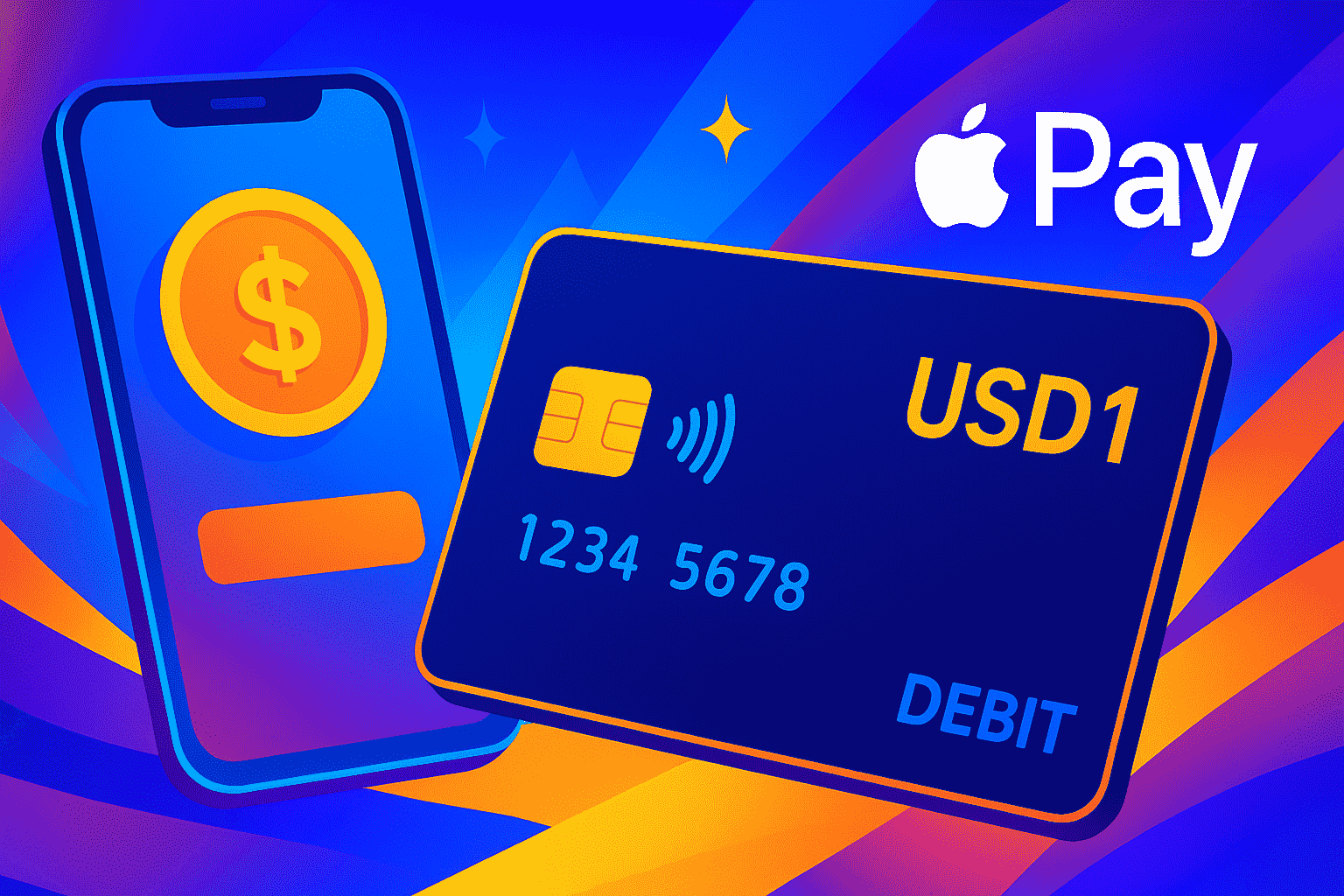
World Liberty Financial (WLFI) is set to roll out a debit card and retail app linked to its stablecoin USD1, co-founder Zach Folkman announced on September 23 at Korea Blockchain Week 2025 in Seoul.
Got @worldlibertyfi’s @zakfolkman to break news on stage at KBW 🤫👇🏼
The project will launch a debit card and retail app “soon.”
They plan to have its stablecoin USD1 linked to Apple Pay and position its app like a “Venmo meets Robinhood.” pic.twitter.com/nPxCO6xn4Z
— Jacquelyn Melinek (@jacqmelinek) September 23, 2025
The debit card will integrate with Apple Pay, allowing consumers to use USD1 for everyday purchases. Alongside the card, WLFI’s upcoming app will support peer-to-peer payments and asset trading, with Folkman describing it as “a mix between Venmo and Robinhood.”
The move marks a strategic shift for WLFI, positioning USD1 not just as a cryptocurrency but as a mainstream payment solution for daily transactions.
Tech-Neutral Approach and Rapid USD1 Growth
Folkman emphasized that WLFI has no plans to build its own blockchain, instead maintaining technology neutrality by supporting multiple networks. Currently, USD1 is available on BNB Smart Chain, Ethereum, and Tron, with expansion to Solana planned.
Since its April 2025 launch, USD1 has grown rapidly, now holding a market cap of $2.69 billion and averaging $777 million in daily trading volume, ranking it as the seventh-largest stablecoin globally.
Recent reports indicate USD1 issued an additional $205 million in tokens, pushing total supply to a record $2.4 billion.
WLFI also signed an MoU with Bithumb, a leading South Korean crypto exchange, to explore new business opportunities, positioning South Korea as a strategic hub for its Asian expansion.
WLFI’s Market Challenges and Long-Term Focus
Despite USD1’s growth, WLFI’s native token has struggled, falling over 55% from its all-time high of $0.46 to around $0.19, wiping out roughly $6.33 billion in market capitalization.
Folkman, however, downplayed short-term volatility:
“We’re focused on the long-term product value, not short-term price movements.”
The Apple Pay integration is seen as a major step in bringing stablecoins into everyday consumer finance, potentially setting a precedent for wider adoption across retail payments.