Some of the links on this site may be affiliate links. ICOBench may receive advertising commissions when users visit recommended platforms via our affiliate links, at no additional cost to you. All recommendations are based on a comprehensive review process.
Cardano is leading crypto’s latest move, putting one of the market’s long-running Layer 1 projects back on traders’ radar.
ADA climbed roughly 6% on Thursday to around $0.21, making it one of the strongest major cryptocurrencies on the day. The immediate technical hurdle sits higher at roughly $0.24, but a much bigger question is in the air: can Cardano stage enough of a recovery to revisit $1 before the end of 2026?
While that requires an enormous move, Cardano is entering the final months of the year with one of its most important scaling upgrades moving through development.
Ouroboros Leios intends to dramatically increase Cardano’s throughput by separating parts of transaction processing and block validation. Cardano has previously targeted a 10x to 65x increase in throughput capacity, with a mainnet-ready release candidate by late 2026.
It brings further attention to blockchain speed, and is an interesting backdrop for another project developing a similar ambition for the largest blockchain. Bitcoin Hyper (HYPER), currently priced at $0.01368, is bringing Solana’s speeds to Bitcoin via a Layer 2 that can bring real-time payments back to the original cryptocurrency.
Cardano’s Leios Upgrade Puts Blockchain Throughput Back in Focus
Cardano has always taken a relatively deliberate approach to network upgrades, but Leios is considerably more ambitious than simply shaving a few seconds from transaction times.
With a plan to separate transaction diffusion from final block sequencing, allowing far more work to happen in parallel, it makes the current ADA rally more interesting than a price move in isolation.
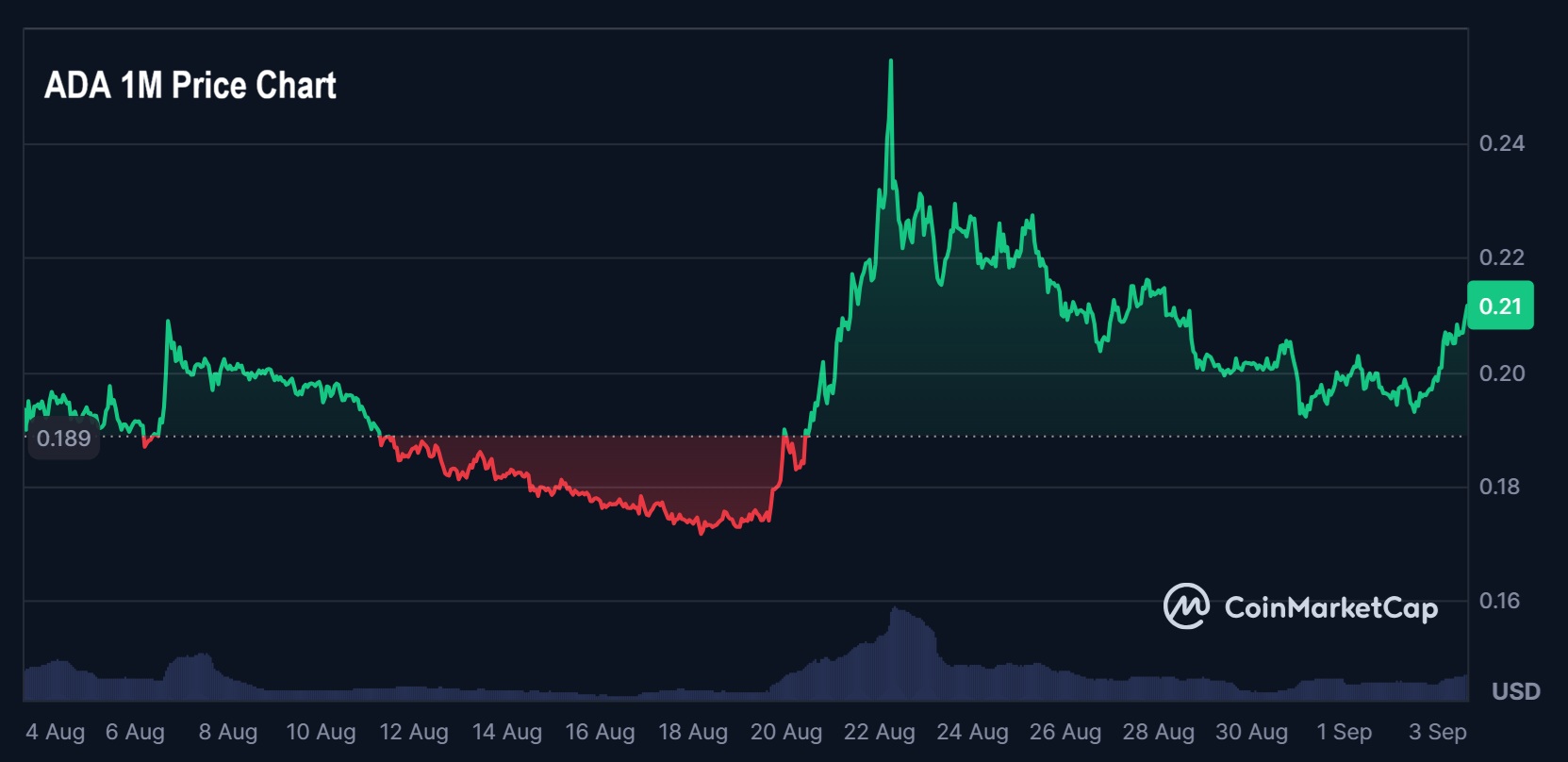
A return to $1 by December would still require a large market recovery, and Cardano has closer resistance to overcome. But Leios provides investors with a tangible technical milestone to watch as they head into the final part of the year.
Bitcoin faces a related challenge from the opposite direction – the core chain is never going to chase speed. But its bottleneck of seven transactions per second has let other chains like Ethereum win in terms of usage.
So as the conversation around speed for real-world spending increases, what can be done on Bitcoin?
Bitcoin Hyper Gives BTC a Separate High-Speed Execution Layer
Bitcoin Hyper’s Layer 2 is built around the Solana Virtual Machine (SVM) – the execution environment used to process Solana transactions and smart contracts.
Similar to Cardano’s latest plan, the division of labor is straightforward: Bitcoin continues to serve as the underlying settlement network, while Bitcoin Hyper handles transactions and programmable activity that require much greater speed. An SVM layer can handle thousands of transactions per second.
Therefore, BTC brought into the Hyper Layer 2 can participate in high-speed transfers, without asking the Bitcoin main chain to execute every interaction itself.
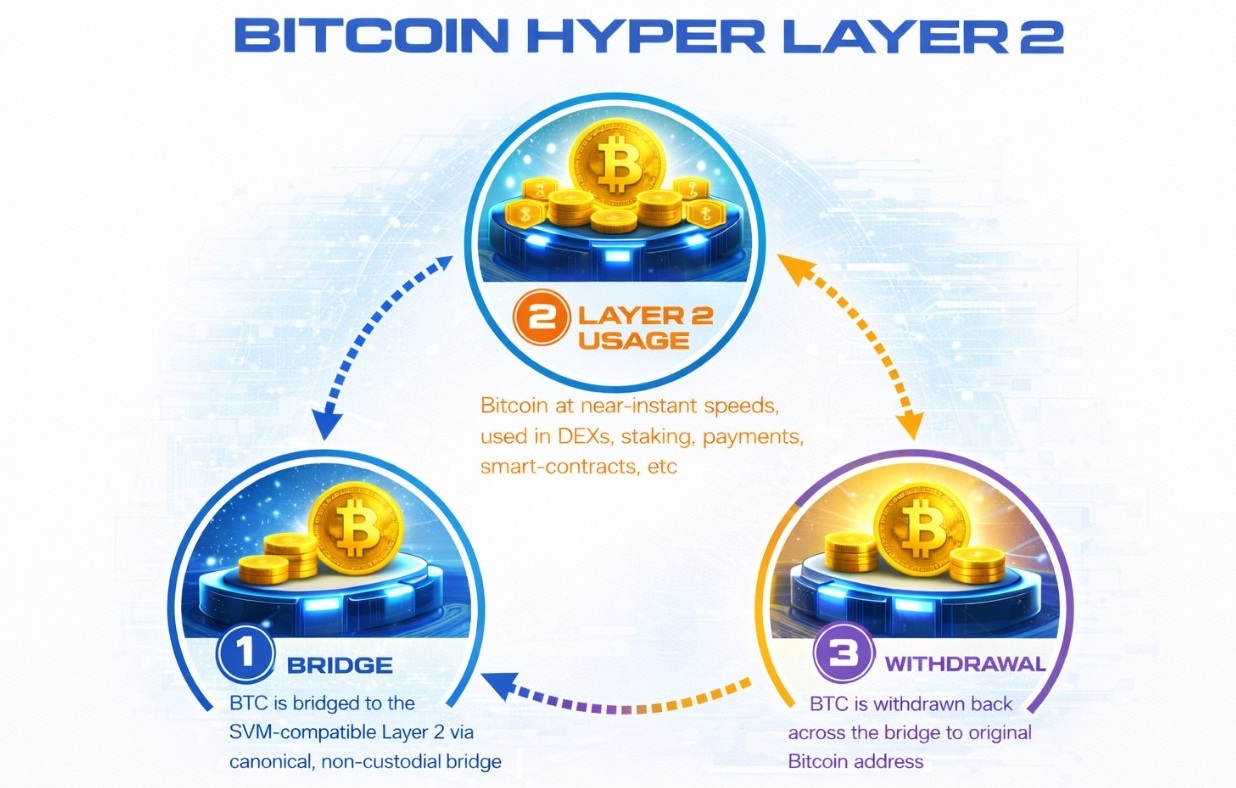
That opens the door to practical uses that are awkward on Bitcoin: A merchant payment can clear quickly enough for an everyday checkout, and trading applications can update positions without waiting for the next Bitcoin block.
Developers also gain a familiar, programmable environment capable of supporting far more extensive applications than Bitcoin Script was designed for.
On the tech side, Bitcoin Hyper uses zero-knowledge proofs to verify the Layer 2 activity before transactions are bundled and committed back to Bitcoin.
In one sense, it is a fundamentally different scaling philosophy from Cardano’s. Leios aims to increase what Cardano itself can process. Bitcoin Hyper assumes Bitcoin does not need to become a high-performance execution network at all – the layer above it can take that job instead.
Can HYPER Be the Next Crypto to Explode?
Investors have already committed an incredible $33 million to the Bitcoin Hyper presale, making it one of the largest presale raises of 2026.
HYPER, with a presale price of $0.01368, will serve as the native gas token on Layer 2, paying for transactions and smart contract execution. Holders can also stake HYPER and participate in governance, with current presale staking rewards at 35% APY.
Its smart contracts have undergone audits by Coinsult and SpyWolf, while the project’s longer-term roadmap moves toward the full network deployment and exchange trading.
Bitcoin Hyper is refining the developer experience with clearer documentation, familiar tooling, predictable APIs, and better feedback for builders.
The goal: make the network easier to understand, connect existing tools, and start building with less friction. 🔥⚡️
Read the… pic.twitter.com/kAo1w7Xa06
— Bitcoin Hyper (@BTC_Hyper2) September 2, 2026
Cardano’s latest rally is a useful reminder that scaling remains one of crypto’s central technical battles.
ADA reaching $1 by December would demand a huge move from current levels, but progress toward Leios gives the market something more concrete to evaluate than a price target alone.
Bitcoin Hyper is pursuing the same opportunity from an earlier stage – albeit working on the largest crypto market cap, and for the asset that accidentally became a store of value, rather than the currency it planned to be.
As faster execution becomes one of the narratives driving the final months of 2026, HYPER’s $33 million start puts it firmly in the conversation around the next crypto to explode. With success, it can give Bitcoin back its original goal.