

 Some of the links on this site may be affiliate links. ICOBench may receive advertising commissions when users visit recommended platforms via our affiliate links, at no additional cost to you. All recommendations are based on a comprehensive review process.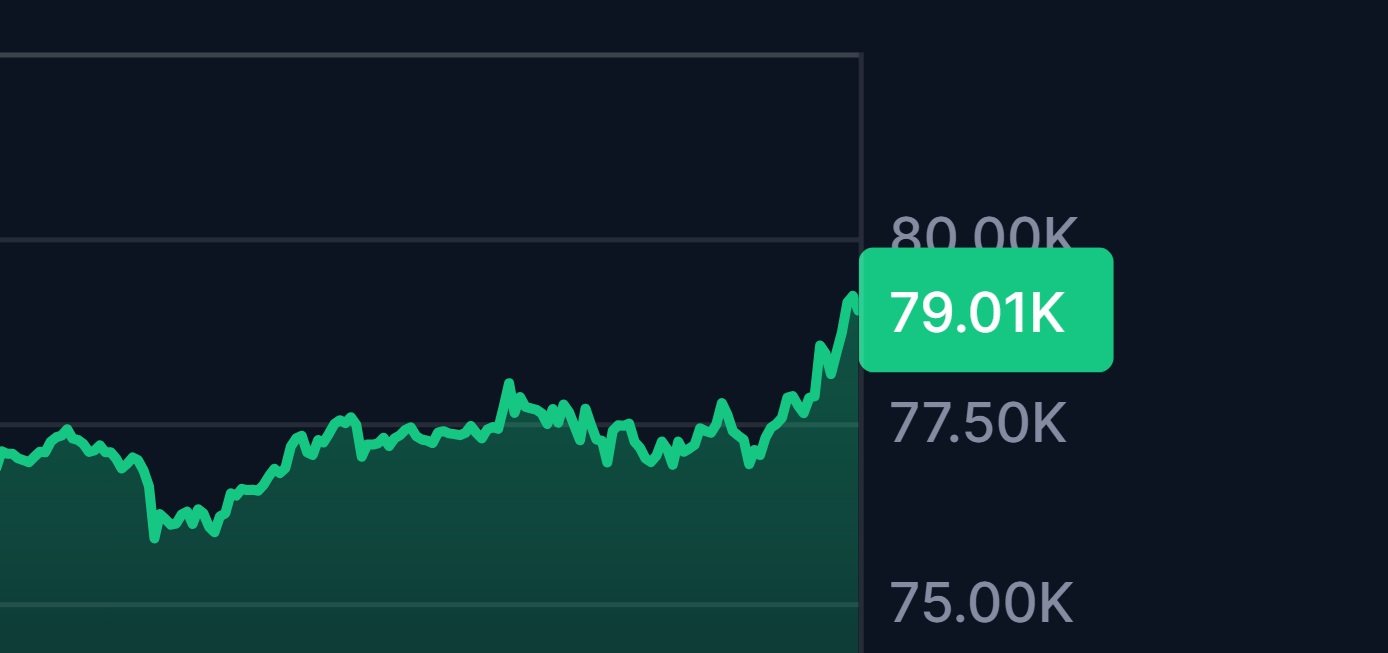
AAVE and XRP have both delivered the kind of weekly gains that tend to focus attention right back on the altcoin market.
Aave is trading around $137 after gaining 58.20% over the past seven days, while XRP is near $1.49, up 49.44% over the same period. The two tokens live in different parts of crypto, but that is what makes the moves interesting – capital is not concentrating around a single narrative.
Bitcoin has pushed the rally into another gear, climbing to around $79,101 after gaining 2.29% over the past 24 hours and 24.56% over the past week. And as we often see, once BTC establishes momentum and holds higher levels, traders often rotate into assets with more room to run.
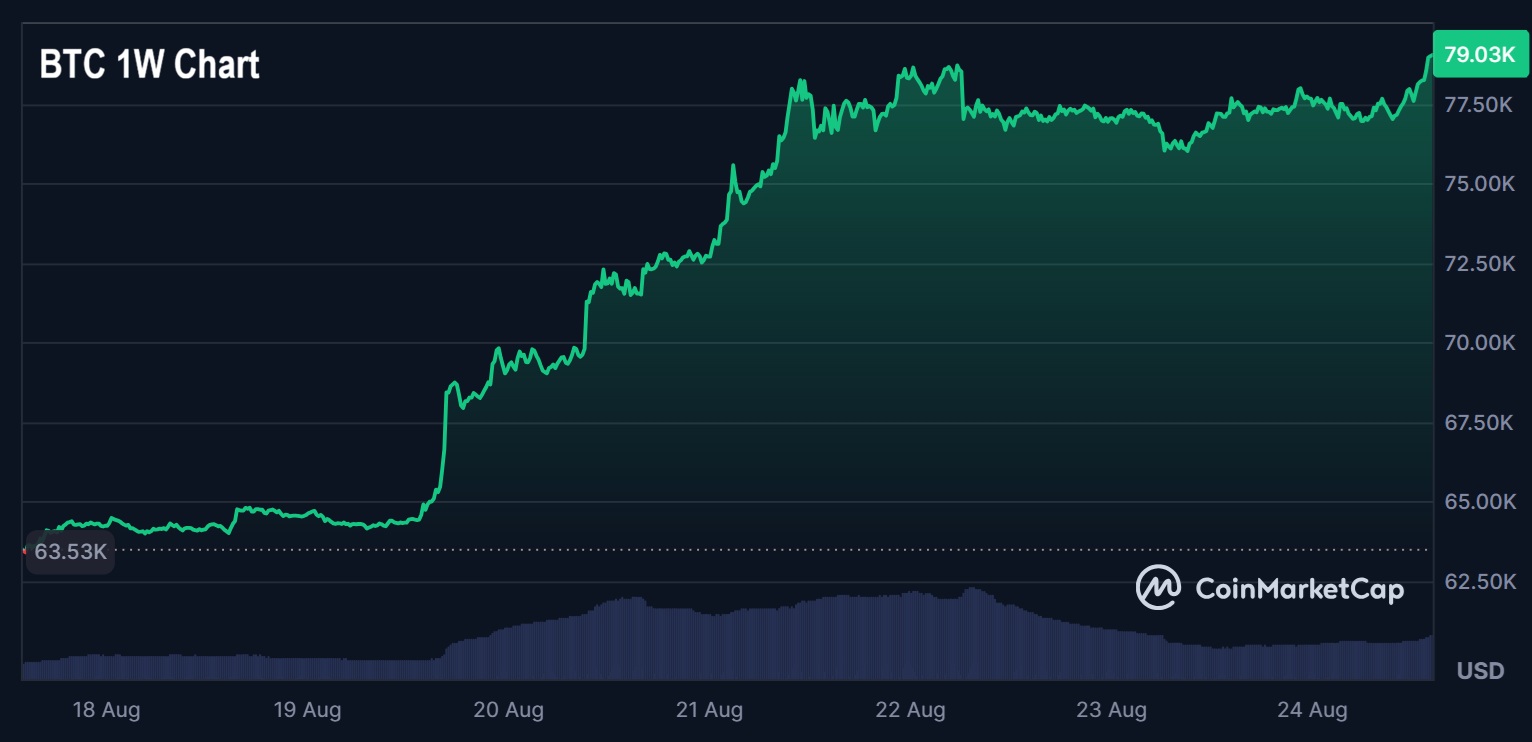
That appears to be happening now. Bitcoin led the initial rebound, but the strongest percentage gains have increasingly shown up elsewhere, with AAVE, XRP, PEPE, Ethereum, and other altcoins accelerating as confidence returned. BTC opened the door – and the altcoin market has started running through it.
For investors looking at the best crypto presales, Bitcoin Hyper, LiquidChain, and Maxi Doge are all still pre-listing, giving buyers the opportunity to buy them at a discount before trading and public price discovery.
Bitcoin Hyper Targets the Utility Sitting Behind Bitcoin
Bitcoin Hyper (HYPER) is the largest presale of the three by some distance, with $33 million raised at a token price of $0.01368,, showing that early investors are picking up on the opportunity to bring payments back to Bitcoin.
BTC has become one of the most valuable assets in crypto, but the base chain is simply not optimized for real-world payments, even if that was the original dream. The base chain managing just seven transactions per second simply can’t support payments at scale. It’s been left to Ethereum and Solana to pick up the slack.
Hyper speed. Maximum blast. 💥⚡️https://t.co/VNG0P4GuDo pic.twitter.com/R7BUhvLCZW
— Bitcoin Hyper (@BTC_Hyper2) August 24, 2026
Bitcoin Hyper is developing a Layer 2 intended to give BTC a faster place to operate – it’s a place where Bitcoin can be bridged onto the network and used in an environment based on the Solana Virtual Machine – aka, thousands of transactions per second, at sub-cent costs.
The result is a more practical version of Bitcoin for payments, trading, lending, and other financial tools.
HYPER is the network token used to pay transaction fees. Staking is also available at 35% APY during the current stage, while Coinsult and SpyWolf have audited project contracts.
The $33 million raise is important because HYPER has yet to reach the stage where actual network activity can be measured. Buyers are effectively backing the idea that Bitcoin’s next big opportunity is not another store-of-value narrative, but making existing BTC capital easier to use.
AAVE’s latest run makes that kind of proposition easier to understand – DeFi tokens can attract enormous demand when investors believe activity is returning to on-chain financial markets.
LiquidChain Builds for a Market With Several Winners
LiquidChain (LIQUID) takes almost the opposite approach – not focusing on one blockchain. The new Layer 3 assumes that Bitcoin, Ethereum, and Solana will all continue to grow – and that this creates a problem of its own.
Each network has developed substantial pools of capital, but those pools remain separated by chain boundaries. A user with assets on Ethereum will have to move money and assets around to pursue an opportunity on Solana, and the same goes for Bitcoin liquidity.
LiquidChain’s Layer 3 brings these separate pools together, with a shared environment that verifies activity across Bitcoin, Ethereum, and Solana and coordinates connected transaction steps so they can complete together.
LiquidChain is making “which chain?🤔” a thing of the past. 👁️⟁https://t.co/vqvBcdSQYC pic.twitter.com/ip83gw1P0u
— LiquidChain (@getliquidchain) August 23, 2026
For users, the purpose is to make liquidity easier to reach regardless of which network it originates from, while developers can build projects around capital from several chains – no need to code for each chain separately.
That is particularly relevant during broad altcoin rallies – if several blockchain economies expand at once, more capital is created, but more of it also ends up scattered across separate networks.
LIQUID is priced at $0.0149 and has raised $948,000. Staking offers 1,197% APY at the current stage (which will drop as more people join the presale), and both SpyWolf and CertiK have conducted audits.
Crypto will not settle on one winner – odds are that the future is multichain. Instead, users will increasingly want thinner boundaries between successful chains. That’s where LIQUID comes in.
Maxi Doge Takes the Altcoin Risk Trade Further
Maxi Doge (MAXI) is the most speculative name on the list, but a good one. The meme coin has raised $4.84 million at a current price of $0.00028, giving it a huge burst of momentum before even a single exchange listing.
MACI’s gym crossover is built around progress, rankings, and bragging rights, while planned ROI contests and tournaments are designed to give the community much to chew on and compete in after launch.
We need a new crypto king … $MAXI pic.twitter.com/J7ydcJ5py4
— MaxiDoge (@MaxiDoge_) August 5, 2026
The $4.84 million raise suggests that the formula has already attracted buyers – naturally, the real test comes when MAXI reaches exchanges and that early community meets a much larger public market.
But exchanges will want to list MAXI – that early audience suggests there’s lots more buying and trading coming to it in the future, along with the fees that are the lifeblood of exchanges.
In the meantime, staking is available at 64% APY, and this is a unique coin that has built its tribe before going public – a sign of great health for a meme coin.