

 Some of the links on this site may be affiliate links. ICOBench may receive advertising commissions when users visit recommended platforms via our affiliate links, at no additional cost to you. All recommendations are based on a comprehensive review process.
As the crypto market moves toward another growth phase, infrastructure is once again becoming the center of attention. Liquidity is no longer confined to a single chain. Capital flows between Bitcoin, Ethereum, Solana, and emerging ecosystems every day, yet the infrastructure connecting them still feels outdated. Fragmented liquidity, inefficient bridges, and slow execution continue to limit how capital is deployed.
This is the problem LiquidChain ($LIQUID) is designed to solve. LiquidChain operates as a Layer-3 network that sits above major blockchains and coordinates liquidity and execution across them. Instead of forcing users to move assets manually between chains, the protocol enables unified liquidity access through a single execution layer. The result is deeper liquidity, faster settlement, and fewer trust assumptions.
As infrastructure narratives become important in 2026, projects focused on fixing core market inefficiencies tend to attract long-term capital first. That is why LiquidChain is increasingly being discussed as a best crypto presale candidate among infrastructure-focused investors rather than short-term traders.
How LiquidChain Staking Works
At the center of the ecosystem is the $LIQUID token, which powers transactions, governance, and network participation. One of the most talked-about features right now is staking. LiquidChain staking allows token holders to lock their $LIQUID in the network to support security, execution coordination, and liquidity validation across chains.
In return, stakers earn rewards that are distributed from network incentives and activity. At launch, staking rewards are intentionally high to attract early participants and bootstrap the network. At the moment, staking APY is around 2,500%, a figure that immediately stands out even in an aggressive market environment.
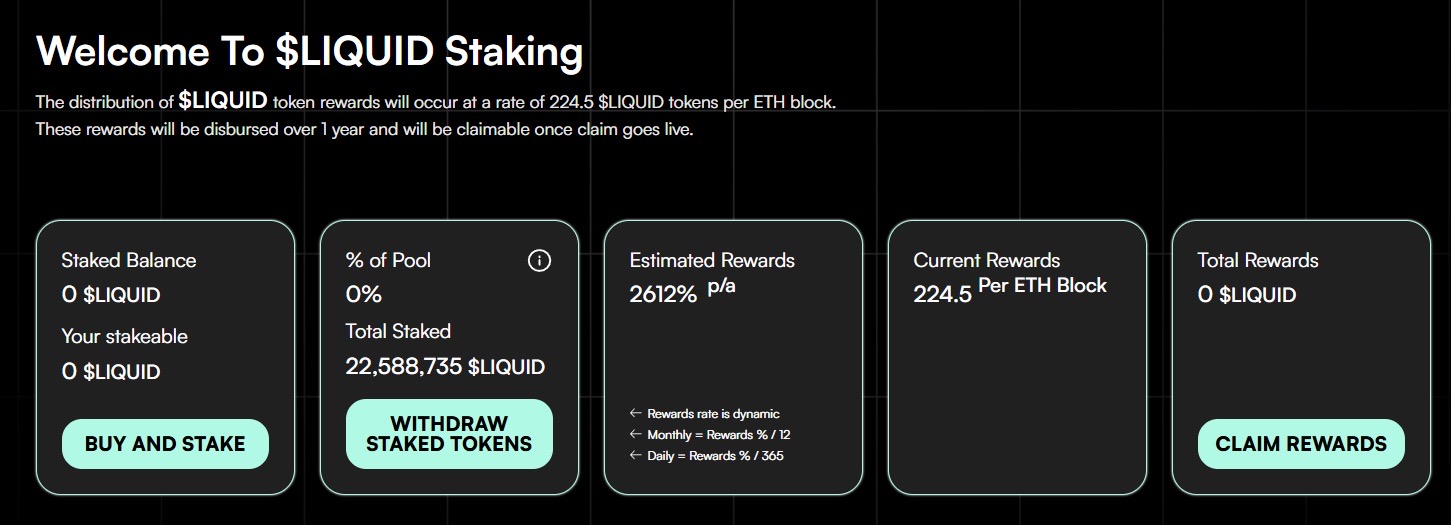
However, this yield is not static. As more users stake their tokens, rewards are distributed across a larger pool, causing APY to gradually decrease. This mechanism strongly favors early participation. More than 22.5 million $LIQUID tokens have already been staked, which means early adopters are moving quickly to secure higher yields while they last. This dynamic is a key reason staking has become a major driver of interest in the current crypto presale phase.
Why Staking Creates Early-Stage Momentum
High early staking rewards are not just about yield. They help align long-term incentives across the ecosystem. By encouraging users to stake rather than flip tokens, LiquidChain reduces short-term sell pressure and builds a committed validator and participant base. This structure is common among infrastructure projects that aim to become foundational layers rather than speculative assets.
As adoption increases, staking rewards normalize, but the value proposition shifts. Stakers benefit not only from emissions but also from growing network usage and demand for the $LIQUID token. This is where many see LiquidChain transitioning from a high-yield opportunity into a sustainable income layer as the market matures.

For investors searching for altcoins to buy ahead of a new cycle, this type of design often signals long-term intent. Infrastructure projects that combine utility, staking, and cross-chain relevance tend to gain value as usage scales. That is why LiquidChain staking is being framed as a potential income layer for the 2026 bull run.
Crypto Presale Momentum and Why Timing Matters
The broader context matters just as much as the mechanics. LiquidChain’s crypto presale has already raised over $350,000, with growing participation from users who understand the value of early infrastructure exposure. Staking is available during this phase, allowing participants to compound potential returns while the network is still forming.
As cross-chain activity continues to expand, protocols that reduce liquidity friction are likely to see increasing demand. LiquidChain is positioning itself directly in that flow, coordinating execution and liquidity where most users already operate. This positioning, combined with aggressive early staking incentives, explains why many are now watching $LIQUID closely when discussing the best crypto to buy in 2026.
No presale comes without risk, but timing often defines outcomes. High APY, accelerating staking participation, and a clear infrastructure use case place LiquidChain in a strong narrative position. For those evaluating altcoins to buy before broader market attention arrives, $LIQUID is a calculated bet on where crypto infrastructure is heading next—and staking is currently the clearest signal of that demand forming early.
Explore LiquidChain and its ongoing crypto presale:
Presale: https://liquidchain.com/
Social: https://x.com/getliquidchain
Whitepaper: https://liquidchain.com/whitepaper