
 Some of the links on this site may be affiliate links. ICOBench may receive advertising commissions when users visit recommended platforms via our affiliate links, at no additional cost to you. All recommendations are based on a comprehensive review process.
 Kraken is a US-based cryptocurrency exchange that has been around for over a decade. The platform began operations in 2013 and has since expanded its offerings to include stocks and ETFs for investors who want to add traditional assets to their portfolio. However, if you prefer to focus on crypto, Kraken also supports spot, margin, and futures trading. This review will explore shortly.
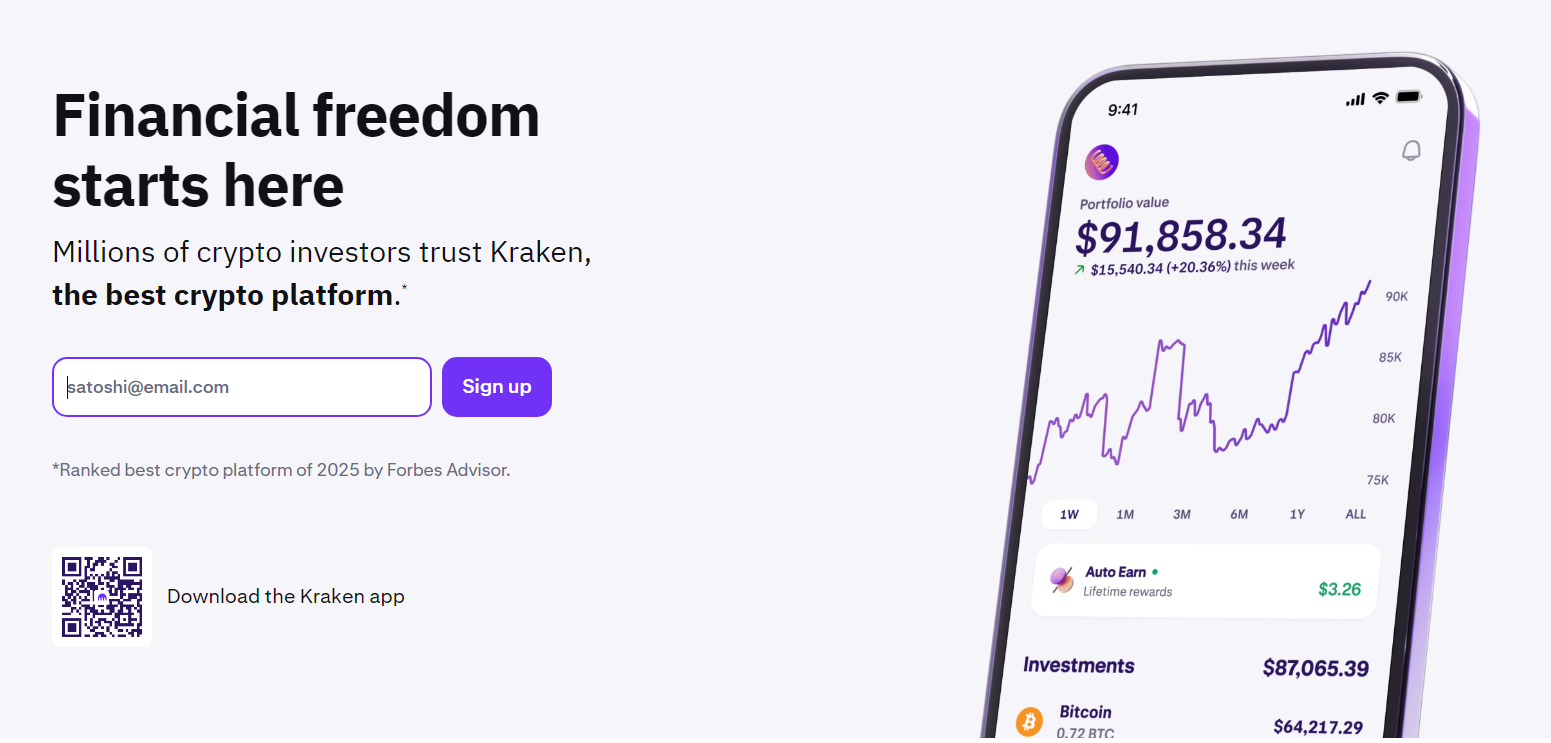
Forbes Advisor rates Kraken as the best crypto platform in 2025, and we were curious to see why. We conducted an in-depth exploration of all the standout features to assess how the platform compares to others in the United States and around the world. Before diving into the details, here are a few takeaways to note:
Kraken was established in 2011, but it wasn’t until 2013 that it began offering Bitcoin, Litecoin, and euro trades. Shortly after, the platform added more currencies and extended its support to margin trading. The company’s growth curve is commendable, starting with its highlight inclusion on the Bloomberg Terminal. That made it one of the first Bitcoin exchanges to have its data included on that platform. It was also the first to list Ethereum’s ether coin in 2015. And in the same year, it opened the first dark pool for bitcoins. By early 2021, Kraken had 6 million clients, but by the time we put together this Kraken review, the number had increased to 9 million clients. So far, it has reached a total transaction volume of $550 billion. On one hand, the exchange has successfully expanded to different markets over the years, like the European expansion in 2023. But on the other hand, it has also had its fair share of market exits, the most notable being Japan in 2023. Nevertheless, the company remains a notable crypto exchange to this day, especially since diversifying in 2024. The diversification saw the release of a dedicated version for institutional traders, the launch of Kraken Wallet, and the joint launch of the Global Dollar Network, a stablecoin pegged to the U.S. dollar. We’ve also received reports suggesting that the company may be planning an IPO in early 2026. If that happens, it would mark a significant milestone for the exchange, as it cements itself as a reputable platform for trading cryptocurrencies. Currently, only a handful of crypto exchanges have gone public in the U.S. But that might change soon, as there is a sizable amount of exchanges lining up for Wall Street IPOs. The first thing you should note is that Kraken’s legal name is Payward, which happens to be the name on all its licenses. Speaking of licenses, the platform is licensed in Europe, in North America, and in a few other countries like Australia, Argentina, and Bermuda. The table below shows the countries and where the licenses Payward holds in : Crypto Asset Service Provider (CASP under MiCAR) Electronic Money Institution Money Services Business by FINTRAC Money Services Business with FinCEN Financial Industry Regulatory Authority Kraken does not serve or accept cash and crypto deposits from the following countries: We were impressed with Kraken’s comprehensive approach to security. And we are not surprised that it has the ISO/IEC 27001:2022 certification, which we confirmed during the Kraken review. The platform has also completed the SOC 2 Type 1 examination, which demonstrates its ability to meet the highest international standards in security. It is one of the few crypto trading platforms that have completed this examination. Another well-known platform that has done that is Gemini, and we have a full review of that as well. Kraken provides regular proof of reserves, but that’s not all. It also uses advanced cold and hot wallets to secure your funds, with 24/7 surveillance. Encryption is an integral part of the platform’s strategy, and even with that, we still found regular security testing, which is commendable. A few other notable security features that we found commendable include: As much as Kraken has shown and demonstrated its commitment to security, we would recommend that you take extra steps on your end to avoid phishing links as well. Do not disclose your passwords or login details on any site. Our experts counted just over 640 coins on the Kraken exchange, but we wouldn’t be surprised if the number increases by the time you see this Kraken review. That is because the platform adds new coins fairly regularly, and we have new ICO drops on the horizon. Some of the popular assets on the Kraken exchange include Bitcoin, Arbitrum One, Base, Optimism, Polygon, Solana, and Dogecoin. Also, for every wallet you create or import on Kraken, you will have four wallet addresses. These include the Bitcoin, Ethereum, Solana, and Dogecoin addresses. If you go to the Kraken wallet, you’ll have support for more cryptocurrencies. But if you go for trading pairs on the exchange, you’ll get up to 1,409 trading pairs for your trades. You’ve probably seen other platforms with more trading pairs, but Kraken, with an average 24-hour trading volume of $695 million, has commendable liquidity to support quick trades, which is even more crucial.
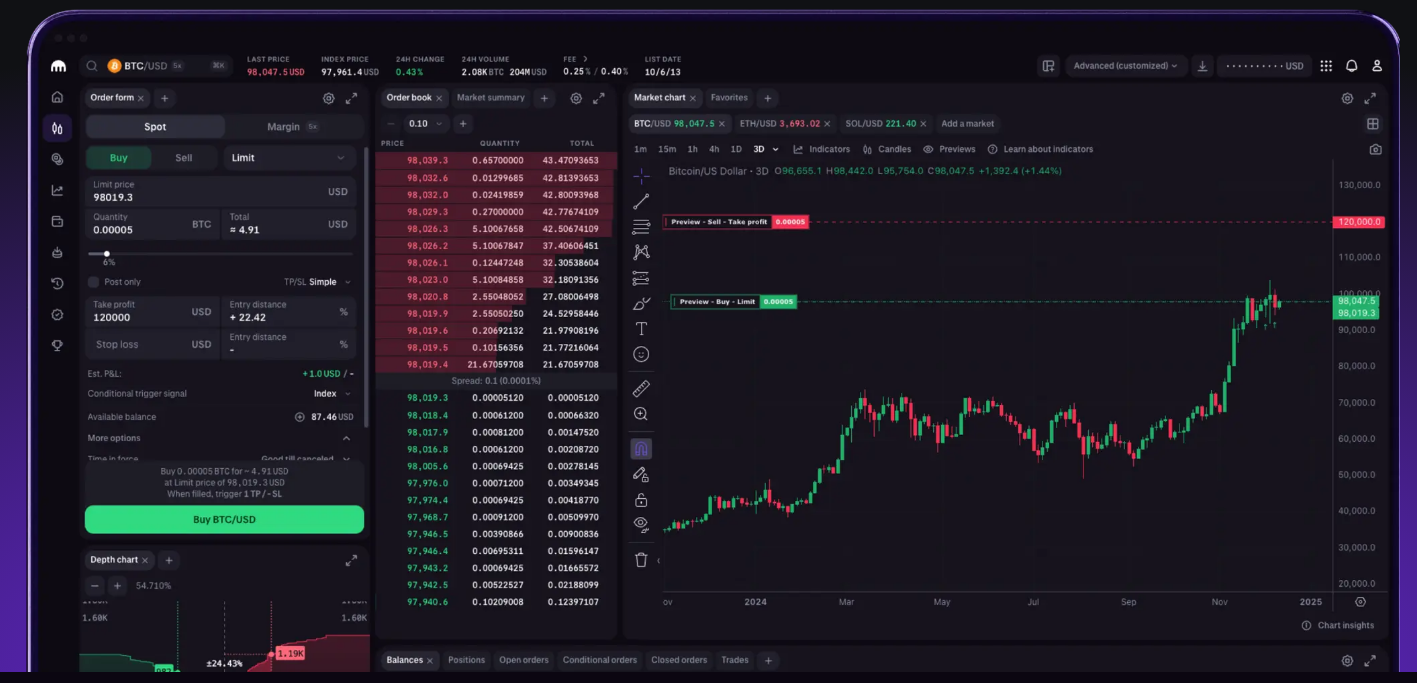
First off, Kraken is a comprehensive trading platform that supports cryptocurrencies and stock trading. However, our focus today will be on the crypto trading features. That said, here are the prominent trading features you’ll find on Kraken: This feature is for advanced traders. With it, you can access spot, margin, and derivatives trading, all with several tools to customize the experience on the web or mobile version. The feature also gives you a consolidated portfolio for you to track your performance with live market data. Kraken Pro supports advanced order types like stop-loss, take profit, IOC, reduce-only, and trigger options. To use anyone, simply drag them to the chart. Even better, you can modify the order types to your preference before executing trades. When it comes to assets, Kraken Pro supports over 400 of them, but that’s just the start. You can not only trade these assets but also stake or invest in them. And the assets include stablecoins and fiat currencies. For derivatives trading on Kraken Pro, we found over 300 perpetual futures and fixed-maturity contracts. There is also a wide range of collateral for you to open long or short positions, with support for leverage to give you capital efficiency. You can get up to 50x leverage, which is commendable but still below other 100x leverage trading platforms we’ve seen. If you have more than $50,000 for orders, you can still execute them with Kraken OTC. This is the premium trading service, with 24/7 access to minimal slippage, deep liquidity, and competitive execution.
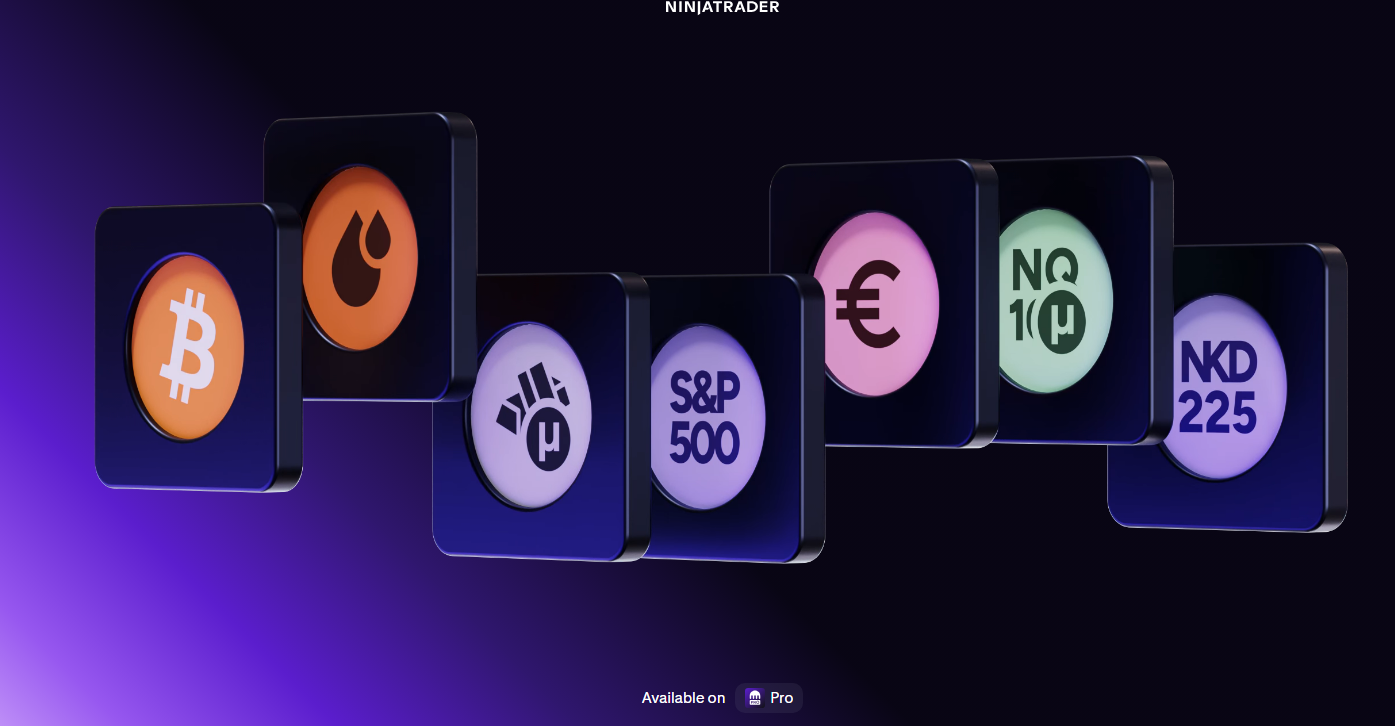
If you work more on desktops, the Kraken Desktop platform is a must-get. You will access over 800 spot and margin-enabled markets, including Polygon, USDT, Cardano, Monero, Cosmos, Ethereum Classic, etc. The platform also allows you to import dashboards that other traders have built and use. But if you want to go solo, you can still build your own dashboard. Even better, you can share it with others within seconds. Kraken designed its desktop version for speed and efficiency, and we can confirm that we had no trouble getting both during our tests. The version is lightweight and available for Mac, Windows, Linux, and Debian. With a Kraken Pro account, you can trade futures contracts on the platform. What’s even better is that Kraken offers futures trading via NinjaTrader Clearing LLC dba Kraken Derivatives US, a Futures Commission Merchant registered with the CFTC. If you are a US resident, you will be able to trade CME contracts. These are regulated, cash-settled futures, which give Kraken an edge over other platforms that support features but aren’t available in the US. Note that you need a minimum balance of $50 to open your first position. Also, it’s best that you add a margin buffer on top to help maintain healthy margins as you trade. For funding, you’ll have to transfer from your Kraken spot wallet to your Kraken derivatives US account. And with Kraken’s banking rails, the transaction should be near-instant, as we got when we tested the platform. However, we didn’t get a fixed leverage with this feature, and we later learned that the leverage varies by contract. The key factors that determine it are the initial and intraday margin.
If you are an institution, Kraken Prime is your best bet. It offers turnkey access to trading, financing, and custody for digital assets. There is also a single point of access to over 20 liquidity providers, which essentially captures 90% of the global digital asset liquidity. Kraken Prime supports advanced order types with advanced charts and analytics. There is also smart order routing that allows you to route orders through multiple venues to secure the best possible execution price. With your Prime UI, you will be able to access Kraken Custody, a premium custody solution for your digital assets. But note that Kraken Custody is independent of Kraken. Another key area that sets the institutional Kraken Prime apart from the individual-based option is financing. You have flexible settlement, where you can deploy a single line of credit to access liquidity across multiple venues. You can also borrow against your assets in custody and use the borrowed funds for leverage and shorting. INK is Kraken’s cutting-edge Layer 2 blockchain and is your gateway to explore decentralized finance. The featured apps we found include Tydro, Dynero, InkyPump, SuperSwap, and the Deep. The key aspects of INK include the DeFi integration, which brings on-chain activities to your Kraken account. You also get the CeFi/DeFi bridge that unifies centralized and decentralized finance. We would recommend you check out INK if you are a developer, as it offers the tools for dApp development. But if you are just a trader, the on-chain access to DeFi will come in handy when exploring decentralized applications. Whether you need a secure location for your cryptocurrencies or NFTs, Kraken Wallet is up to the task. It is a self-custody wallet with industry-leading security that includes biometric authentication and encryption technology. You will also get unified multi-chain access, which allows you to explore Bitcoin, Dogecoin, Solana, Base, Arbitrum, Optimism, and Blast networks. The Kraken wallet supports NFTs in the networks we’ve mentioned above, which is commendable. That means you can effortlessly access all your NFTs from a single location. Another thing you can do with the Kraken wallet is gain access to DeFi applications. You can view and manage your DeFi positions, but it doesn’t end there. The wallet also allows you to confirm transactions and interact with decentralized apps as well. The Kraken wallet is free to use, and like many other cryptocurrency wallets we’ve reviewed, it is available on iOS and Android. Note also that it is a hot wallet.
Staking is one of the most notable ways to earn on this platform during our Kraken review. You can earn up to 21% annually and there are weekly rewards for your crypto. One of the best parts about staking on Kraken is that the platform does not impose any lock-up periods. You can unstake your crypto at any time, provided there are no restrictions from the network. But note that you can still pick a bonded term with the auto-earn feature to earn higher yields than the flexible term option. The Kraken Pro platform takes the staking process to a whole new level. If you have a Kraken Pro account, you can decide how much of each crypto goes to the flexible option and how much goes to the bonded term option. Assets you can stake on Kraken include Cardano, Cosmos, Ethereum, Dymension, Polkadot, Polygon Ecosystem Token, Solana, Tezos, and The Graph. If you are a high-volume trader, we will recommend the OTC option, as it is more cost-effective. You will also get a personalized experience/treatment from Kraken. The fees at Kraken are competitive, and you can get your fees waived or reduced if you reach a specific trading volume. The table below shows a breakdown of the fee structure on the platform: 0.25% fee to close the position 0.05% to 0.40% taker fees 0.05% to 0.40% taker fees 0.0125% to 0.05% taker fees Here are a few tips that can help you minimize costs on Kraken:
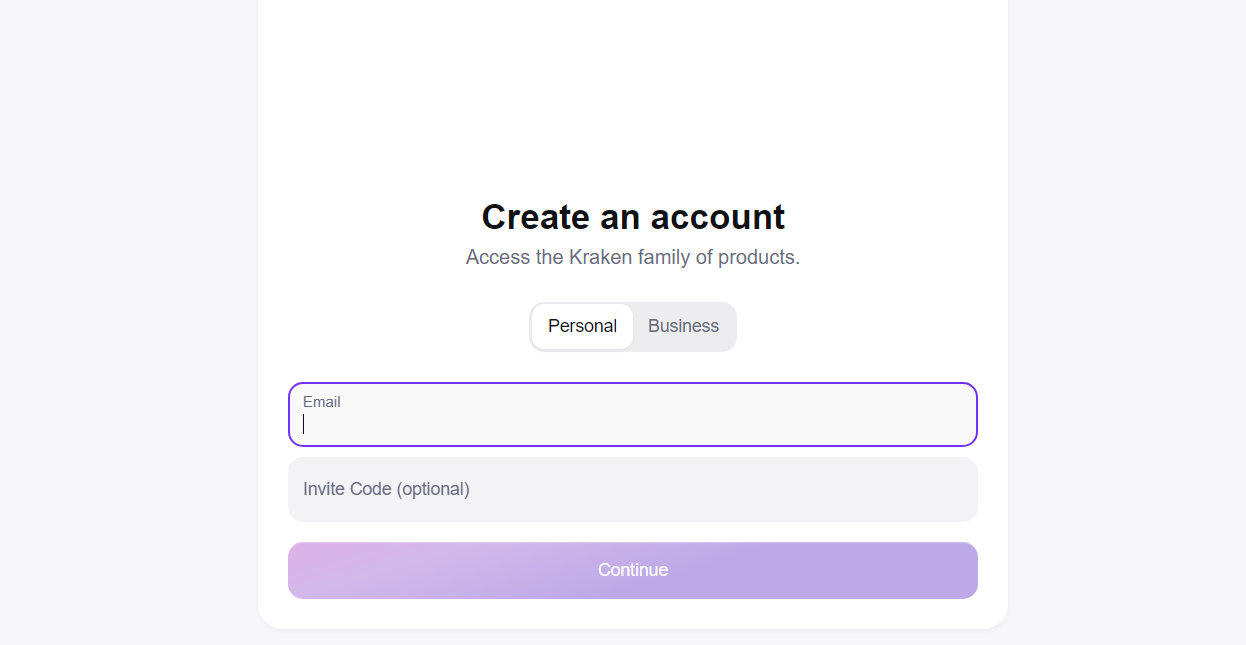
One commendable thing we noticed is that the platform has a “split personality” design. It has a simple version for new crypto traders and an advanced version for professional traders. The primary app has a cleaner user interface, buy/sell buttons, and a simple portfolio tracking feature. If you are just starting your trading journey, this version is ideal for you, but don’t get too comfortable, as you’ll pay higher fees. Kraken Pro offers an advanced trading experience, both on mobile and on desktop. We got faster execution speeds on the platform, and the technical tools available always came in handy. It is the version we will recommend if you are a professional trader who does a lot of chart and price analysis. Joining Kraken took a few minutes, and the ID verification is automated. However, keep in mind that you may get extensive questions when completing your “Know Your Customer” verification. The platform has an extensive support center that includes self-service and support articles. Both provide quick answers and resources to deal with common challenges on the platform. Nevertheless, you can still skip them altogether and use the live chat option if you need more assistance. Kraken offers 24/7 live chat support globally. You can also use the email option, but that takes longer than the chat, at least from our experience when we tested the platform for this Kraken review guide. Note that you’ll have to send the email directly from the support page. ✅ There is chat support for spot and derivatives trading ✅ The Kraken wallet is free to use and is also open-source ✅ Kraken offers robust security that includes the SOC 2 Type 1 examination ✅ There is high liquidity and trading volume on the platform ✅ You’ll get advanced analytical tools for margin and futures trading ✅ The platform supports over 300 perpetual futures and fixed maturity contracts ✅ Kraken is regulated in North America ❌ The 1% instant buy and sell options are relatively high Here’s what you have to do to set up your Kraken account and start trading: Open the registration page and select the personal or business option. Then, enter your email and provide the invite code. Note that the invite code is optional. The next step is to select your country and state of residence. You will also have to verify your email to proceed to the next step.
Verification on Kraken takes a few minutes, starting with your phone number. Once your phone number is verified, you will have to provide more personal details and answer a few questions. The next step is to submit your ID and proof of residence. Kraken accepts fiat deposits if you are just getting started with crypto. Otherwise, you can transfer crypto from your wallet to your Kraken account. The latter is the more cost-efficient option and also our recommended approach. We’ve explored several highlight features in this Kraken review, and the platform ticks several boxes. The most notable boxes are with regard to licensing, security, and advanced trading features with Kraken Pro. You will also get a robust trading experience with Kraken Desktop. One thing we will point out as we wrap up is that you should follow our tips to minimize your trading costs as much as possible. Where possible, stick with the desktop platform and avoid the instant buy/sell options.
Key Takeaways
An Overview of Kraken and Its Background
Licensing and Security
Country
License Type
Cyprus
Investment firm (MiFID) with license number: 342/17
European Economic Area (EEA)
E-Money Institution (EMI)
United Kingdom
Financial Conduct Authority
Canada
Restricted Dealer
Australia
Digital Currency Exchange (DCE)
Argentina
Virtual Asset Service Provider
Restricted Countries
Security Features at Kraken
Available Coins and Trading Pairs on Kraken
The Prominent Trading Features on Kraken
☄︎ Kraken Pro
☄︎ Kraken Desktop
☄︎ Futures Trading
☄︎ Kraken Prime
☄︎ INK
☄︎ Kraken Wallet
Earning on Kraken

Fees and Limits on Kraken
Feature
Fee
Instant buy/sell
1% trading fee
On-chain staking
20% commission
Deposits and withdrawals
The fee varies based on the method and currency you use
Perps
0.25% fee to open the position
Spot crypto trading
0.00% to 0.25% maker fees
Spot maker rebate
-0.02% to 0.23% maker fees
Margin fees
The fees vary based on the cryptocurrency (note also that rollover fees apply)
Futures
-0.006% to 0.02% maker fees
Pro Tips to Minimize Cost When Trading on Kraken
Our User Experience on Kraken
Customer Support at Kraken
Pros and Cons of Using Kraken
Pros
Cons
✅ Kraken does not apply any lock-up periods except those imposed by the networks
❌ You need a minimum balance of $50 to open a position for futures trading
How to Set Up a Kraken Account
Step 1: Register with Kraken
Step 2: Complete the KYC Verification
Step 3: Fund Your Kraken Account
Kraken Review—Final Thoughts
FAQ
Can I trust Kraken?
Is Kraken legal in the US?
What are the cons of using Kraken?
Is Kraken the best crypto exchange?
What are the fees on Kraken?