


 Some of the links on this site may be affiliate links. ICOBench may receive advertising commissions when users visit recommended platforms via our affiliate links, at no additional cost to you. All recommendations are based on a comprehensive review process.
 The altcoin season is a brief period when investors shift focus and capital from Bitcoin (BTC) to altcoins (other cryptocurrencies besides BTC). This shift and large capital inflow result in a notable increase in the prices of these cryptocurrencies. And as such, those who invested early are left with massive gains.
While past altcoin seasons have returned massive gains, the period is also often characterized by high volatility. And the speculative fervor doesn’t offer much guarantee either. Hence, the need to be adequately informed before throwing your eggs in this basket.
In this guide, we will not only explain what the altcoin season is but also explore the typical signs that signal its arrival.
The Altcoin Season Fever
A simple way to view this season, also called the altseason, is to look at it as a financial wave. First, investors pour money into Bitcoin. The inflow then causes Bitcoin’s price to go up, but there’s a catch.
Soon, Bitcoin’s price begins to stabilize or move sideways. When that happens, the profit margins begin to drop, leaving investors in search of the next big opportunity. Low-cap cryptos, from meme coins to utility tokens, begin to attract the attention of investors, as they typically come at a low price with high growth potential, especially during the presale period.
As investors begin to pour money into these altcoins, their prices begin to go up. And as prices go up, so do the profits. This wave will continue until the altcoins stabilize, move sideways, and, in the worst cases, fall completely. By this period, both Bitcoin and even the best altcoins typically go into a bear market.
Experts predict that the above cycle, including a recovery phase, will continue. The first cycle dates back to 2017. At the time, Bitcoin rose to $19,000 but was soon overtaken by ETH, which skyrocketed to $1,300. That price shock kick-started the first altseason, as Bitcoin lost its market dominance.
The next altseason came in 2020/2021. ETH led the charge again, surging to $4,000. Solana and Avalanche didn’t take a back seat either, and we also had one of the first notable meme token sensations within the same period.
This year (2025), we’ve seen more token launches on Ethereum and Solana than on any other blockchain, as the two are locked in a battle for the best blockchain.
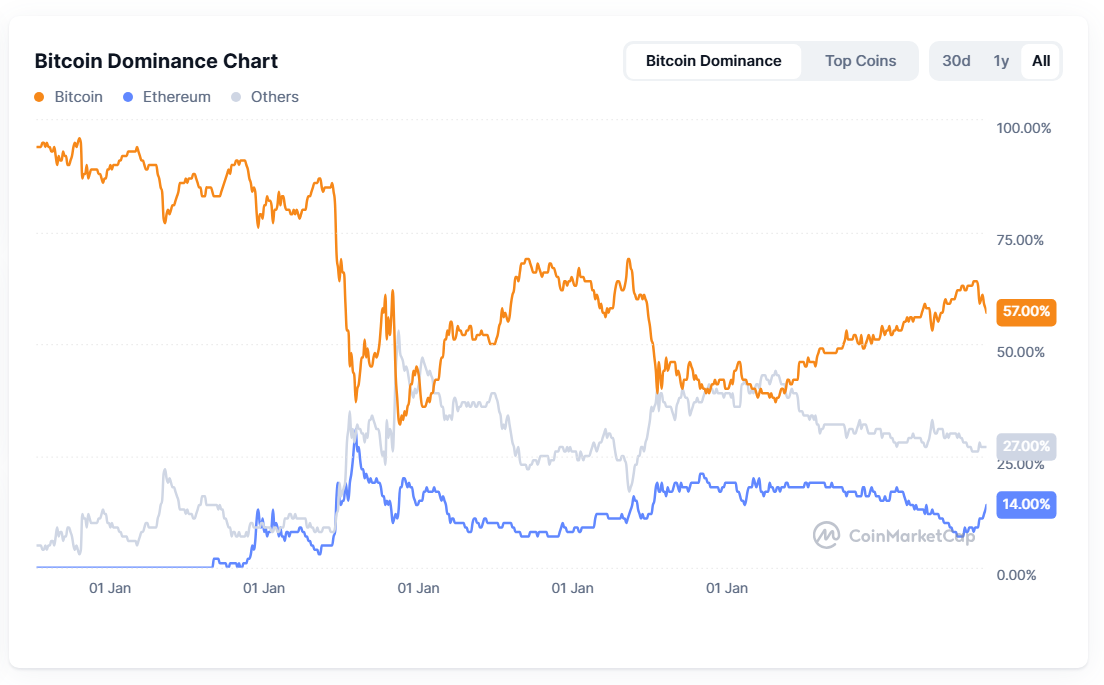
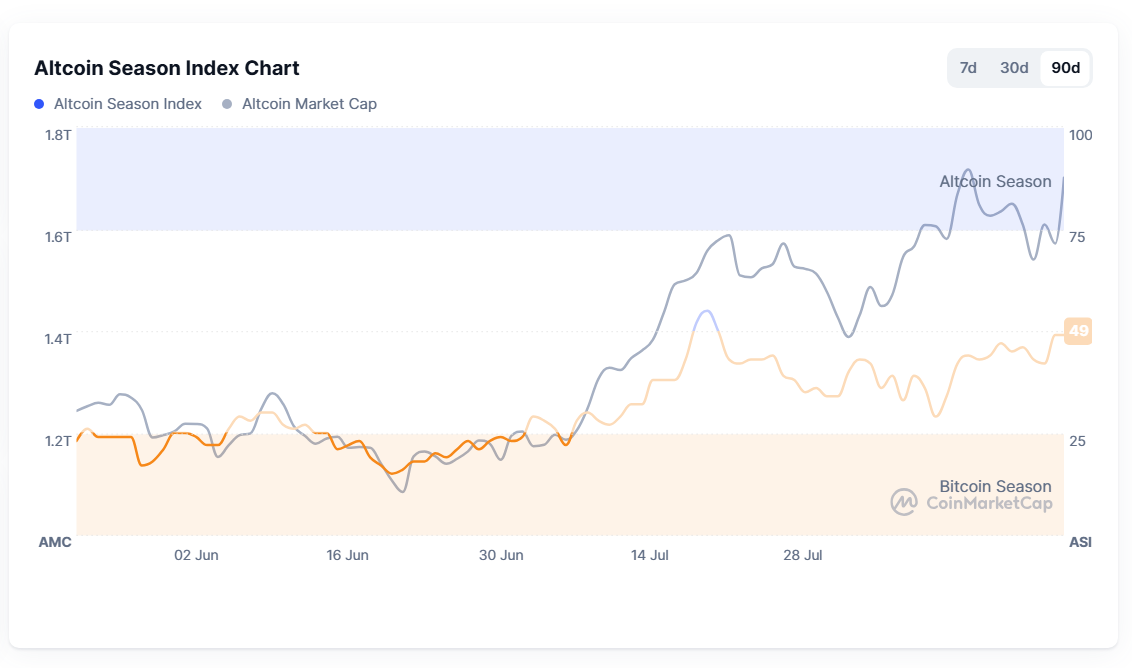
The table below summarizes the typical phases to expect with the altseason: A few things we recommend you pay attention to when looking out for an altseason include the following: The Bitcoin dominance index measures BTC’s relative market share in the overall cryptocurrency market. It is typically represented in percentages. Source: CoinMarketCap A high index means that investors lean more towards BTC than other cryptocurrencies. It shows investor confidence in Bitcoin. But when the index is low, it typically indicates investor movement towards other cryptocurrencies. During this period, investors are more willing to take on the risks of investing in new tokens and even upcoming ICOs. The 2018 altseason came after Bitcoin’s dominance fell below 40%. Hence, you should keep an eye on the chart to catch the altseason early. This index shows the market performance of the top 100 altcoins relative to Bitcoin. And it measures this performance over 90 days. Note also that the index does not include stablecoins or asset-backed tokens. Source: CoinMarketCap The altcoin index heralds the start of a new altseason when 75% of the altcoins outperform Bitcoin. For the 2021 altseason, the top 100 altcoins had a combined market capitalization that was 130% that of Bitcoin. One thing you can expect to drive trading volumes during this period is FOMO (fear of missing out). The increase in trading volumes also typically results in rising market caps for the altcoins. If you see these signs, then the altseason might be fast approaching. One of the key things to do during this season is to research and diversify. Yes, one meme coin might be creating market buzz. But that doesn’t mean you should throw all your funds into that one meme coin. Other things you can do include the following: If you want to get tokens at the lowest price, then we recommend buying them during the presales. You may also get other benefits like staking rewards or NFTs, all of which increase your holdings and potential profit. We recommend using technical indicators. You’ll get these on notable exchanges or wallets with DEX access, like Best Wallet and D’CENT. Crypto scams will pop out during this period to take advantage of the market buzz and FOMO. One rule of thumb we use to fight against scams is that if it is too good to be true, then it is likely false. Besides scams, you’ll also have to consider the market volatility, which, from our experience, is typically high during this period. Ensure you take adequate risk management measures before investing. Utility tokens remain one of the top cryptocurrencies investors turn to during the altcoin season. Other tokens you can consider include meme coins, NFT and gaming tokens, DeFi coins, and Layer-2 protocols. Define your strategy, do your research, and look out for scams.The Typical Phases
Phase
Brief Description
Bitcoin Season
During this period, Bitcoin gets most of the investors’ attention. It also receives the highest cash flow.
Large-cap altcoins rally
Tokens like Ethereum will begin to rally, followed by other large-cap altcoins. This phase indicates cash flow away from Bitcoin.
Broader altcoin rally
As investors seek out lesser-known but promising altcoins, the broader altcoin market begins to rally alongside ETH and other heavyweights.
Market peak and correction
Eventually, the market hype dies down, and investors begin to look away from altcoins and the crypto market in general.
Key Indicators: How to Spot an Altseason
A Drop in Bitcoin Dominance
The Altcoin Index
Increased Trading Volume and Market Buzz
Maximizing Opportunities During the Altcoin Season
Invest in Presales
Time Your Investments
Risks to Consider
Final Thoughts
FAQs
How can I track the altcoin season?
Can I profit during the altseason?